A quiet return to myself through travel, art, and stillness.
Author: Karon
I’m a retired elementary educator, writer, and traveler currently wintering along the coast. I write about slow living, health and healing, reinvention in later life, and finding beauty in everyday moments. My work reflects a season of intentional living, curiosity, and learning to listen more closely to both place and self.
I had been toying with the idea of a digital detox for a while. I just didn’t realize how much I actually needed it.
With so much change over the past several months, I had begun to feel the need for less input, less noise, and more clarity. I decided to make that my April project—a digital detox of sorts: less TV, less scrolling, and more space to think.
With simple, clear rules—no TV and just 15 minutes of scrolling each day—I set out to clear the mental clutter. It felt like a natural next step after decluttering my life physically a few months ago.
I wasn’t perfect at meeting my goals, but I consistently tried. Like many people, I had justified my screen time because so much of it felt practical—calls, emails, and searches. Even so, by the end of the month, it had noticeably improved. My screen time was less than half of what it had been.
Giving up TV was easy. I really haven’t watched much for years. What surprised me was how much clutter came from social media—even the “helpful” kind. I follow smart people who share great advice on health and fitness, but after a while, even good information becomes overwhelming. Scrolling had quietly turned into a form of procrastination.
So I started putting my phone down and doing the next small thing instead. I began finishing things I had been putting off, and once I started, it became easier to keep going. My attention felt less fragmented, and my mind felt clearer.
Instead of consuming more ideas, I wanted to live the ones I already had. So I began putting some of my favorite advice into practice. Something shifted. I was taking action instead of endlessly thinking about taking action.
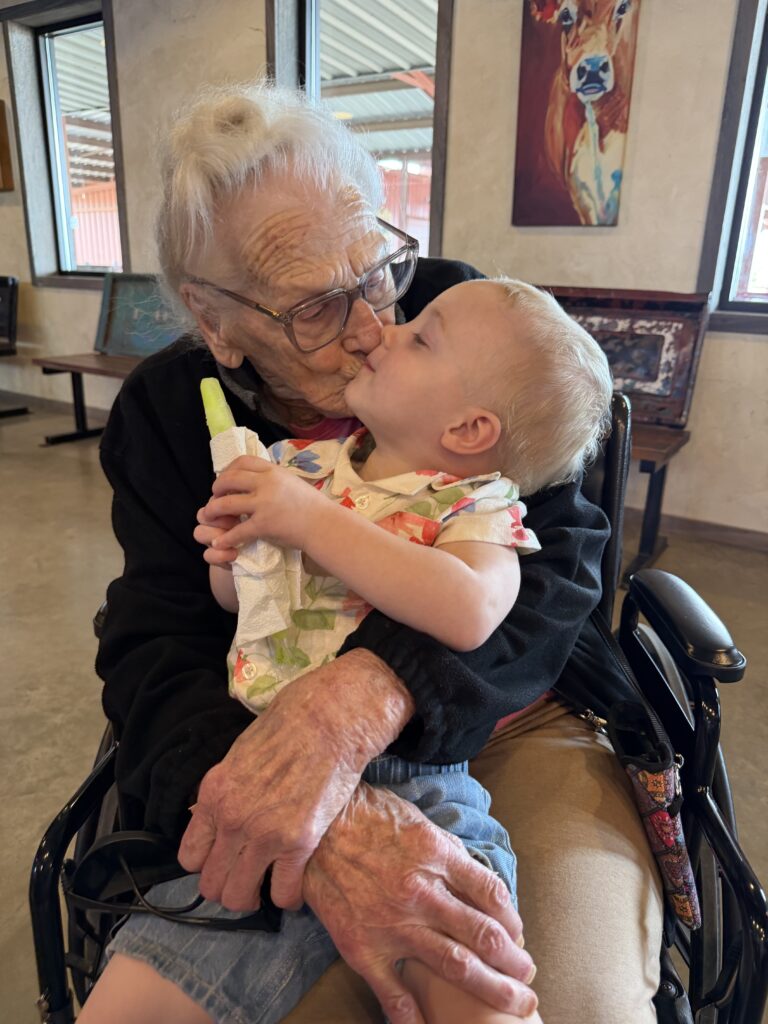
This month I read more, played with my grandsons, and walked after meals. One afternoon I sat outside without my phone—just the sound of birds, crickets, and frogs. The quiet felt deeply familiar, like stepping back into a slower rhythm I had almost forgotten. It helped that my son’s place is both peaceful and full of the everyday sounds of life—kids playing, laughter drifting in and out. I also began trying a couple of new habits from my list of “someday” ideas.
My goal was to simplify, decompress, and reclaim my attention. What I thought would be a project about reducing screen time turned out to be something deeper. It wasn’t just about using my phone less—it was about returning to life as it was happening and being fully present for it.
This week gave me nothing extraordinary to write about, yet it has been full and rich in all the right ways.
I am currently back at my son’s place—my nomadic home base.
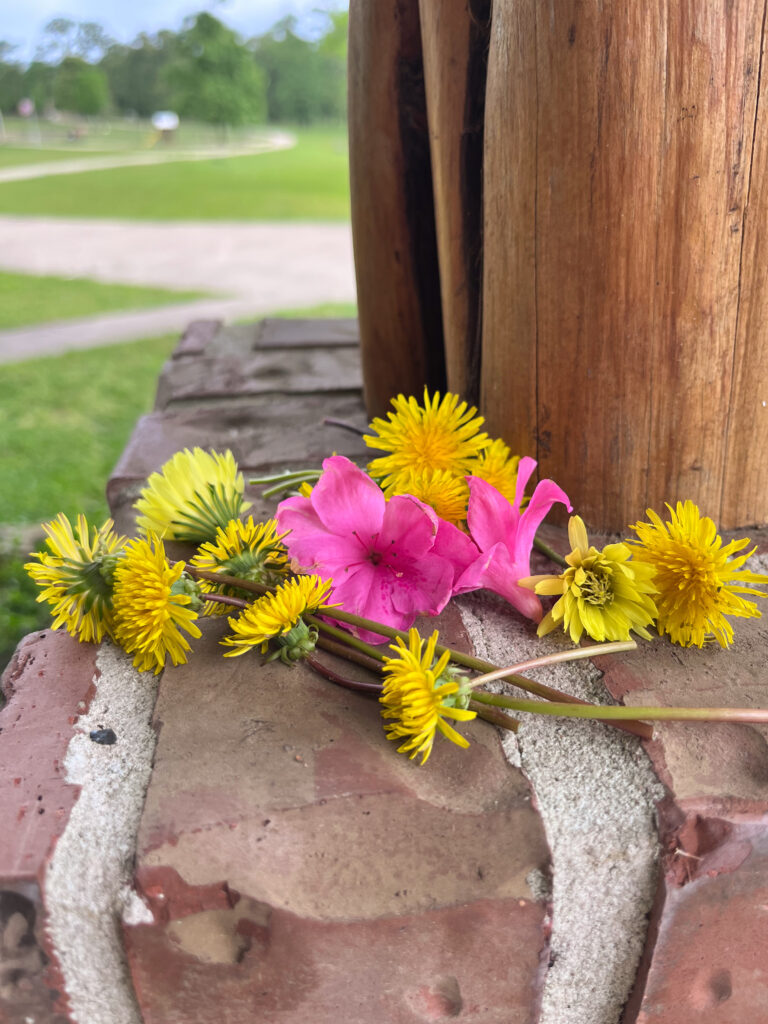
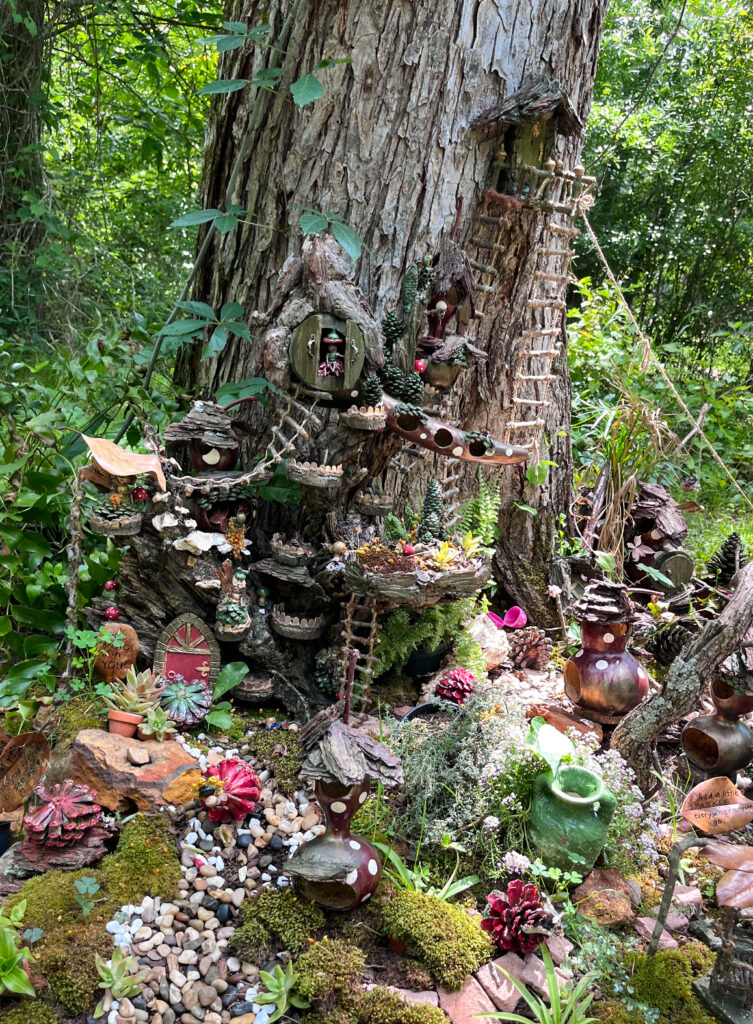
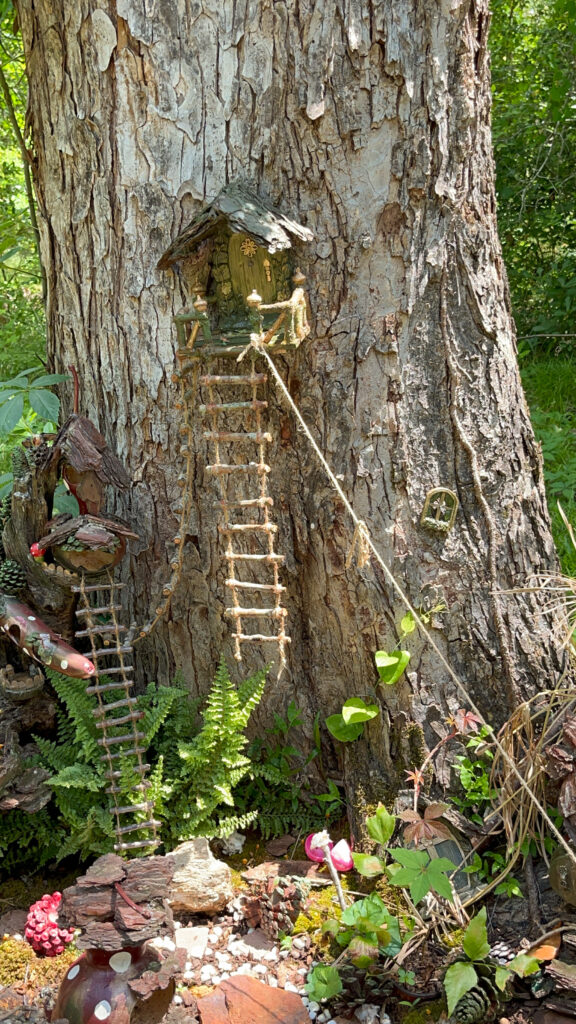
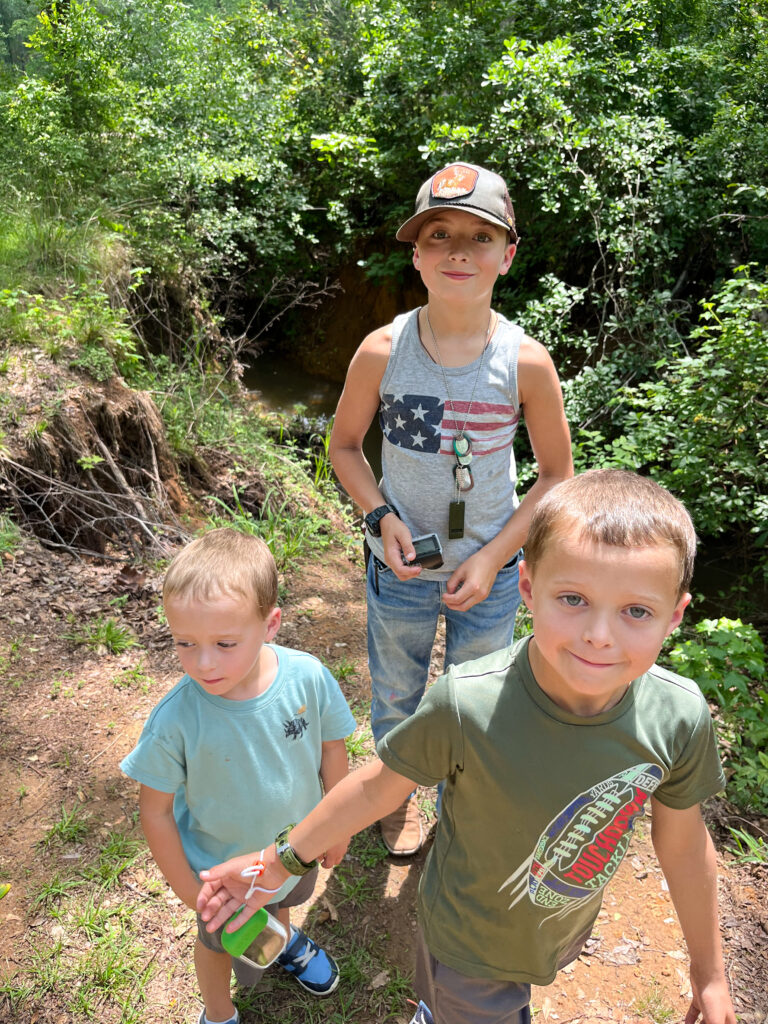
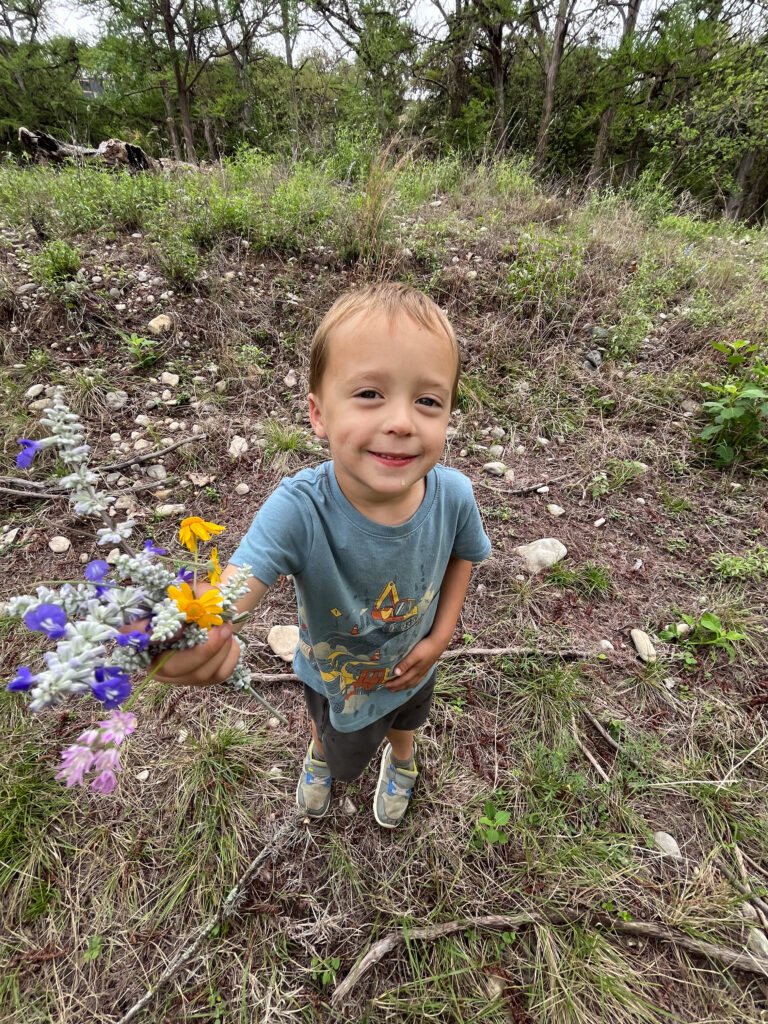
It has been a slow-paced week of Legos, flower picking, and imaginary play. I’ve been immersed in the ordinary lives of my three grandsons. In just nine short days, I’ve watched a jiu jitsu class and a flag football game, taken a quick trip to Palestine for lunch and a hike through the annual fairy garden trail, and simply been present for everyday moments.
On the drive to Palestine, we told stories about them when they were little, their dad when he was little, and even a few stories from my own childhood. We laughed at silly things and listened to favorite songs. It was one of those simple days that means more than you expect.
This week, I’ve also been trying to walk at least ten minutes after most meals, along with a longer walk on many days. I’ve been sorting through a few things too, hoping to travel lighter on my next trip.
And I’m loving the freedom of not being weighed down by things.
This new life didn’t just change where I lived—it changed how I live.
I now lean into things that I used to think were flaws. Like being an introvert. I savor that time alone to recharge. I used to push against that and now I embrace it.
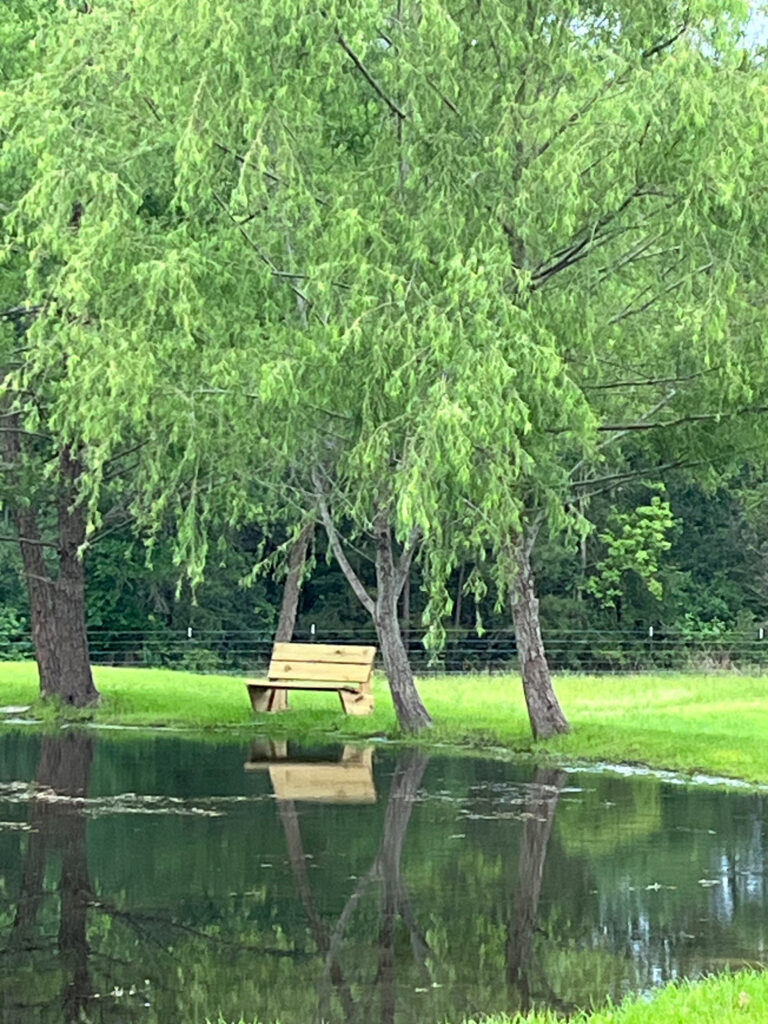
A few days ago I sat in the sunshine by the lake and just felt the warmth on my skin and listened to the gentle sounds of nature. I no longer feel the need to rush.
With the fast-paced life of teaching as just a memory now, I can fully breathe. I am deeply content with traveling and living alone. Having the space to breathe allows me to savor the moments with family and friends.
I’ve roughly planned the next several months: Colorado, New Mexico, North Carolina, and stops in between. I’m excited for what’s ahead. I am envisioning mountain hikes, lakes, and room to embrace slow travel. There will be time alone and some visits with family and friends.
But for right now, I’m grounded in the moment, with two more weeks here with my grandsons. I’m treasuring these days of sitting outside to watch the sunrise, hearing the rain on the roof, and listening to them play nearby.
For a couple of months, I had been thinking about this week.
Planning it. Imagining it. Holding it quietly in my mind.
A week in Bandera, Texas— a former home. A place where my kids grew up, where school days and ordinary routines once filled our lives. I pictured the things we would do, the places we would return to, the feeling of stepping back into something familiar.
And then it came.
And just as quickly, it was gone.
Isn’t that the way with the moments we look forward to the most? They arrive with so much anticipation, and then they pass in a blur, leaving behind something harder to name.
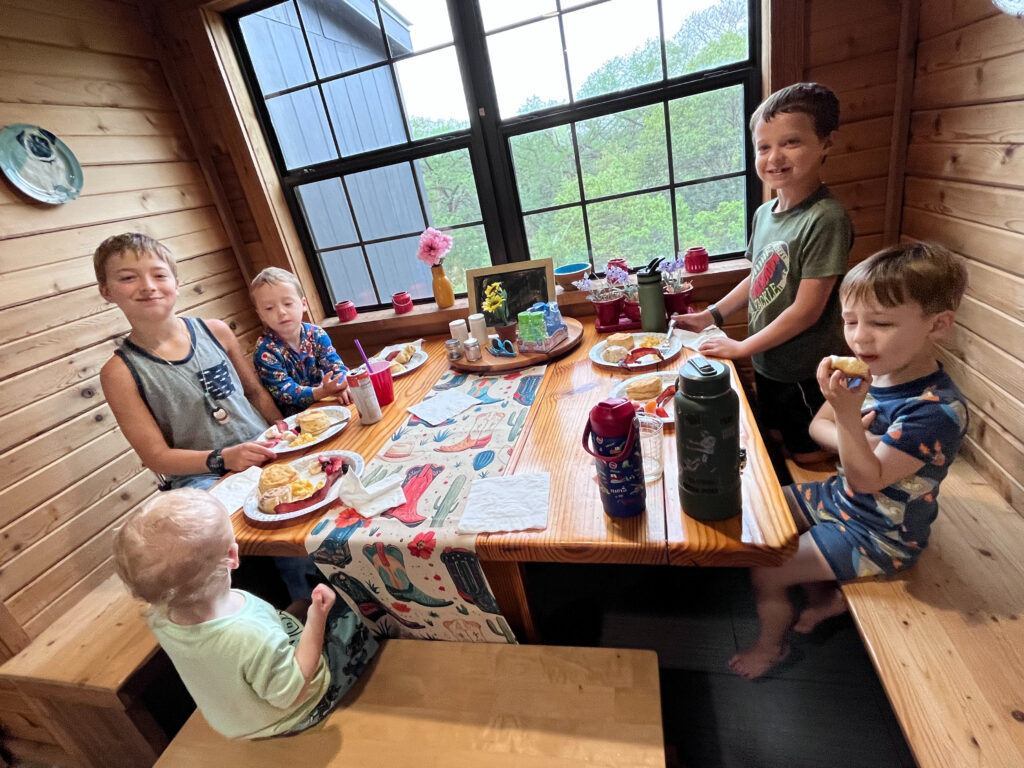
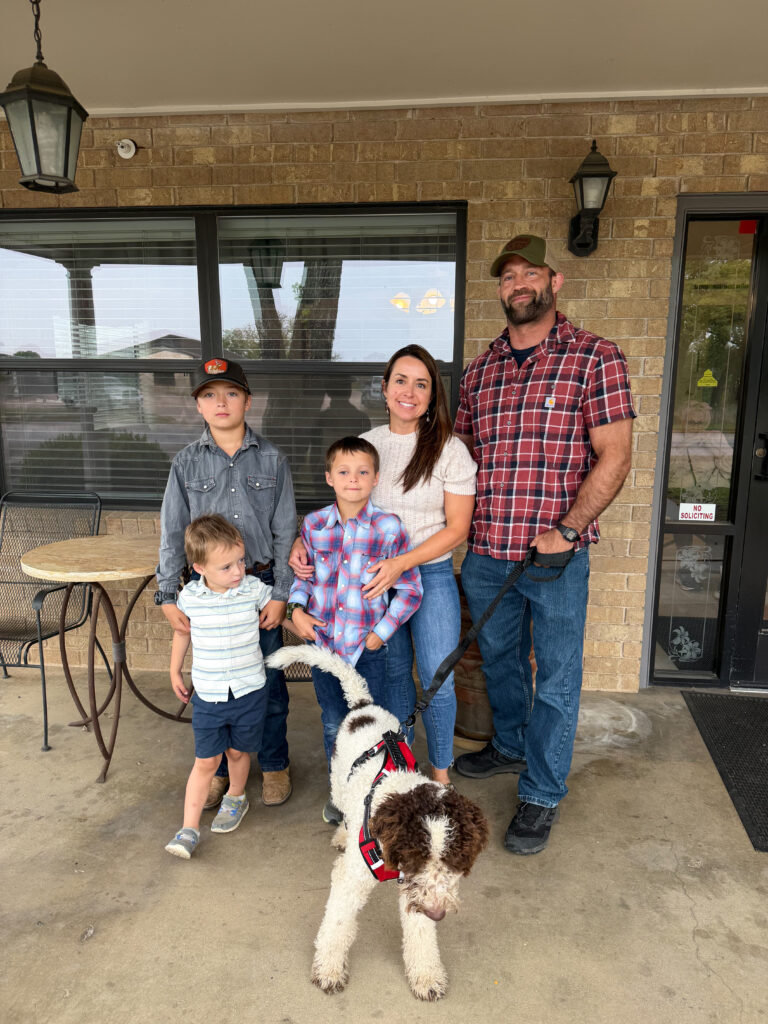
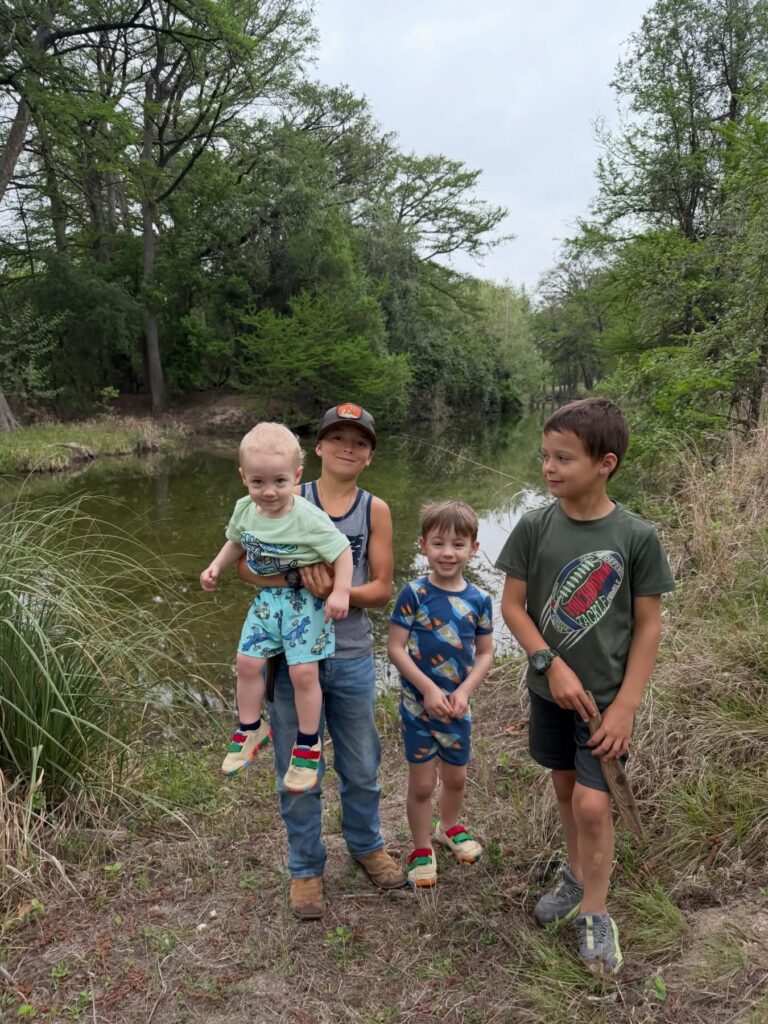
Amy and Corey stayed the full week with the boys, while Ryan and Jackie were only able to be there for a few days. It didn’t matter. What mattered was that, for a little while, all five of my grandsons were together.
And not just them—but all of us.
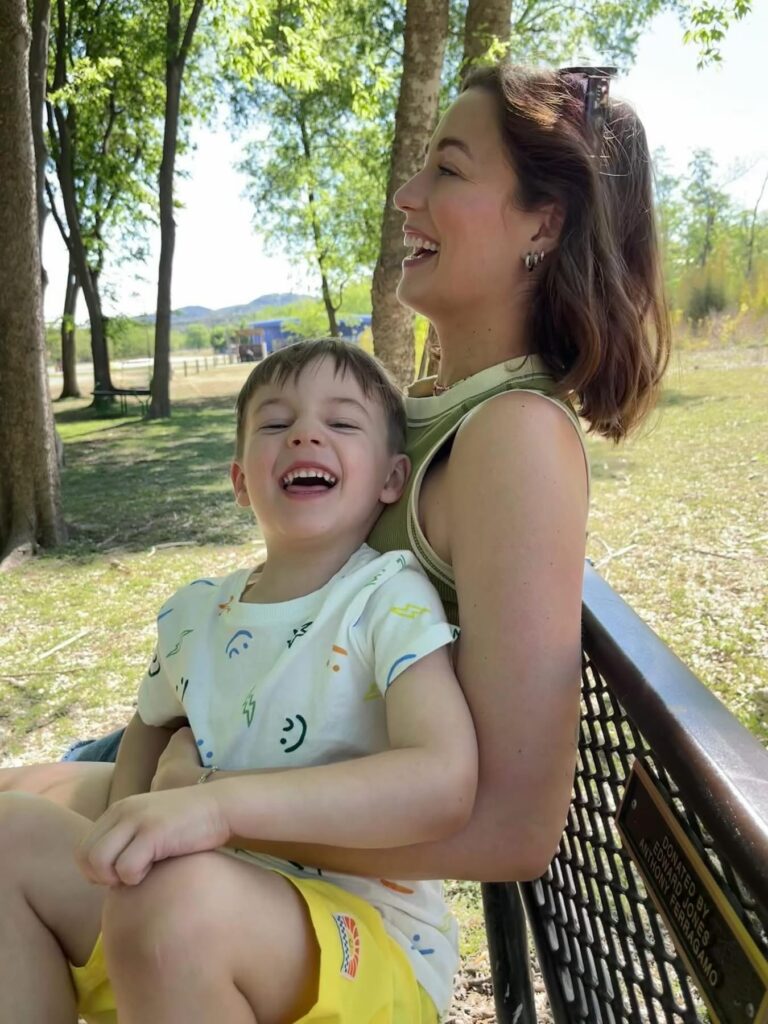
There is something incredibly special about having your children and their families in one place at the same time. It doesn’t happen often, and when it does, you feel it. In the noise, in the laughter, in the simple act of everyone sitting around the same table. It meant more than I can fully put into words—and I know it meant just as much to my mom to see everyone together.
There is something about that—watching them run, play, eat, and just be together—that settles into a place deeper than memory. It’s not just what we did. It’s what it felt like to witness it.
We filled our days, of course.
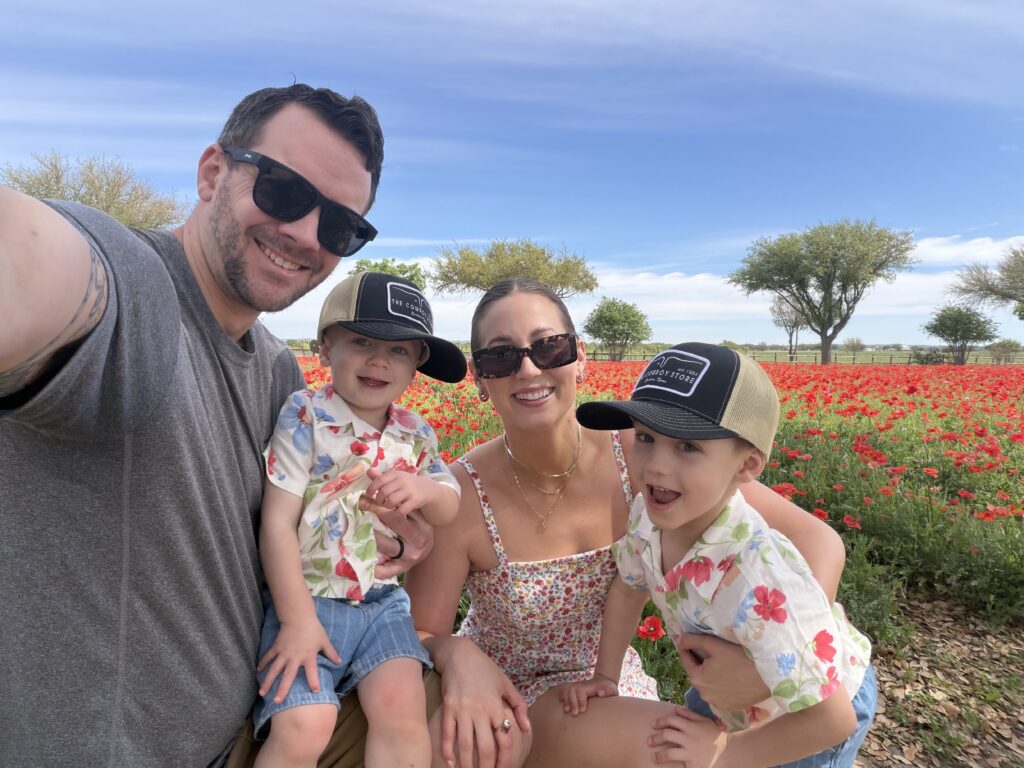
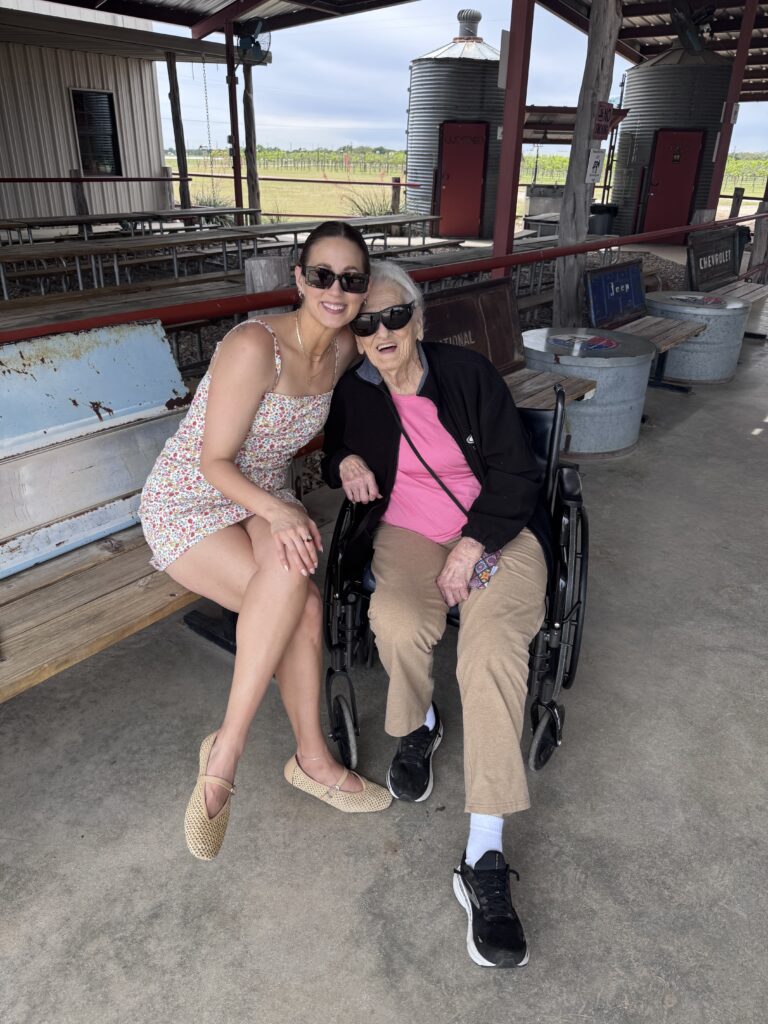
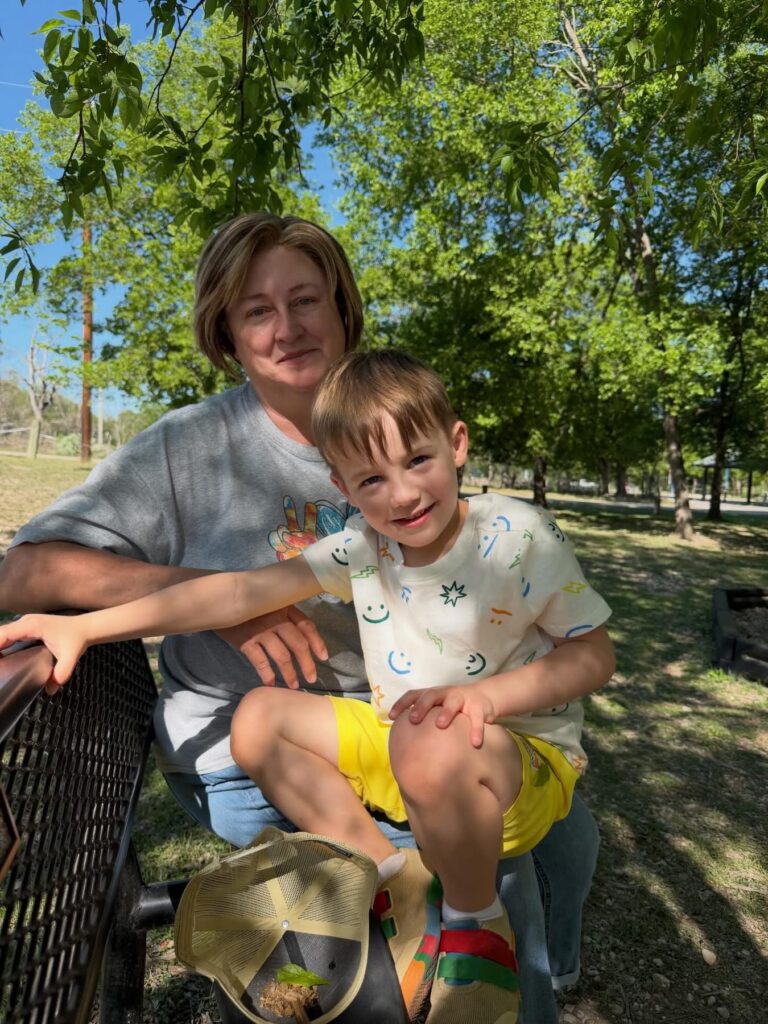
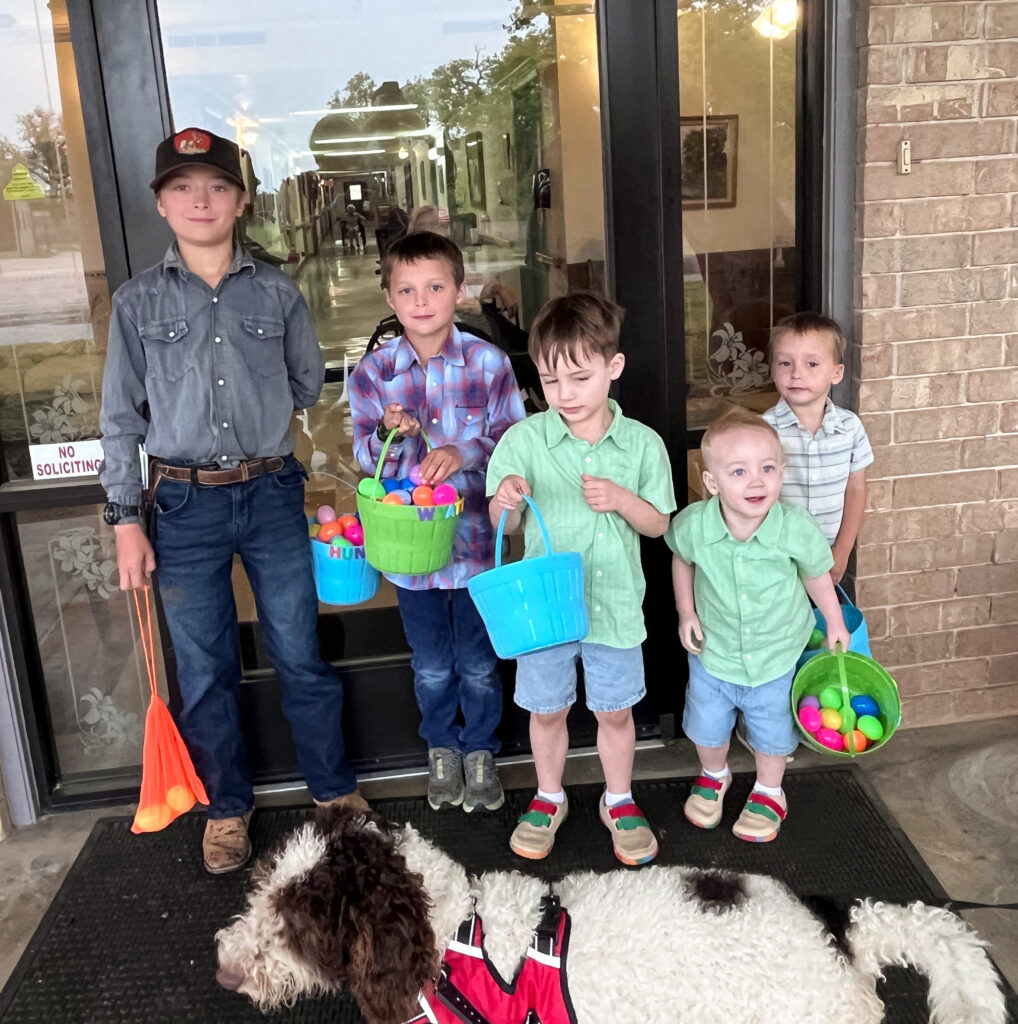
An Easter egg hunt and picnic with my mom. Another day, we picked her up and took her with us to Wildseed Farm, followed by a quick stop at one of Fredericksburg’s many wineries. A cousin dropped in for a visit, adding another layer to the gathering. These weren’t big, dramatic moments—but together, they created something full and rich.
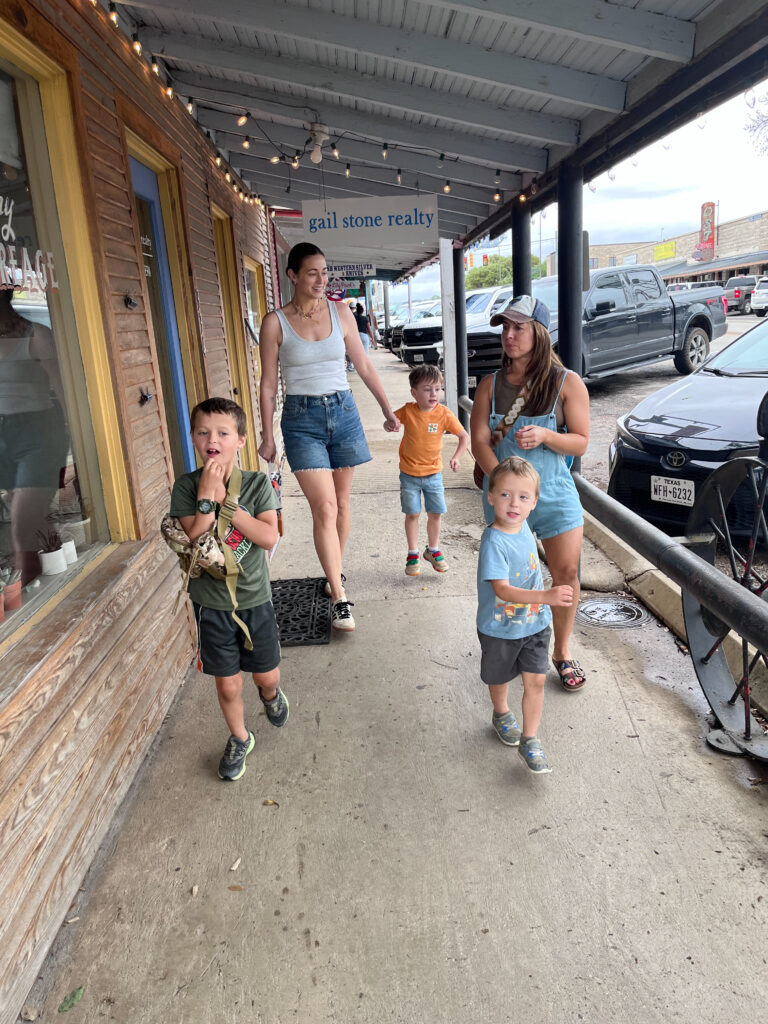
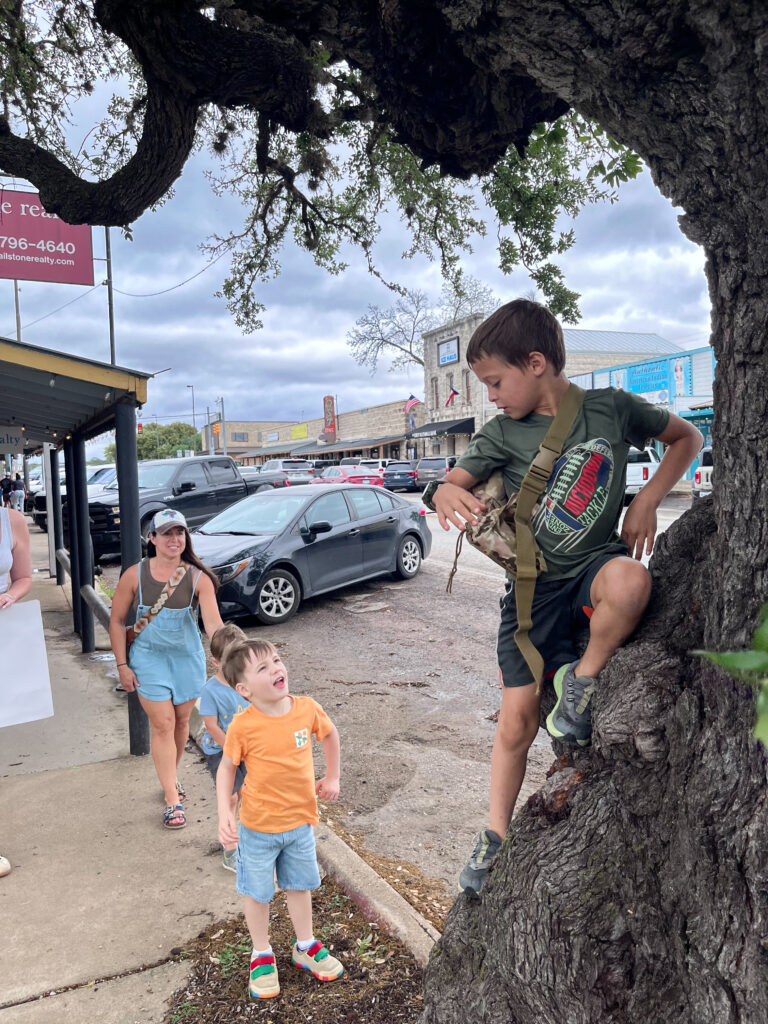
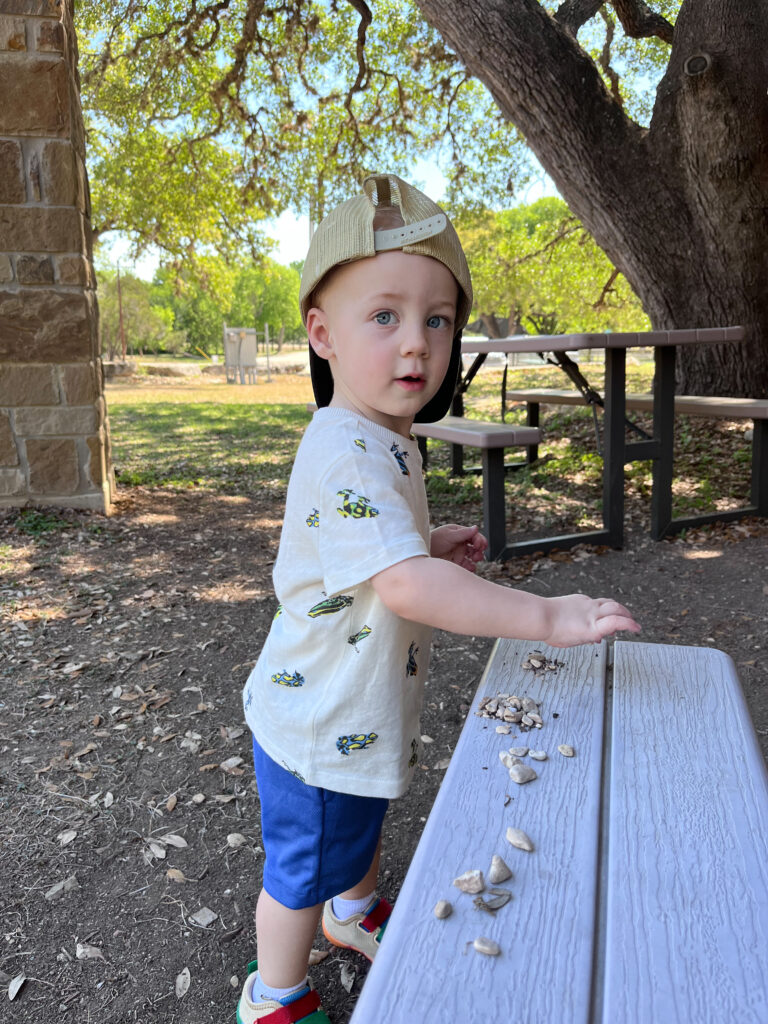
We walked into town, slipping easily into the rhythm of Bandera. Lunch at the OST, still standing as it always has. Ice cream from the General Store. Trying on cowboy hats at the Cowboy Store, because how could we not?
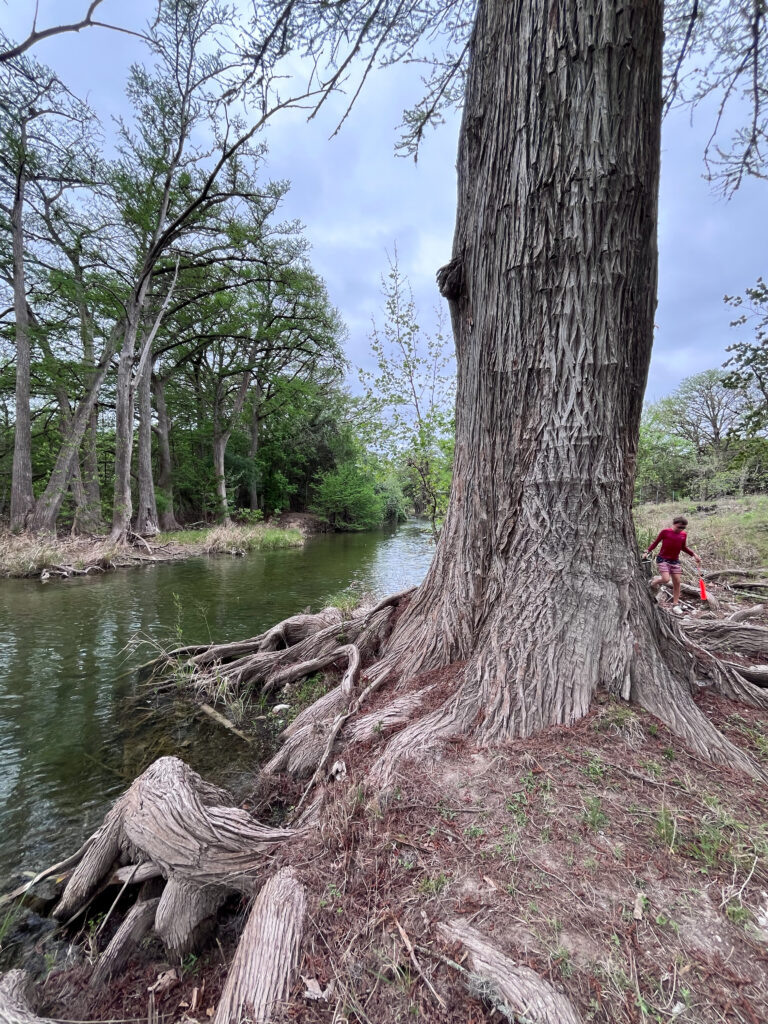
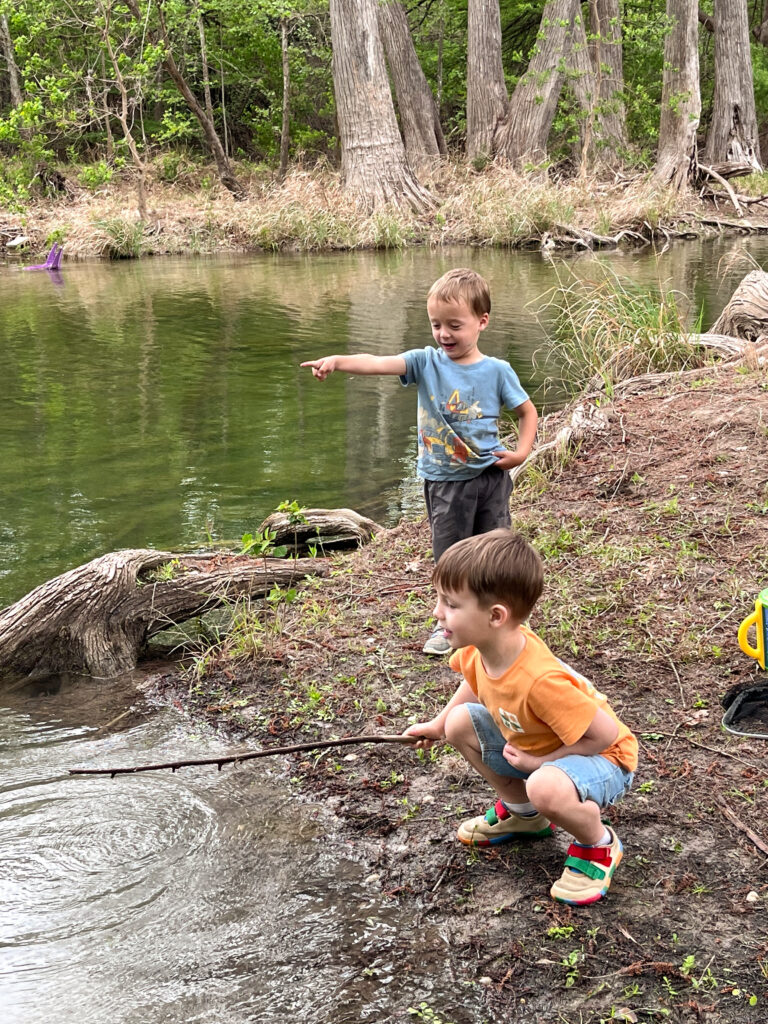
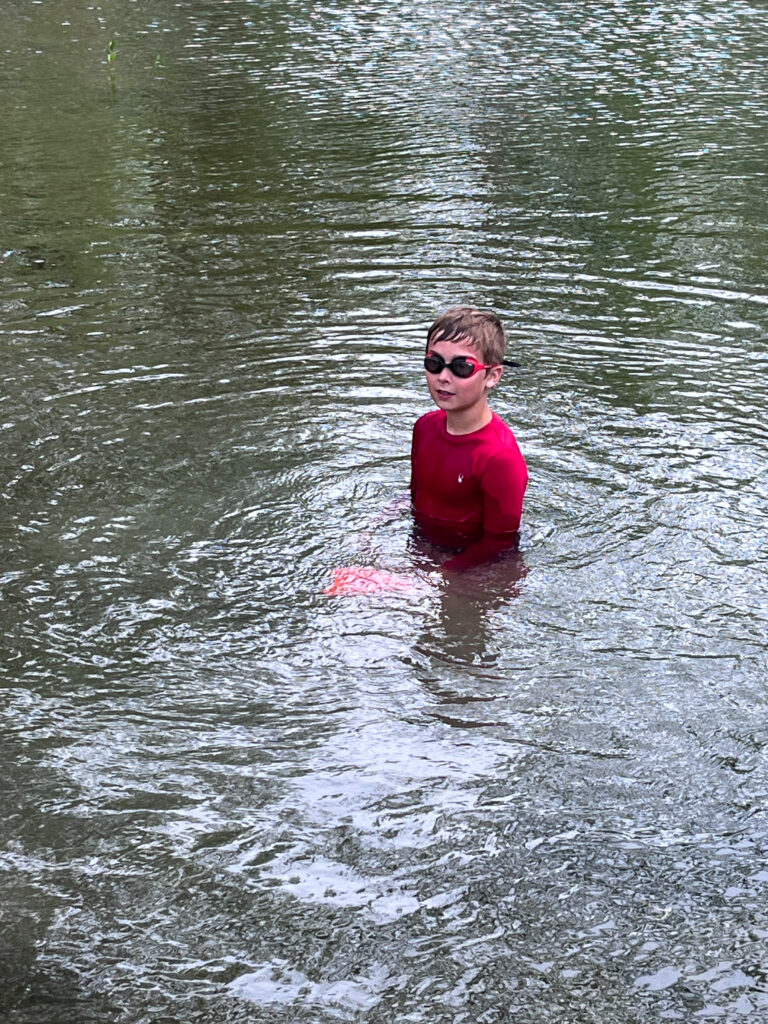
Down by the river, the little boys threw rocks and sticks into the water, completely content in the simplest of ways. Nearby, my oldest grandson and his dad went for a swim. Different ages, different ways of experiencing the same place—but all part of the same memory being made.
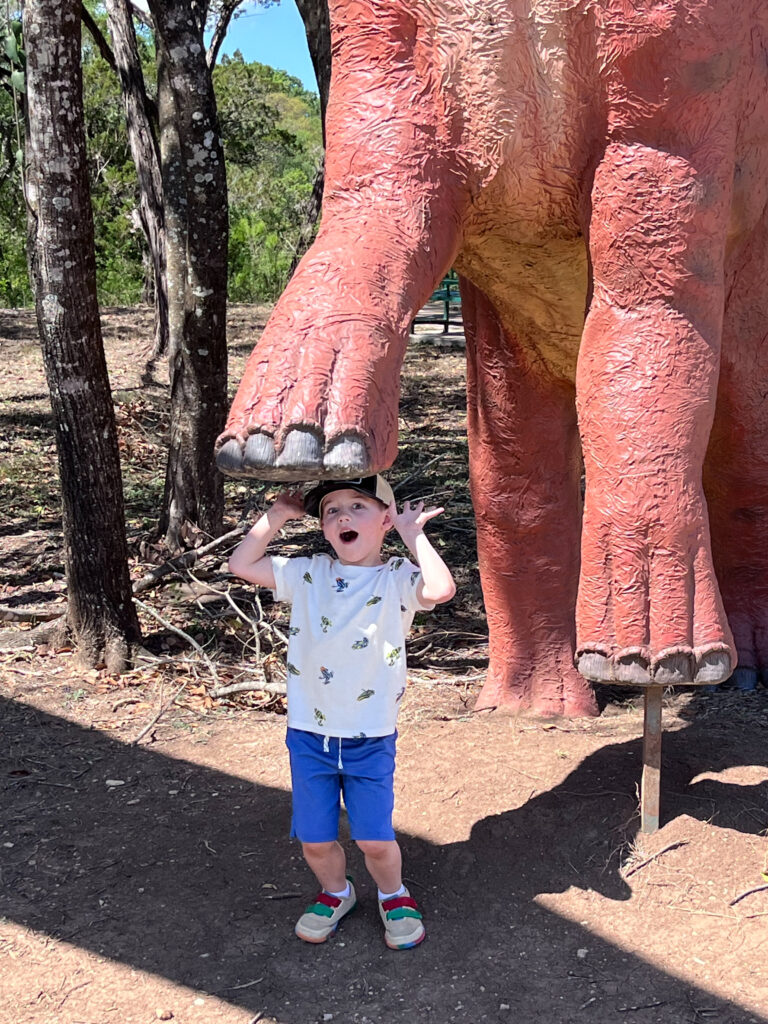
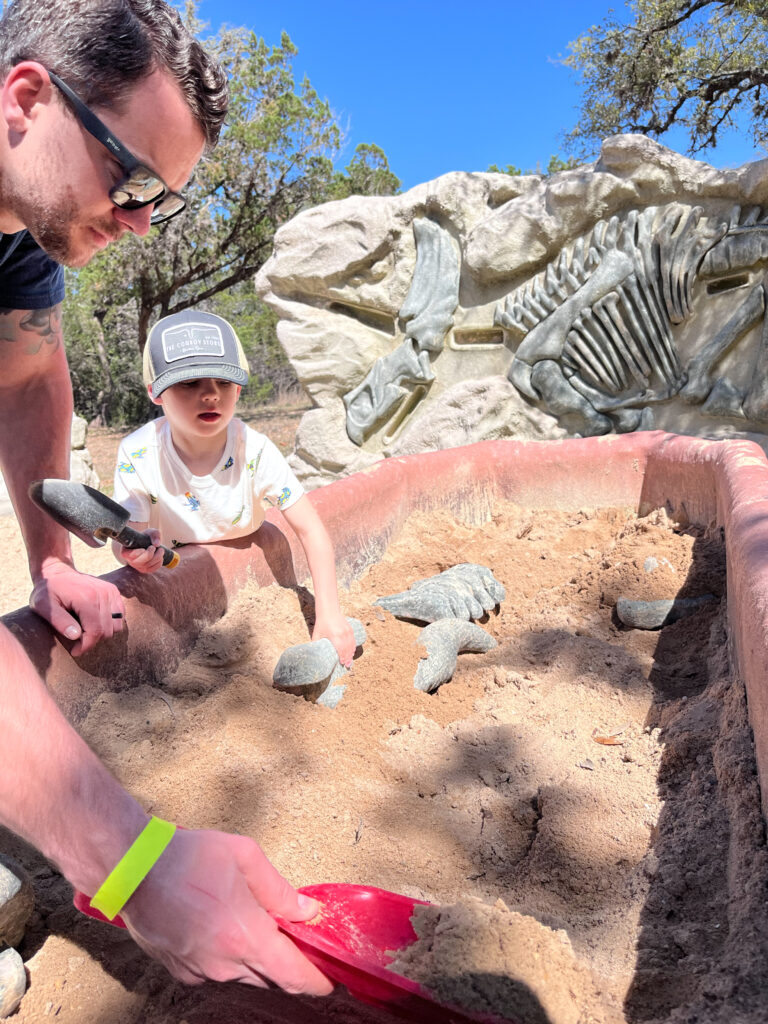
We visited the Bandera Natural History and Art Museum and its dinosaur walk—something added after we moved away more than ten years ago, so it was new to us. It was really fun, and honestly felt a little unexpected in a small town known as the “Cowboy Capital of the World.” A reminder that even the places we once knew so well continue to change.
And breakfast at El Jacalitos—the “little shack” that isn’t so little anymore—still serving the kind of breakfast tacos that somehow taste like both the past and the present.
It was a full week. A busy week.
But more than that, it was a reminder.
That places hold stories, but they don’t stay the same.
That time moves forward, whether you’re ready or not.
And that sometimes the most meaningful moments aren’t the ones you plan—they’re the ones you feel while they’re happening, knowing, even then, how fleeting they are.
Each month this year, I’ve been choosing a project centered around intentional living and personal growth. In January, I focused on really seeing. In February, it was acts of kindness.
March, though, didn’t begin with a clear plan. Somewhere between moving multiple times, settling into Fredericksburg, and spending my days with my mom, a different kind of project quietly took shape — one I didn’t plan, but simply lived.
This month became about letting go of structure and allowing a natural rhythm to emerge.
I thought my month in Fredericksburg would be slow-paced and relaxing, but it did not start out that way. The house I had leased for the month had one tiny problem — a mouse — which I discovered after I had unloaded most of my things.
The woman I rented it from had another place I could stay temporarily while I looked for something else. But there were no other rentals available in my price range on such short notice. Instead, she arranged for me to move between a couple of Airbnb rentals, which meant packing up and relocating four different times during the month.
My only other option would have been to give up my time in Fredericksburg with my mom and go somewhere else. I decided to be flexible, move around, and stay.
So far, it’s been well worth it.
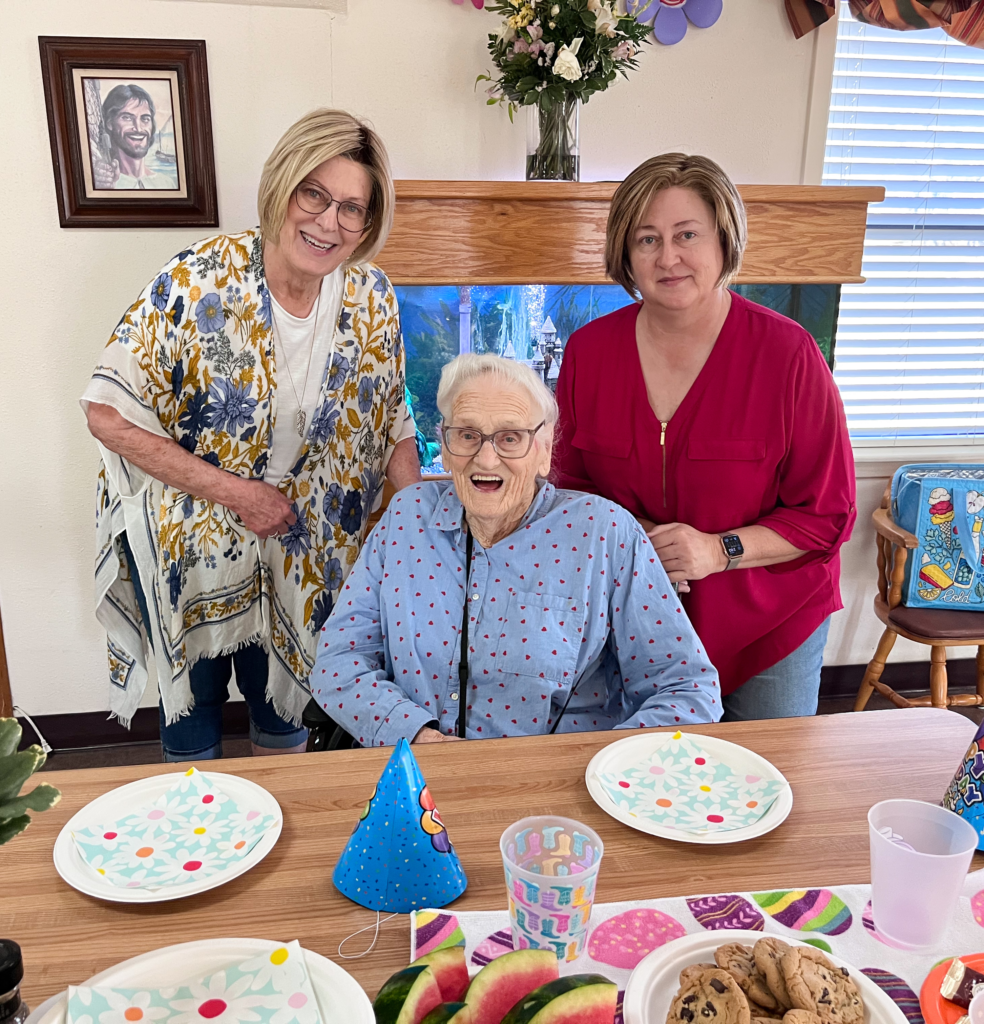
My mom and I have shared some really lovely moments. My niece came for a visit, and we spent time together talking, eating good food, and catching up. Then my sister Kathy visited. We took mom to Hallmark — her favorite store — and helped her pick out cards for the next few months. After lunch, we sat with her and organized them.
The next day, Kathy and I rearranged mom’s room to make it more functional for her. We also had some priceless time together catching up, and shared the best cheese enchiladas I’ve had in a long time.
Each day, I sit with my mom during one or more meals and visit with her and her tablemates. And each day, I’ve been slowly cleaning out and reorganizing her drawers, her closet, and her things, trying to make her small space feel a little more peaceful and ordered. There’s something about it that has felt unexpectedly therapeutic.
This has been the rhythm I’ve found in Fredericksburg.
Other things have been more sporadic — the gym, a few CrossFit workouts, hiking at Enchanted Rock, and exploring some of the tourist spots I’ve never seen before. But the rhythm hasn’t been in those things. It’s been in the everyday moments — sitting, talking, organizing, and simply being with my mom.
I am in my seventh month of being a nomad, and I’m starting to feel more comfortable going with the flow and being spontaneous. I am learning to settle into a place and find my rhythm there, whether that looks like walks on the beach or time spent with my mom.
More than anything, I’m deeply appreciating time with family, and this month has given me so much of that.
As this month comes to an end, I find myself reflecting.
I did some of the things I had hoped to do — a few hikes, some exploring, small moments of getting out and experiencing this place. But that isn’t what lingers.
What lingers are the quiet rhythms that shaped my days — the conversations, the routines, the simple act of being there with my mom.
This month didn’t unfold the way I expected. But somewhere along the way, it settled into exactly what it needed to be — a rhythm rooted in connection, in presence, and in time with my mom.
Some days aren’t meant for plans. They’re meant for wandering — for walking slowly down familiar streets, noticing the things you might otherwise pass by.
This week, I found myself doing just that in Fredericksburg, letting the day unfold one small moment at a time.
The morning light hit the buildings along Main Street just right, casting long shadows across the sidewalks. The town felt quieter at this hour, as if it was still stretching awake. A few doors were just beginning to open, the soft sound of shops coming to life spilling into the street.
Walking through a small town on a sunny morning has always been one of my favorite ways to explore. Even here, in a place I’ve been many times before, everything felt a little new — as if I was seeing it again for the first time.
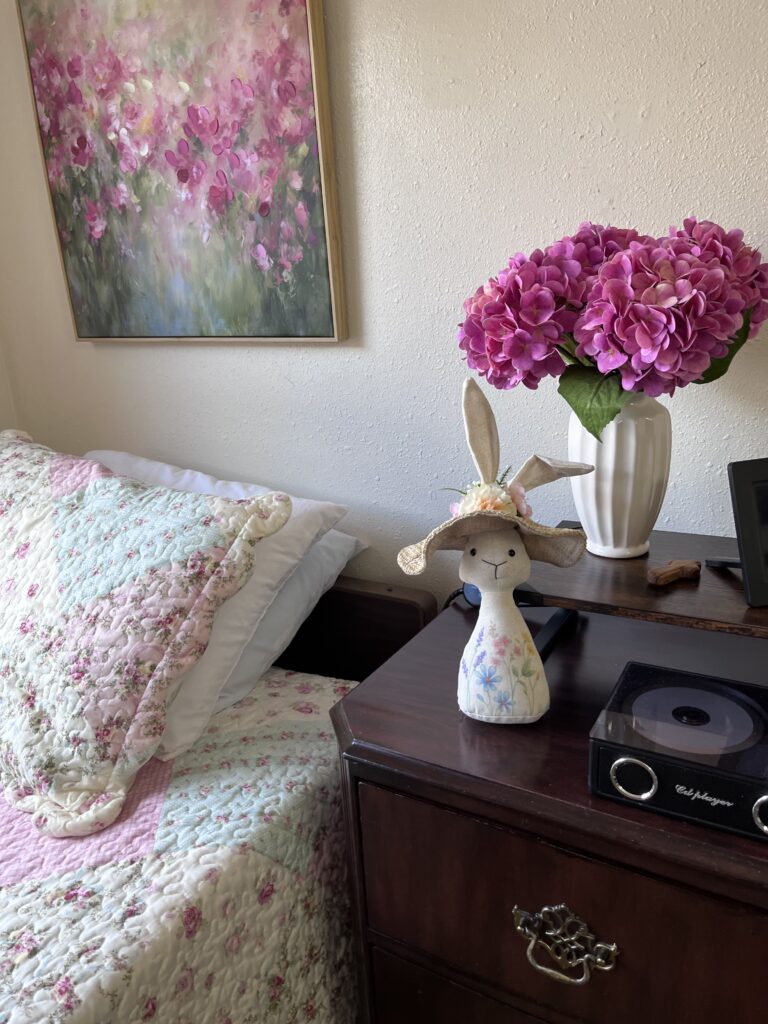
A small shop window stopped me in my tracks. Bunnies tucked among soft florals, pale pastels layered carefully, each detail placed with intention. It was simple, but beautiful in a way that made me pause a little longer than expected.
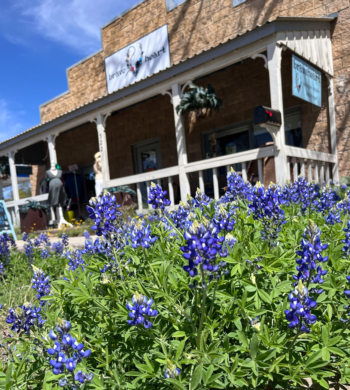
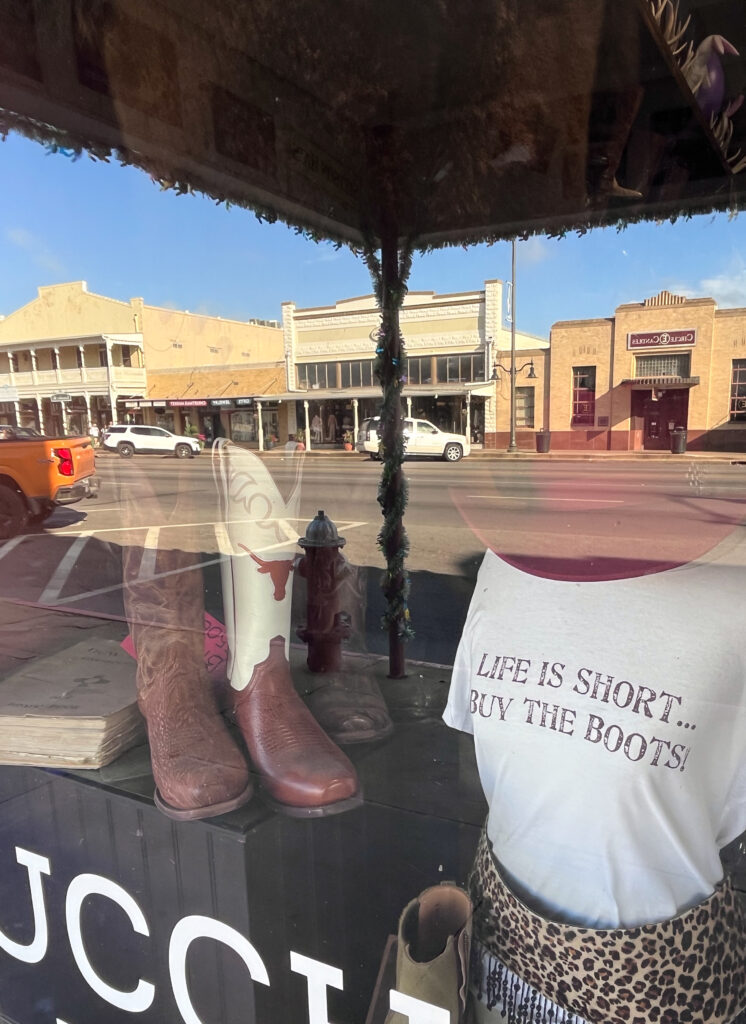
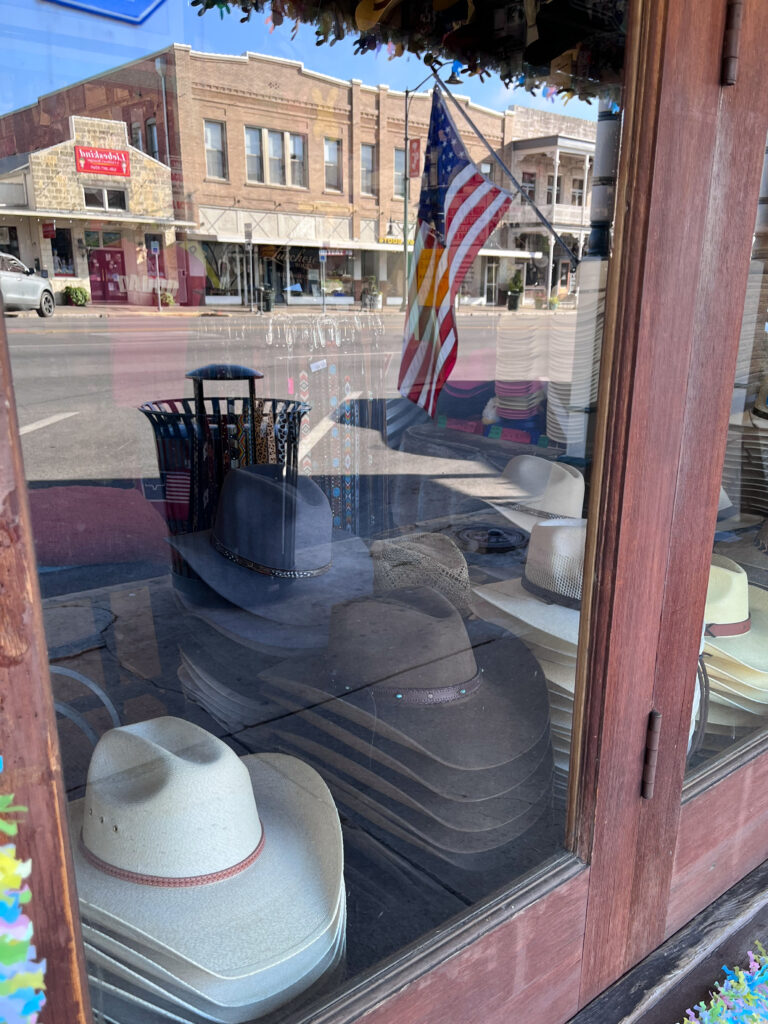
A few doors down, another window caught my eye — leather boots and Stetson hats. I could almost imagine the familiar scent of leather, the kind that lingers in a good boot store. Classic, unmistakably Texas.
I found a bench and sat for a while. The air still held onto the cool of the morning, but the sun was beginning to warm it. Footsteps echoed lightly along the sidewalk. A couple passed by, walking hand in hand, their pace unhurried. I caught myself wondering about them — how long they’d been together, whether this was home or just a visit, what their story might be.
More people began to appear, one or two at a time. A quiet rhythm was building.
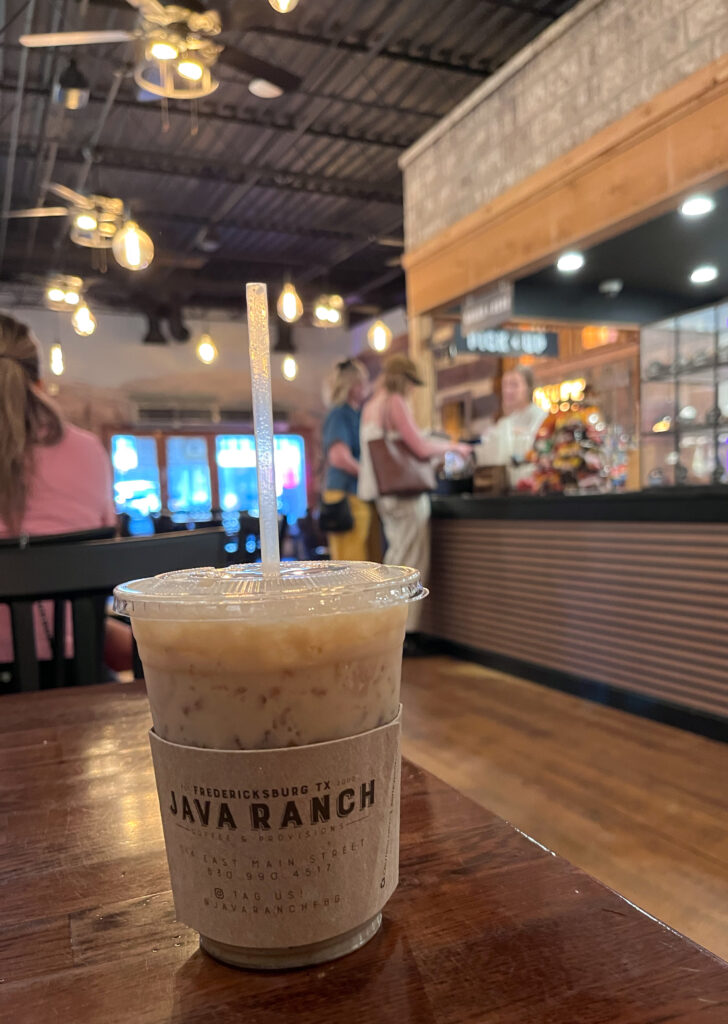
I stopped for a chai tea and stayed longer than I had planned. It was the kind of pause that didn’t need a reason. I just sat there, people-watching. I found myself doing more of this these days — allowing space for small moments to be enough on their own.
The busyness of being a mother and teacher felt far away in moments like this. There was space to notice. To sit. To stay.
And then, I got up and continued on — a little slower, a little more aware, carrying the quiet of the morning with me.
An orange glow was beginning to peek over the hills as we approached the entrance to Enchanted Rock State Park. After two months of getting used to temperatures in the 70s along the coast, the morning air in the 40s felt downright cold. Despite the chill, we began our pre-sunrise ascent up the granite mountain.
My niece Mary is an avid hiker, and we had made a simple plan. She would continue all the way to the summit while I stopped about halfway up to sit on the rocks and take photos as the sun came up. I had a feeling the halfway point might be the perfect place to take it all in.
It felt good to be out in nature on a cold morning watching the day begin. Enchanted Rock is such an iconic part of the Fredericksburg area. Each year hundreds of thousands of visitors come to climb this massive dome of pink granite, which formed more than a billion years ago. Rising about 425 feet above the surrounding terrain, the rock stands at 1,825 feet above sea level — a bit of a contrast from my recent morning walks along the flat beaches of Rockport.
Sitting on a large boulder about halfway up, I thought about the Big Tree in Rockport and how I am drawn to natural things that have survived through centuries. Standing in their presence makes you pause. You can’t help but wonder about the stories they could tell if they could talk.
And sitting there watching the light slowly spread across the Hill Country, it struck me how brief our presence is in places like this. People come and go, taking photos, climbing to the summit, and heading back home by afternoon. Yet the rock remains — silent and steady — having witnessed centuries of change. There is something comforting about that kind of permanence in a world where so much of life feels temporary.
I looked down and could barely see the structure where we had started. My legs felt strong and steady, and the climb up had seemed surprisingly easy. I really wanted to continue to the summit, but I knew the descent on the granite could be slippery, and my shoes weren’t really the type I needed for it.
I quietly wondered if I was truly being logical and practical — or if it was my old fear of heights creeping in. The climb down had always been the scariest part.
I decided I would come back another day after buying more appropriate shoes. For now, I settled back onto the warm granite and turned my attention to photographing the amazing scenery around me.
As the sun slowly rose above the hills, the granite around me began to glow with soft shades of pink and gold. Early morning hikers appeared as tiny silhouettes moving across the dome above me. The Hill Country stretched out in every direction, rolling layers of blue and green fading into the distance. It was quiet in that way early mornings often are, before the crowds arrive and the day fully begins.
After a while I spotted Mary making her way down from the summit. She was full of energy and stories about the view from the top. I was happy for her and just as happy with my decision to stay where I was. My morning had been exactly what I needed — a quiet place to sit, watch the sunrise, and take it all in.
Sometimes the most meaningful moments aren’t found at the summit, but halfway up a mountain, sitting quietly on a warm piece of granite and watching the day begin.
As I drove past Boerne, I began to see the hills. I almost felt I was seeing the area for the first time (even though we lived in this area for years). The hills looked hillier. Maybe it was the contrast from being by the sea for two months. I was struck by the thought of how we grow so accustomed to the things in our daily life that we don’t even see it anymore. Being more observant is a gift that comes with this nomadic lifestyle. I feel more awake and in tune with my surroundings.
The drive had seemed long, but I was now in the last hour. I thought of how I had not really been ready to leave Rockport. I had hesitated to begin packing as if that would delay the inevitable. There was a painting class coming up that I really wanted to take at the end of March. There was a volunteer opportunity at the Little Theater starting in a few days. I never made it over to the uninhabited island for shelling. I didn’t take a boat tour. How had I let these things slip by? I had packed and loaded anyway.
I have discovered with travel there are always things left undone. The more places you explore in one area, the more you realize you want to do. I found this in Vicenza. I found this in Japan. The more you learn and really live in an area, the more things you uncover that tourists miss. Somewhere along the way, maybe while I was living in Japan, I began to slow down. To really explore the hidden and off-the-beaten-path kind of places. No, now that I think of it, I think it may have begun in North Carolina with the little coastal towns.
Whenever it began, I really developed a love for just driving to a destination with a few things on a list to see and then meandering through the town and stopping when something caught my eye. Many times it would be something that I just absolutely had to photograph.
Now I am beginning a month in Fredericksburg. I will spend time with my mom. Take her outside and talk about the trees beginning to bud out and the birds. We will decorate a little for Easter and have some quiet meals together. I will structure in time for me as well. Time to walk on Cross Mountain. Maybe I will get a temporary membership at the gym. I will try to find a couple of opportunities to listen to live music. Maybe I will even brave that alone. Meandering through some art galleries is a must. And hopefully the wildflowers will start blooming while I’m here.
Even though I really wasn’t ready to leave the coast and I loved my time there, I am learning that I rarely leave a place because I am finished. I leave because it is time. And each time I go, I begin building a small rhythm in the new place — a favorite walking path, a cozy coffee shop for chai tea, a few quiet rituals — knowing that before long I will feel the tug to move again. Perhaps the ache of not being ready is simply proof that I was fully there. As I top a hill, the cross on Cross Mountain comes into view.
Before February had found its rhythm, I found myself on the receiving end of an unexpected kindness in a Starbucks drive-through. A stranger paid for my chai tea and drove off without waiting for thanks.
I had set out to make this month about giving — random and intentional acts of kindness — but it seemed kindness was already finding me first.
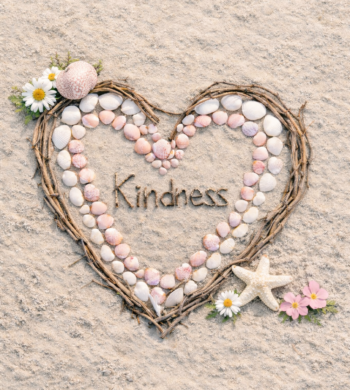
February marked the second month of my yearlong project to live more intentionally, and my focus was simple: to do random and not-so-random acts of kindness. I planned to give snack bags to the few homeless people I’d seen around town, drop off books at the Little Free Library, pay it forward in small ways, volunteer, leave “pocket hug” rocks in unexpected places, create ephemeral art on the beach, and support local businesses.
With shopping, I had a special plan: to visit every little shop in Rockport’s cultural arts district and offer a genuine compliment — either about the shop or its owner and staff. The idea came about when I realized that, despite my visits to Rockport, there were several shops I had never ventured into. This project was about spreading kindness and, hopefully, bringing a smile — whether through a compliment, a small surprise, or a fleeting piece of art on the beach.
One morning, I decided to begin with the beach.
While I was sitting on a towel shaping seashells into a heart in the sand, I heard a man calling out in the distance. Before I could fully register what was happening, a dog came running straight toward me, closing the space between us quickly. I let out a short, startled scream. He stopped just a few feet away, almost as surprised as I was, then jogged past me at eye level before returning to his owner who had been calling him all along.
My heart took longer to settle than the sand did. I smoothed the places where his paws had scattered the shells, then quietly resumed my work. There was little I could have done if the moment had unfolded differently, and I whispered a thank-you to God for my safety. The interruption felt like a small reminder that my little heart of shells wasn’t the only fragile thing on the sand. I brushed the sand from my hands and kept working.
It had taken me several mornings of beachcombing to gather enough shells to shape the heart as I envisioned it, though the large shell and sea star were not treasures I uncovered along the way. Even so, I felt content with that imperfect first attempt. Kindness, I was learning, doesn’t require perfection — only willingness.
As the month unfolded, I began to notice something unexpected: I was receiving far more than I gave.
One day at the library, I went to pay for printing and realized I was a dollar short in cash and they didn’t take cards. The librarian smiled and said it was fine — someone had left extra money in case another person needed it. At an artist reception, a woman I had never met sat beside me, introduced herself, and we quickly became friends. She even invited me to another art event hosted by her art co-op. A Winter Texan who volunteers at the art center remembered my name from a single previous encounter and invited me to a casual “sip and chat” gathering. I paused to chat with a young woman placing a book into the Little Free Library, only to learn that she regularly drives to surrounding towns, leaving wrapped books with bookmarks in each one.
On another day, I witnessed volunteers rescuing a wounded brown pelican — my favorite water bird. The sun was just beginning to set over the bay as two men moved slowly toward him. As they carefully secured him, he stretched out one long wing, almost tentatively, as if he were being gentle with them in return. There was a quiet patience in the moment — no panic, no struggle — just careful movements and steady hands. They gently gathered him up and placed him into a large cage in the back of their SUV. Watching them, it felt as though there was a kind of trust between bird and rescuer, a shared stillness that made the scene unexpectedly tender.
Pelican rescue by Wings Rescue of Aransas County.
Throughout the month, small conversations with locals slowly made me feel less like a visitor and more like I belonged.
Being an introvert, this month required more bravery and self-discipline than I anticipated. I’m naturally observant and reflective, someone who pays close attention before engaging. As a photographer and creative, I’m often the one behind the lens — noticing, documenting, taking it all in. So walking into unfamiliar shops, offering sincere compliments, and initiating conversations with strangers nudged me beyond my comfort zone. What looked simple on paper quietly required intention and courage.
Looking back on this month, I’m reminded of something I once heard: what we give often comes back to us. When we offer love, kindness, or attention, it often returns in unexpected ways. In Rockport, the simplest gestures — smiles, greetings, shared stories, and thoughtful acts — seemed to ripple outward, creating connections that were both gentle and profound. I felt seen, welcomed, and part of a community of people who genuinely cared for one another and their town.
February in Rockport wasn’t just about the acts of kindness I planned. It became a reminder that when we step forward with open hands — even imperfectly — connection has a way of meeting us there. Like smoothing scattered shells back into place, we begin again, and something gentle takes shape.
I started my day in Port Aransas walking the beach at sunrise, beachcombing for over an hour. The waves were rough, the sky heavy with clouds, and the early glow of pink from the rising sun quickly disappeared behind them. The sand was cool underfoot, and each wave left treasures along the shore. I collected a bounty of shells—mostly scallops, in shades of gray, black, orange, and white. Each one felt like a small treasure, a tiny piece of the beach’s beauty to carry with me.
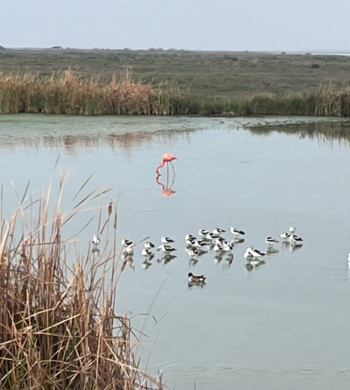
From the beach, I wandered to the Leonabelle Turnbull Birding Center, where another surprise awaited. In the shallow waters, a bright pink figure stood out—a lone flamingo, a visitor from far away who has called this sanctuary home since 2023. Believed to have arrived on the winds of Hurricane Idalia, this American Flamingo likely traveled from the Yucatan Peninsula. While flamingos are rare in Texas, locals have grown accustomed to spotting this striking visitor, who has become a star on Facebook birding groups and a favorite subject for photographers.
I had come hoping to catch a glimpse of the elegant Roseate Spoonbills, but the flamingo stole the show. I settled onto the sun-warmed bench with only my phone in hand, watching as it waded gracefully through the shallow water. Around me, the marsh was alive with birds—dozens of wintering white pelicans floated and fished, while a variety of ducks paddled quietly nearby. Their calls mingled with the gentle ripple of waves, creating a peaceful symphony of wildlife. Nearby birders shared quiet excitement, snapping photos and whispering observations.
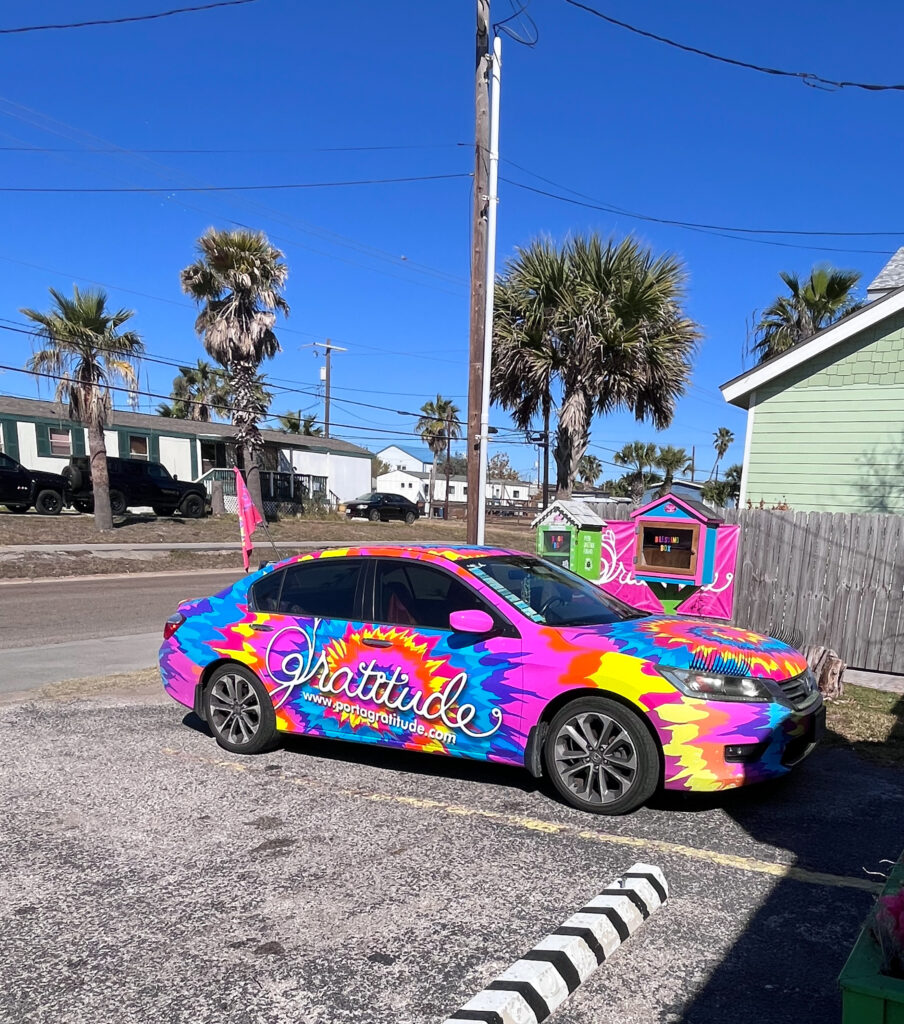
Later, on another visit to Port Aransas, I met a woman who was equally unforgettable, though in a very different way. She owned a small shop, and her personality radiated from every corner of it. A woman of a certain age, she wore jeans that looked as if someone had graffitied them with bright words and colors, a vivid top covered in the word “love” in every hue, and bright red boots. Her shop reflected her energy—inside and out, it was a kaleidoscope of color, full of quirky details like the feet of the Wicked Witch of the West sticking out from under the front of the building. Even her car seemed to shout fun and originality. She was lively, exuberant, and unmistakably herself—much like the flamingo, a one-of-a-kind presence in this little beach town.
Both encounters reminded me of the small surprises that make life memorable. Sometimes it’s a bird carried by a hurricane that finds a new home, sometimes a person whose joy and creativity is impossible to ignore, sometimes the simple treasures of shells on the shore. All left me smiling, and all made me appreciate the unique character of Port Aransas—the way it invites visitors to notice the extraordinary in the ordinary.
Whether you’re wandering the beaches at sunrise, exploring the birding center, or stopping in the colorful shops along the streets, Port Aransas has a way of offering little moments of delight that stay with you long after you leave. The flamingo, the pelicans, the shop owner, and the colorful shells each have their own kind of brilliance, reminding me that life is richer when we pause to notice the unexpected, the vibrant, and the one-of-a-kind.
Eleven months ago, I retired from teaching. A year ago, my life looked completely different. I was still teaching full-time, and my mother was living with me. My days revolved around schedules I had very little control over.
As a teacher, your day runs on carefully planned blocks of time. Outside of school, you build more routines just to keep everything moving—family, household, responsibilities. Structure wasn’t optional; it was necessary.
When I first retired, my mother was still with me, and I built new routines around her needs. Then everything changed quickly after she had an injury that led to a hospital stay, then rehab, and eventually long-term care. My time shifted again—this time revolving around visits, paperwork, decisions, and the stress of navigating systems I never expected to understand. Even after things settled, I noticed I was still operating as if something urgent might happen at any moment.
You probably know the rest of the story since I started this blog. I decided to sell everything and travel, which led me to where I am now: a winter pause in Rockport, Texas.
When I first arrived in Rockport, I had already been traveling for about three and a half months. I didn’t realize how much I needed this pause. I spent the first week simply settling in. After that, I explored a little, but what I really needed was downtime and reflection.
Even with temperatures in the mid-seventies, I gave myself a kind of winter reprieve. I allowed myself to do very little. Slowly, small routines formed—sitting on the balcony at sunrise, writing reflectively, adding gentle morning stretches, taking daily walks. Beach walks happened whenever I felt like it. Some days I stopped by an art gallery. Other days I drove to Port Aransas to beachcomb. There was no pressure attached to any of it. I moved at my own pace.
What I realize now is that slowing down doesn’t happen automatically just because your calendar clears. It takes time for your mind and body to catch up. It took me a while to notice how tightly I had been holding everything together.
What’s shifting isn’t just my schedule. It’s my sense of worth. For most of my life, I measured myself by what I accomplished and how well I met expectations—my own and everyone else’s. Teaching reinforced that rhythm. Caregiving deepened it. There was always something to manage, improve, respond to. Now, for the first time, there isn’t. No colleagues. No evaluations. No one expecting me to perform. And I’m beginning to realize that I don’t need to fill that space. I can simply exist in it.
Giving myself the luxury of time allowed something to shift. My sleep evened out. My energy felt steadier. I wasn’t reacting all day long. I was choosing.
Now, about six weeks into this stay, I feel more lively and energetic. My routines have expanded to include more consistent fitness and a few art classes. I’m stepping out of my comfort zone and talking to strangers more easily. The difference is that these things feel chosen, not required.
Last week I visited my mom for a couple of days—it was good to spend time with her. But returning to the bay felt like coming home, in a quiet, settled way. I’ve always loved being near water, whether a lake, river, or ocean. Here, slowing down has allowed me to notice that pull instead of pushing past it. This season—the slower mornings, unhurried afternoons, and steady presence of the bay—feels exactly where I’m meant to be right now.