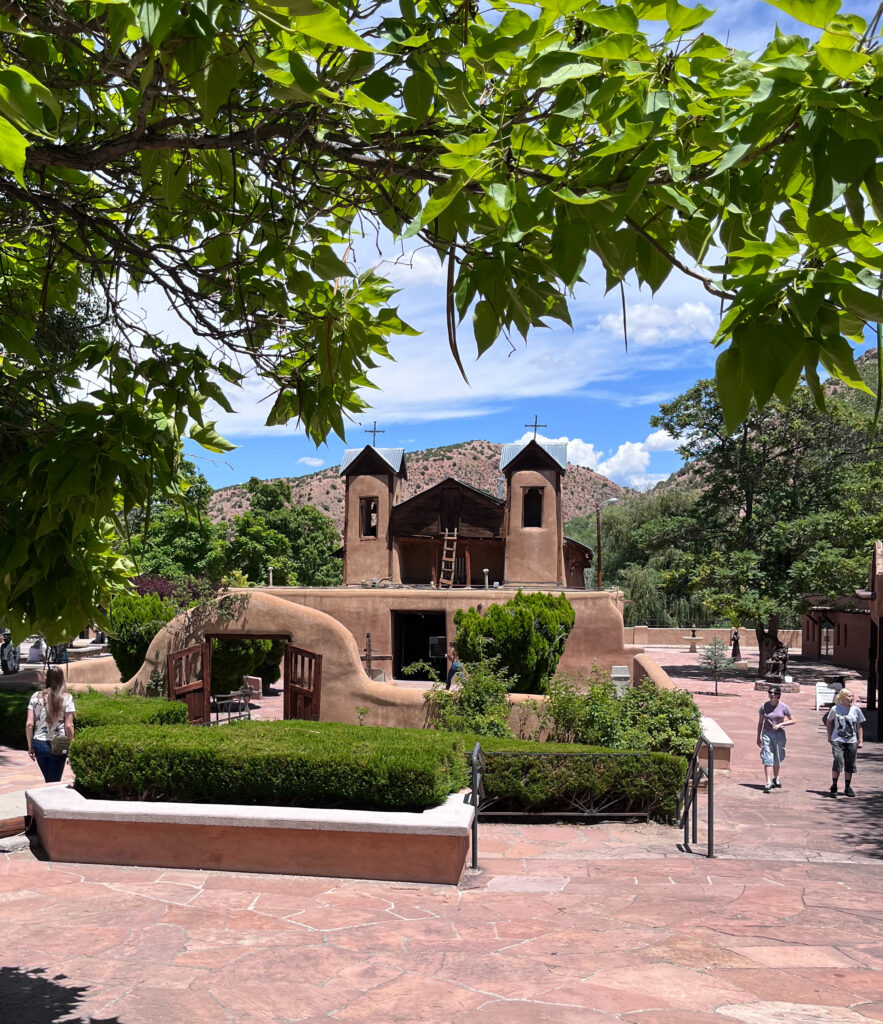
I had heard about the little church in Chimayó, New Mexico, and knew it was supposed to be special. Still, I wasn’t quite prepared for how much I would love it.
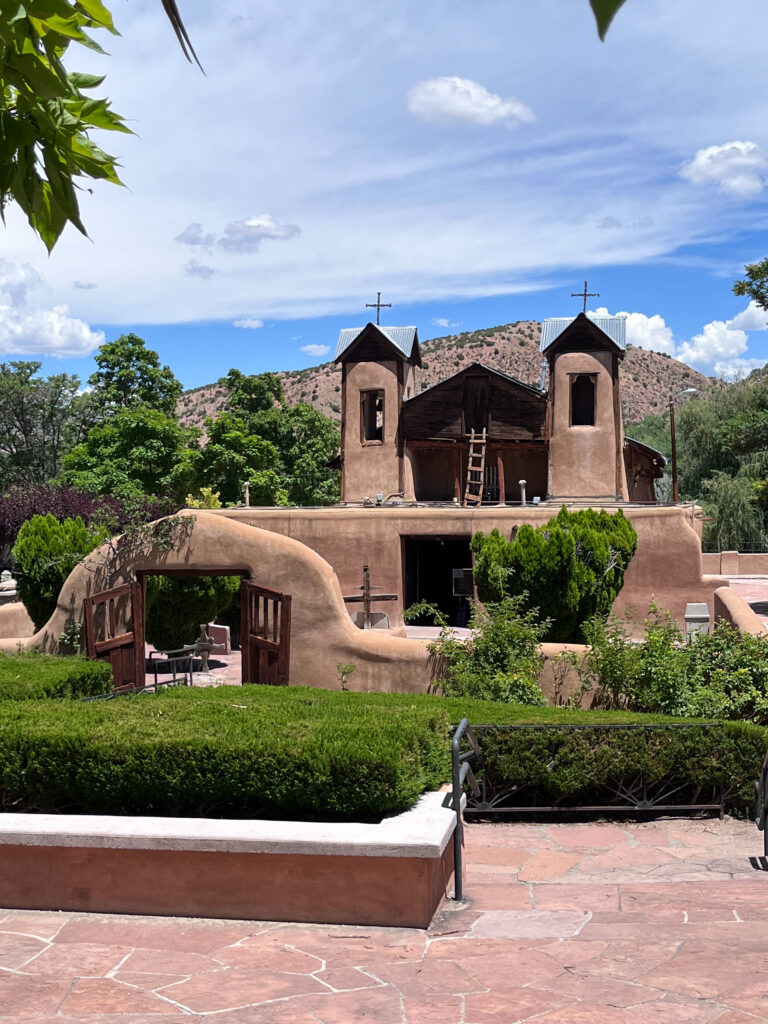
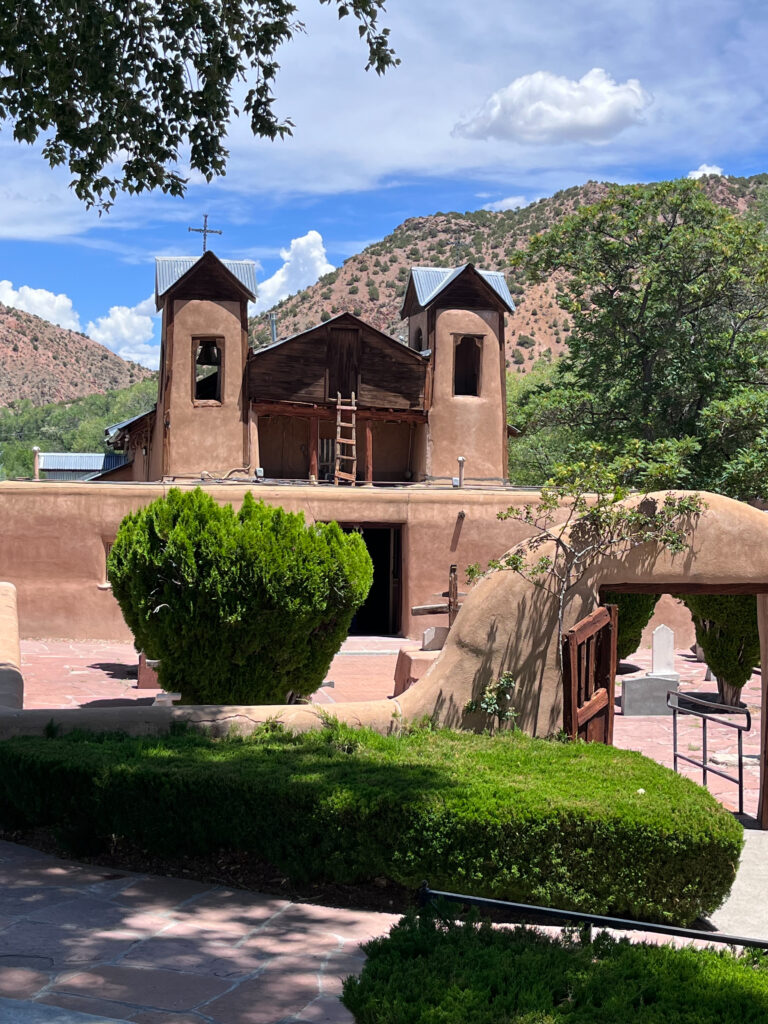
El Santuario de Chimayó sits along the High Road to Taos, surrounded by the rugged beauty of northern New Mexico. From the outside, it doesn’t look particularly grand. It’s a small adobe church with simple lines and a weathered appearance that seems to belong exactly where it is.
But there is something about this place.
The present chapel was completed in 1816, but the land had been considered sacred long before the church was built. The area was important to the Tewa people, who believed the surrounding springs and landscape had healing properties. Later, Spanish settlers brought Catholic traditions to the area, creating the layers of history and faith that are still part of Chimayó today.
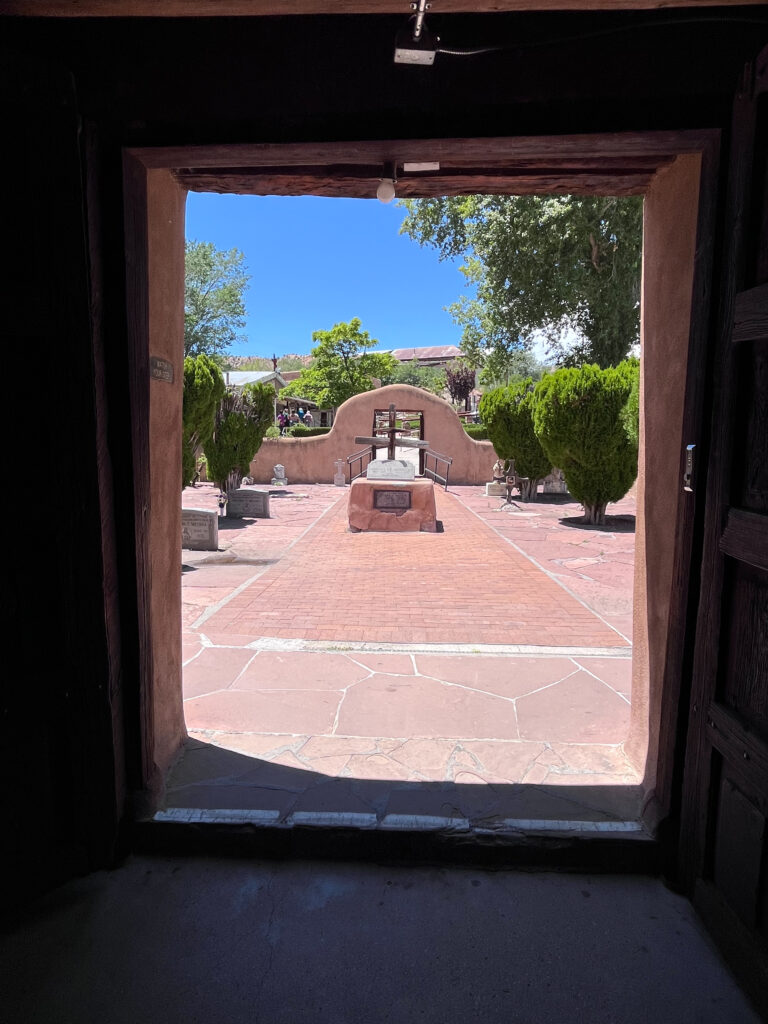
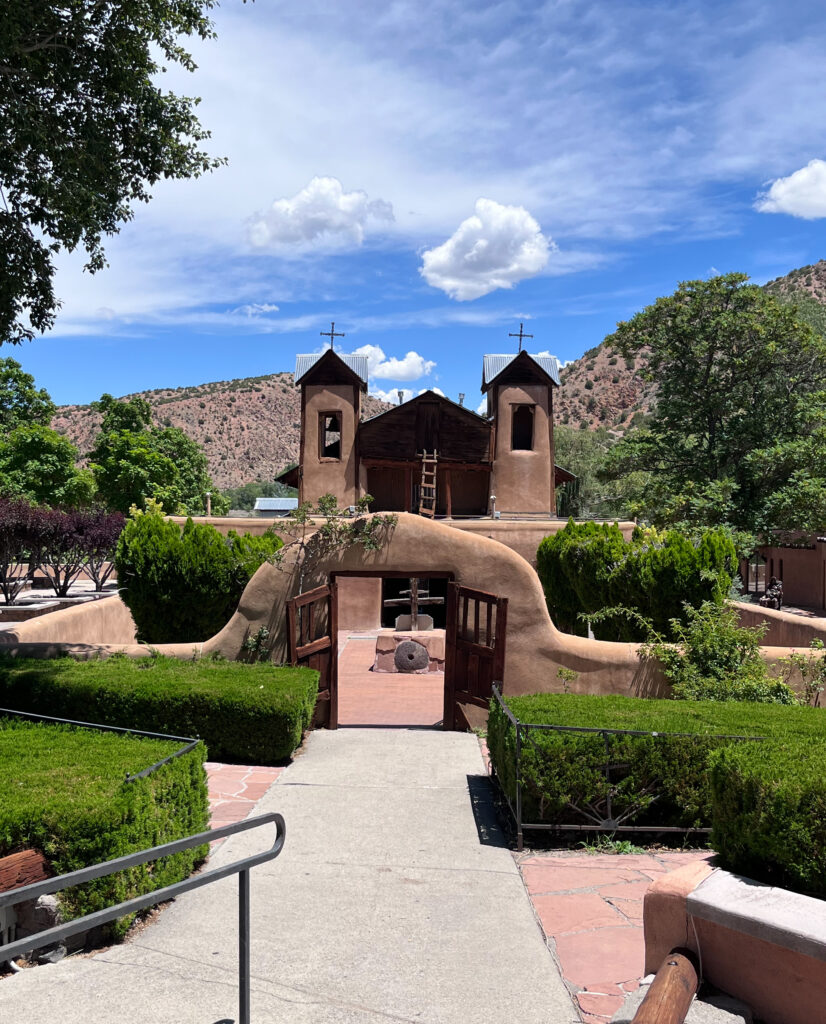
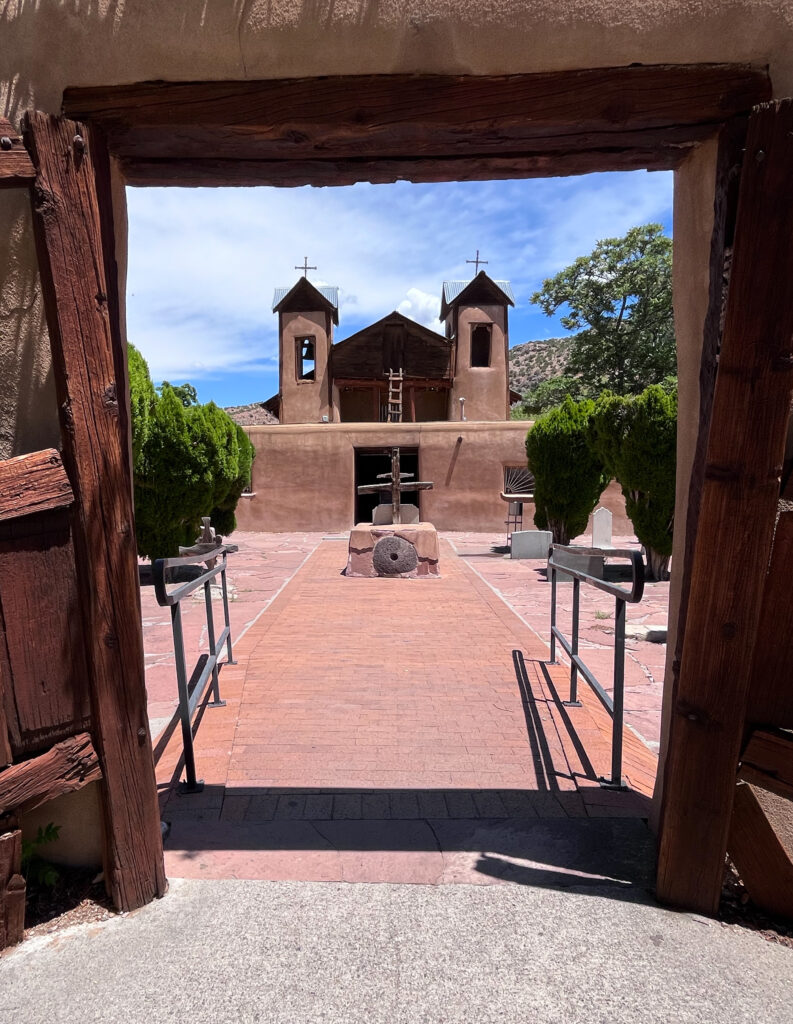
The story behind the sanctuary is almost as fascinating as the church itself.
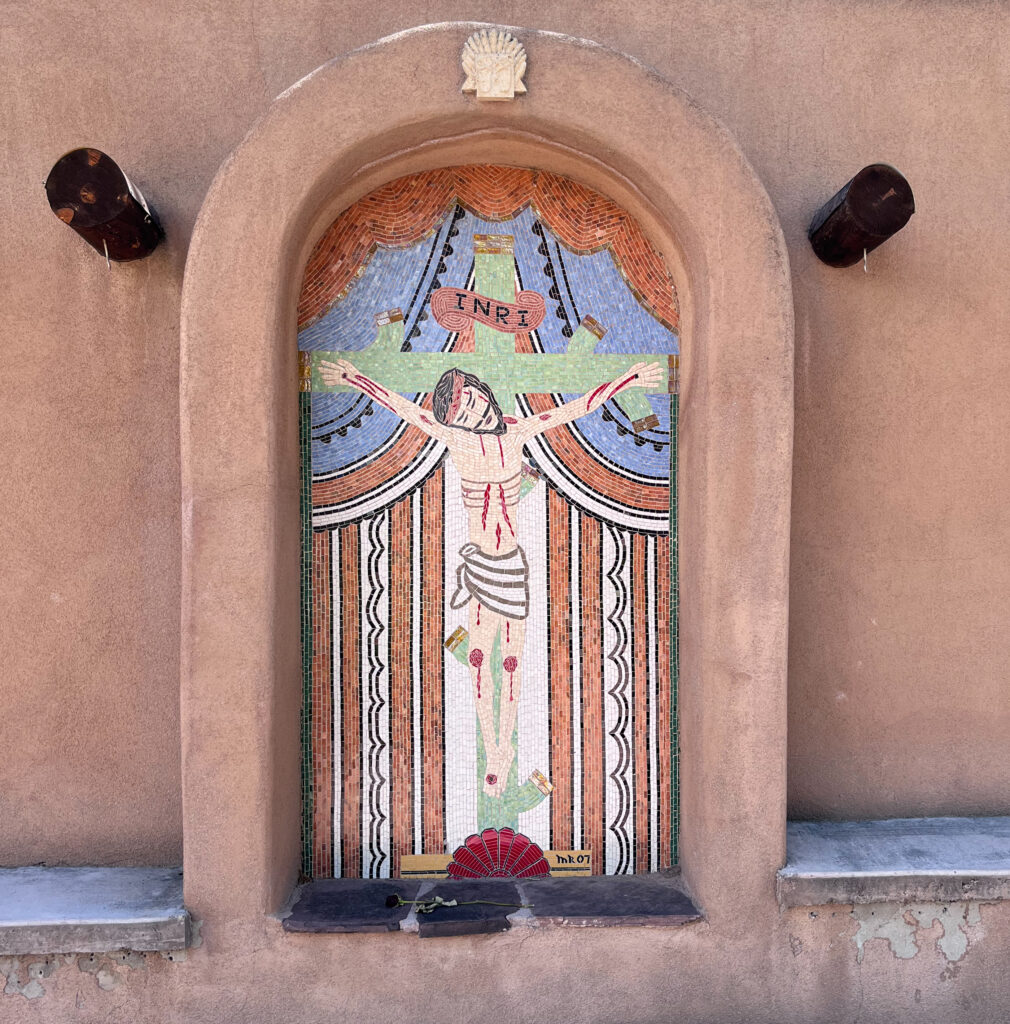
According to tradition, in 1810 a local man named Bernardo Abeyta saw a mysterious light coming from the ground on Good Friday. When he investigated, he discovered a crucifix buried in the earth.
The crucifix was taken to a nearby church, but the next morning it was gone. Somehow, it had returned to the spot where Abeyta had found it.
The crucifix was moved again.
Again, it returned.
Eventually, people decided that the crucifix wanted to remain in Chimayó, and Abeyta petitioned for a chapel to be built at the site. That chapel eventually became the sanctuary that stands there today.
I love stories like this—not necessarily because I know what I believe about them, but because they become part of the character of a place. And this little church has had more than 200 years for its stories to settle into the walls.
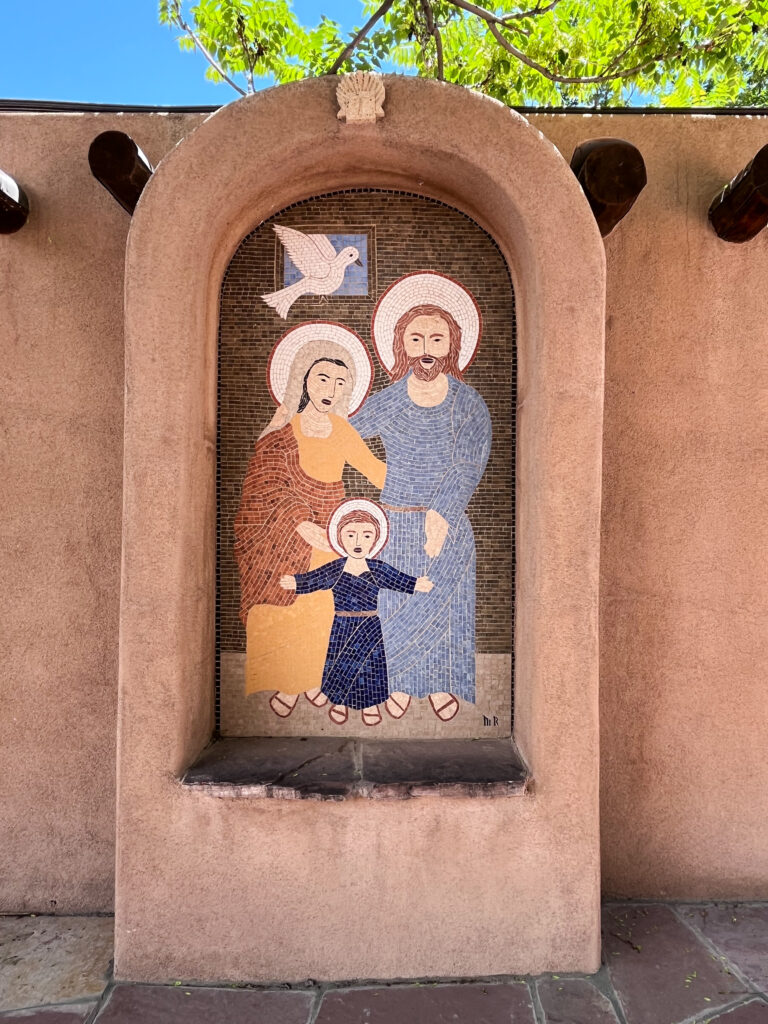
Inside, the sanctuary is intimate and beautifully decorated with traditional New Mexican religious folk art. The carved and painted santos, the altar, and the handmade details gave me plenty to look at. Nothing felt overly polished or grand. It felt personal and deeply rooted in the culture of the area.
One of the most unusual parts of the sanctuary is a tiny room called El Pocito, or “the little well.” A small hole in the floor contains earth that pilgrims have traditionally taken for its healing properties.
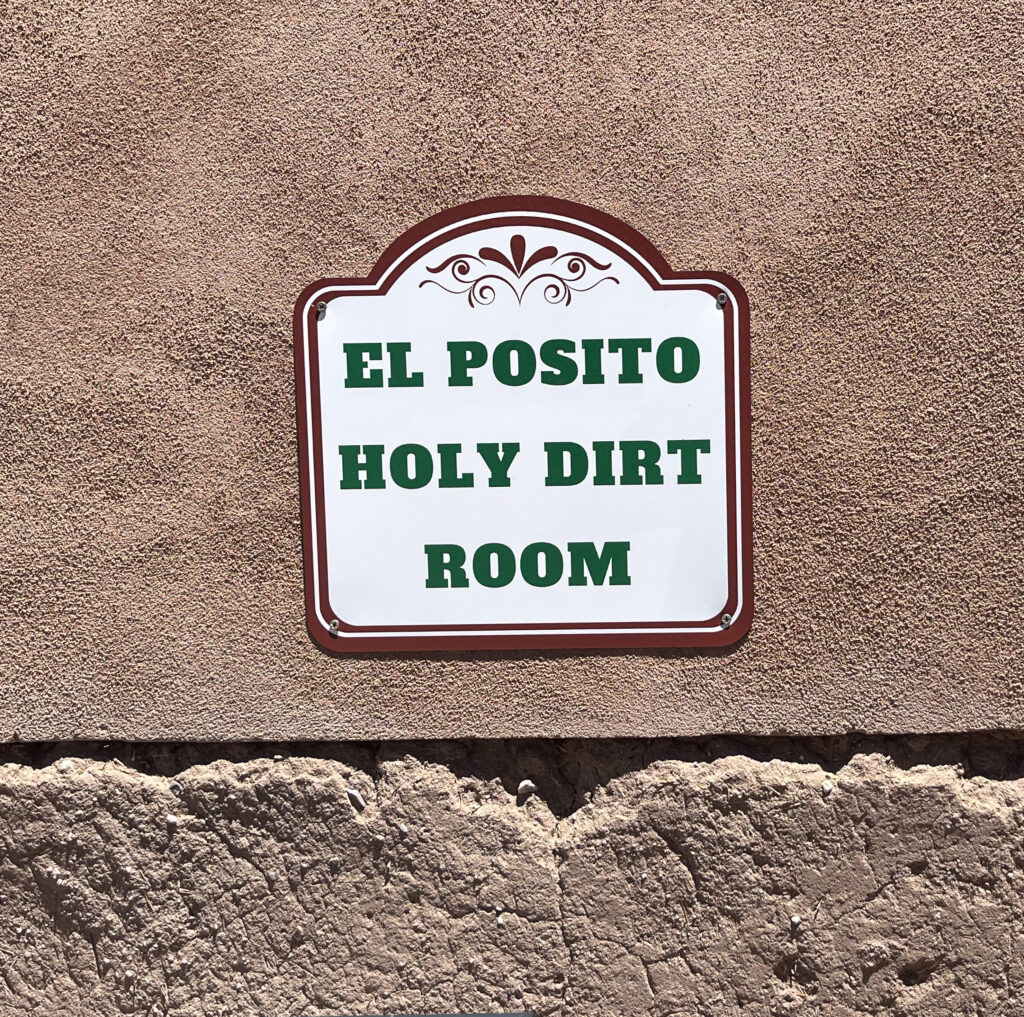
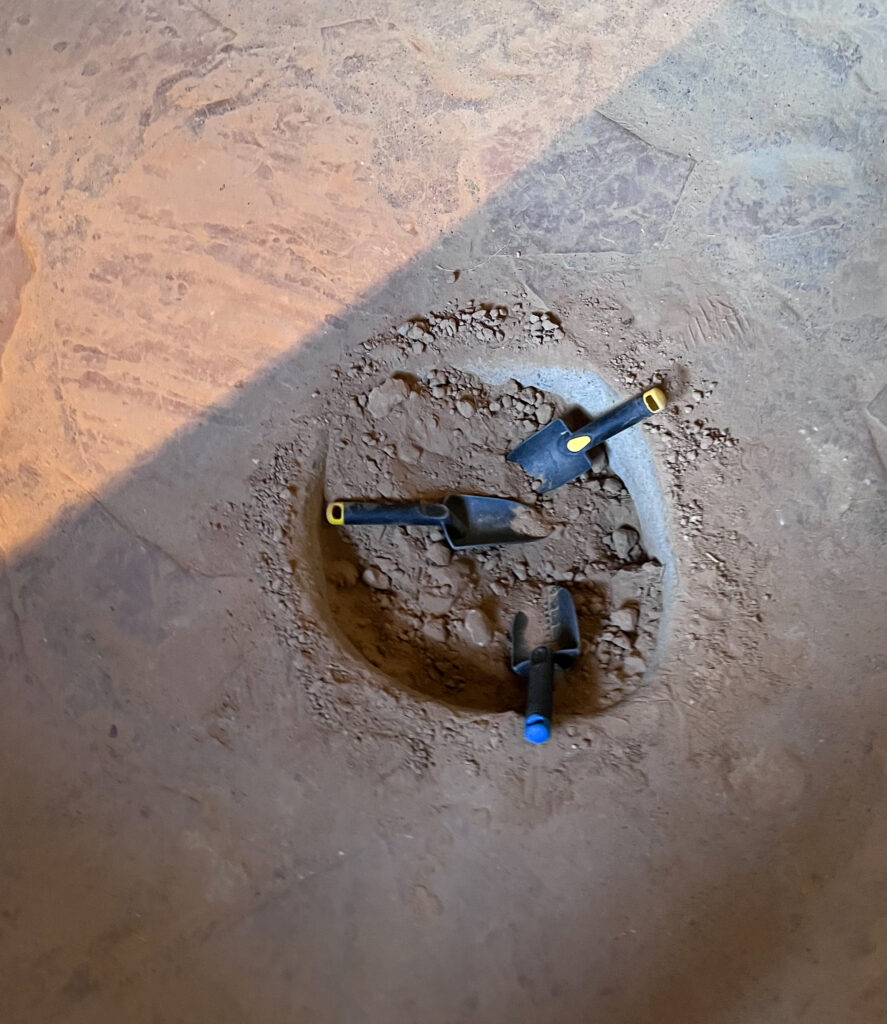
The tradition goes back generations, and people still come here seeking healing and comfort.
There is something especially moving about that. Whether someone believes the earth itself has healing power or simply finds comfort in the faith and ritual surrounding it, people have been coming here for a very long time with their hopes, worries, gratitude, and prayers.
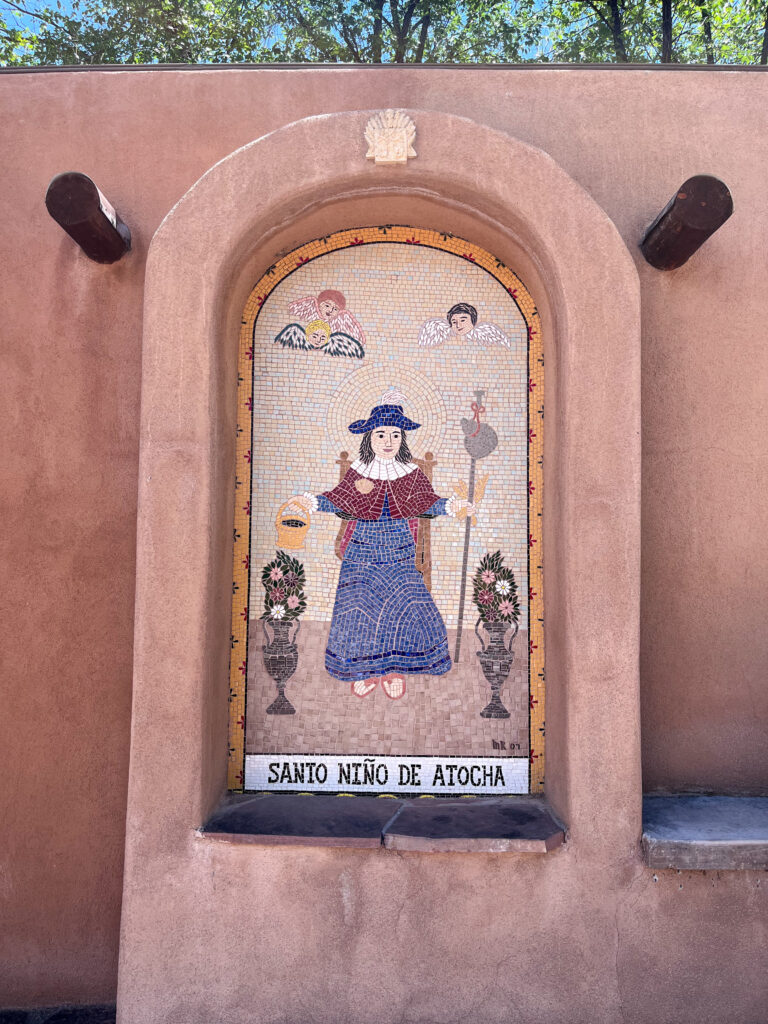
I also visited the nearby Holy Child of Atocha Chapel, often called the children’s chapel. It was smaller and quieter, but filled with its own interesting details. I loved wandering around the grounds and taking in all the little details.
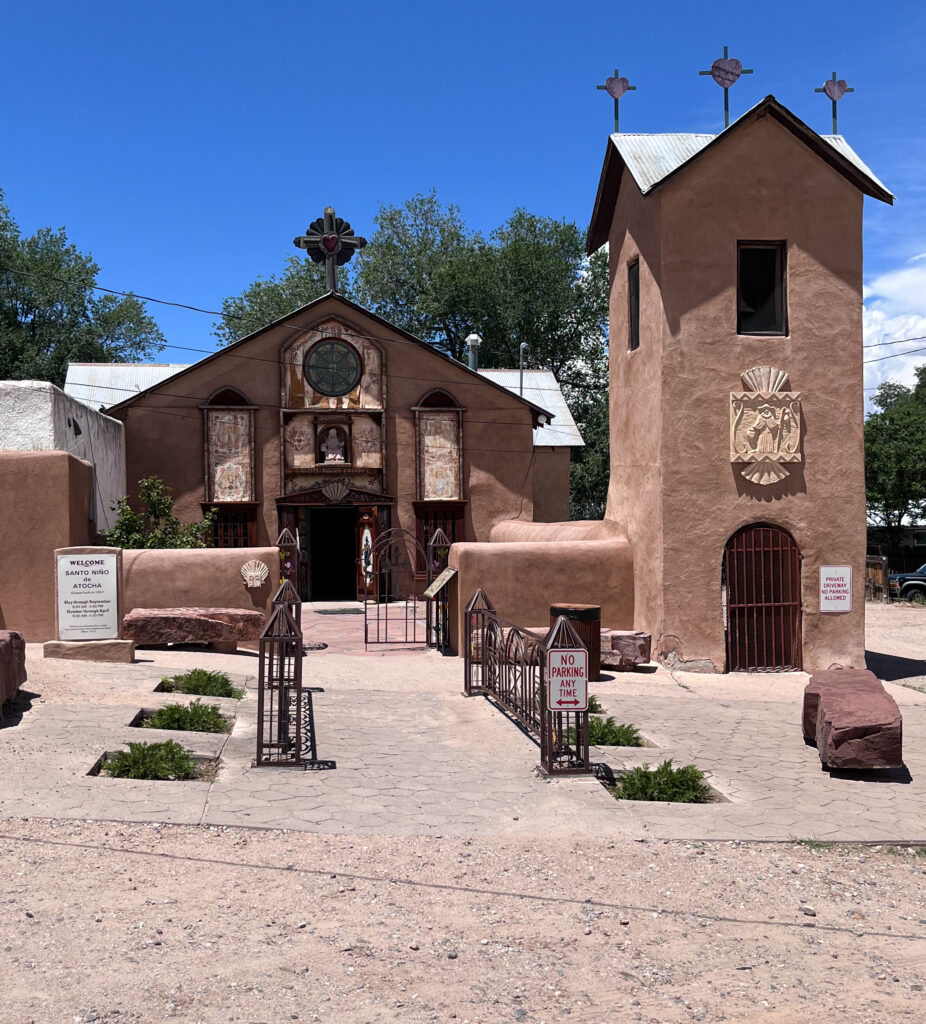
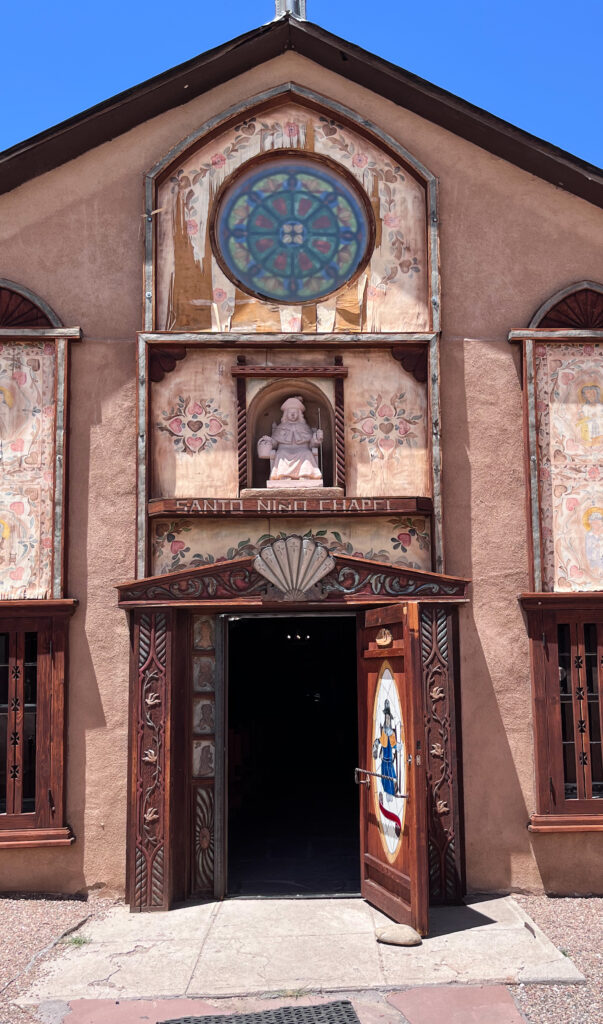
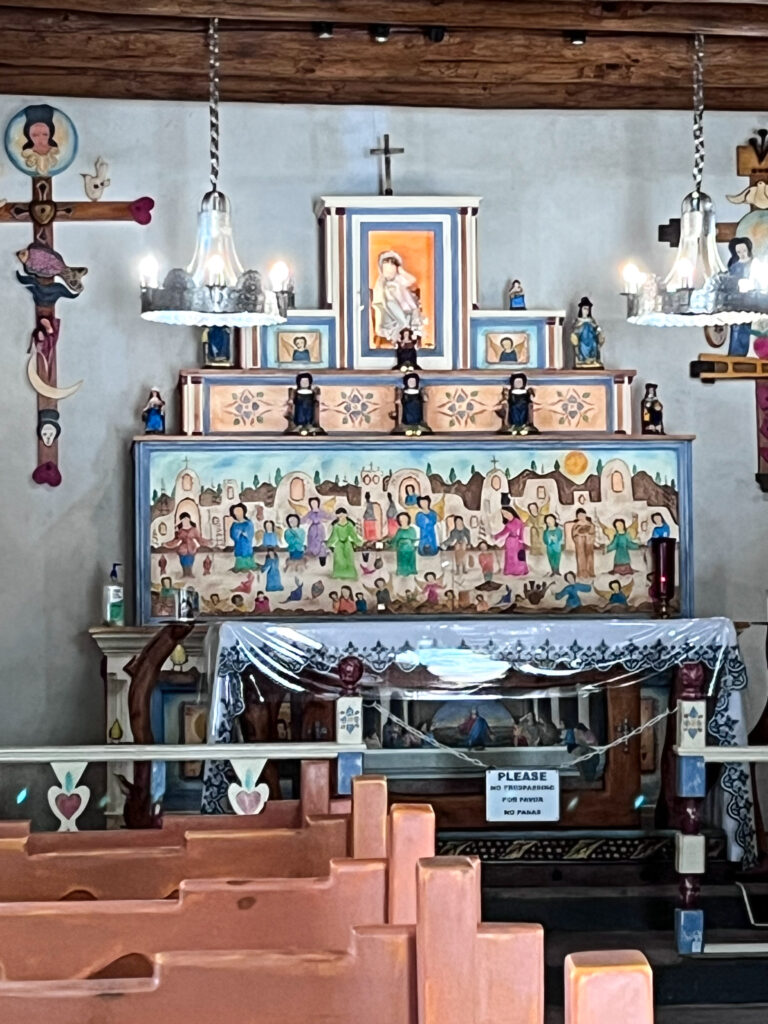
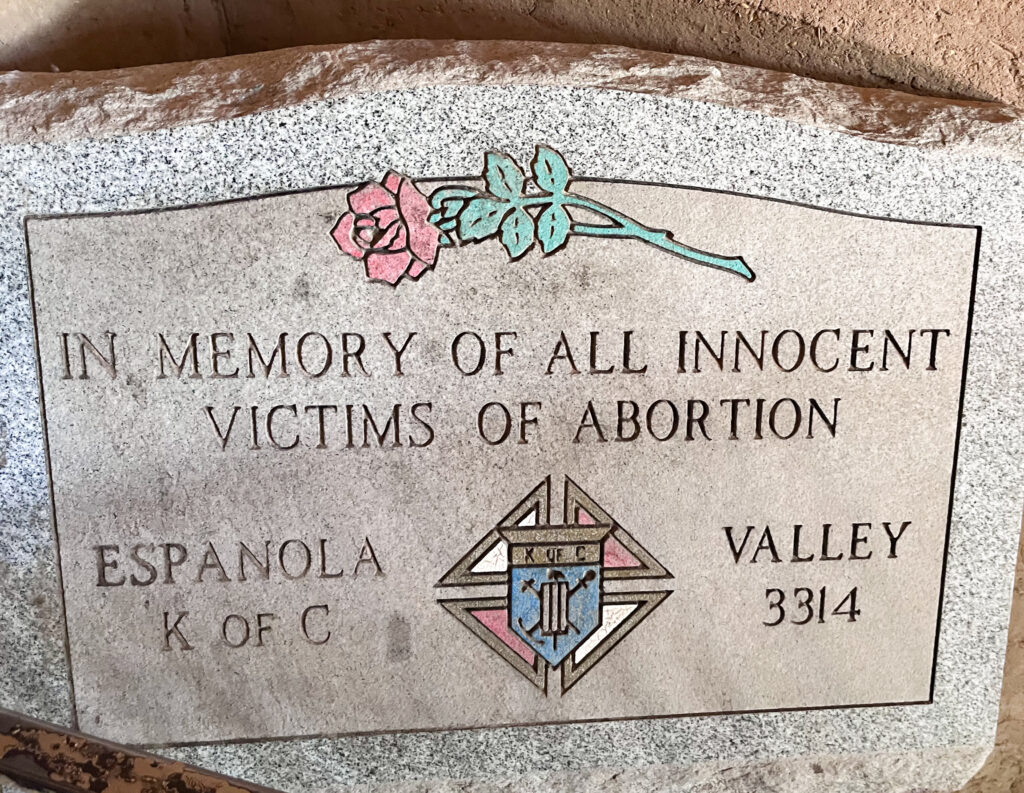
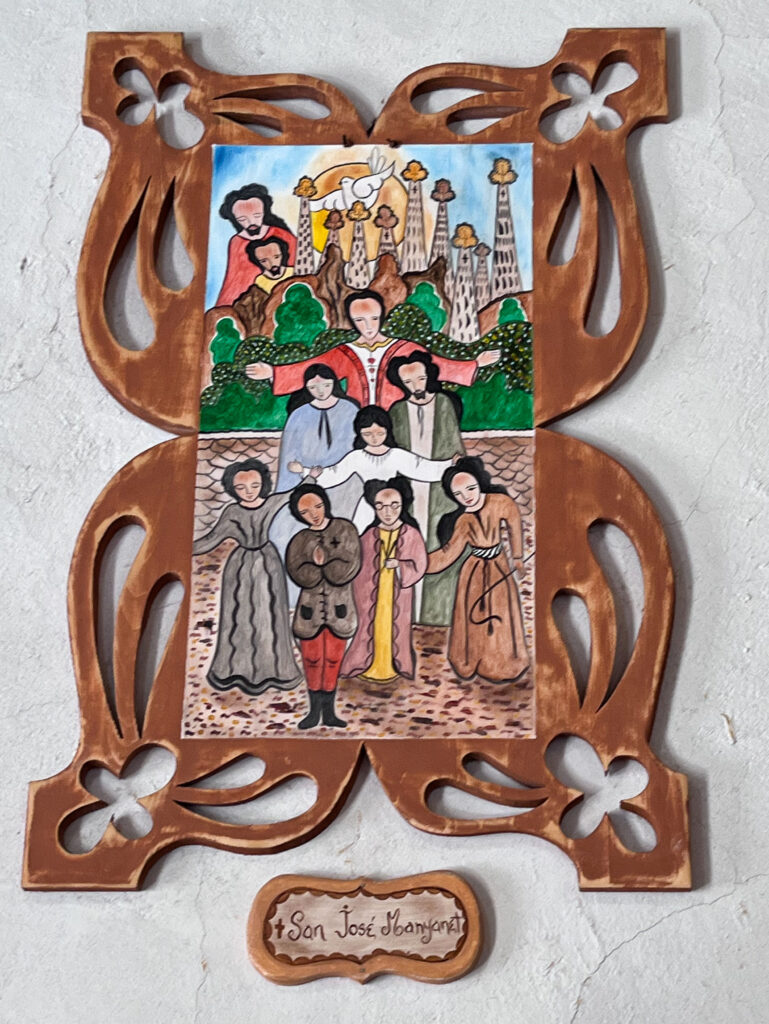
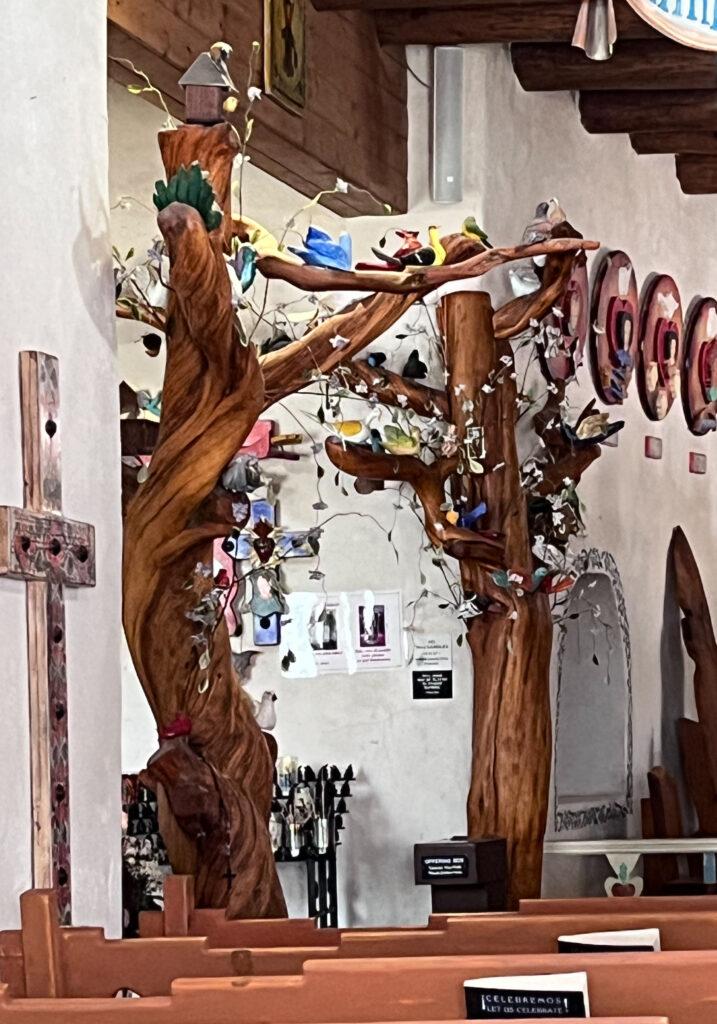
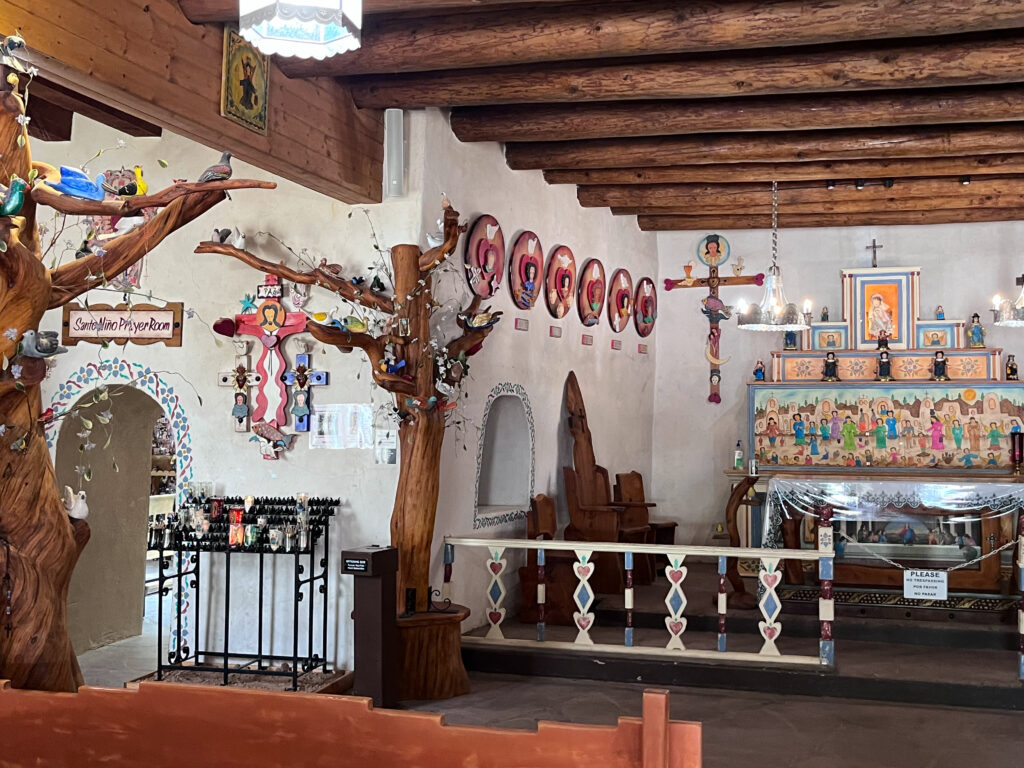
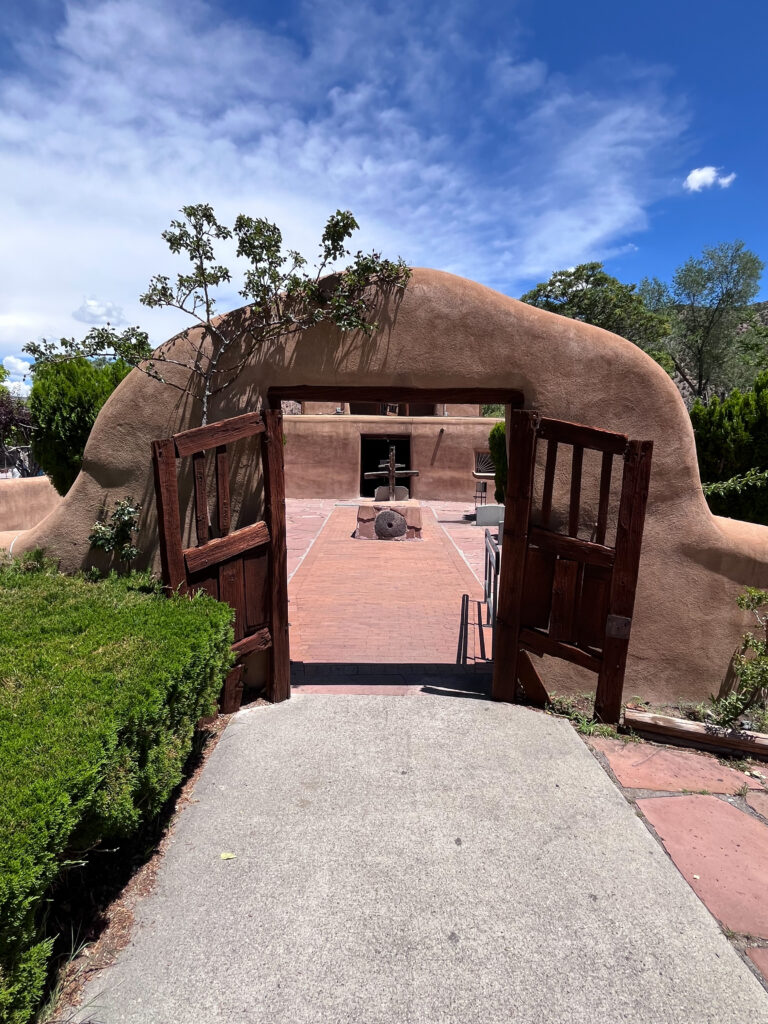
And that’s really what I enjoyed most about Chimayó. It wasn’t just the church itself. It was the whole setting—the adobe buildings, the courtyards, the mountains in the distance, and the feeling that I was standing in a place where generations of people had come before me.
I know I didn’t see everything.
There are other historic chapels in the area, and I didn’t explore nearly as much of Chimayó as I could have. In fact, learning more about the history afterward made me realize just how much I missed.
Maybe that’s okay.
Sometimes a place leaves you with a little unfinished business.
I’d like to return during Holy Week someday and experience the pilgrimage to El Santuario de Chimayó. Thousands of people make their way to the sanctuary on foot, some walking many miles as an act of faith, gratitude, or a search for healing. I think there would be something powerful about being part of that journey—not simply arriving at the church, but experiencing the walking, the quiet moments, and the shared purpose along the way.
For now, though, I’m grateful I stopped.
I went expecting to see an old New Mexico church. Instead, I found a place where history, art, faith, and tradition have been woven together for generations.
Perhaps that’s what I loved most about Chimayó. It reminded me that sometimes the places that stay with us aren’t the grandest or most spectacular. Sometimes they’re the quiet ones that invite us to slow down, look a little closer, and wonder about all the people who stood there before us.
I have a feeling I’ll be standing there again someday.