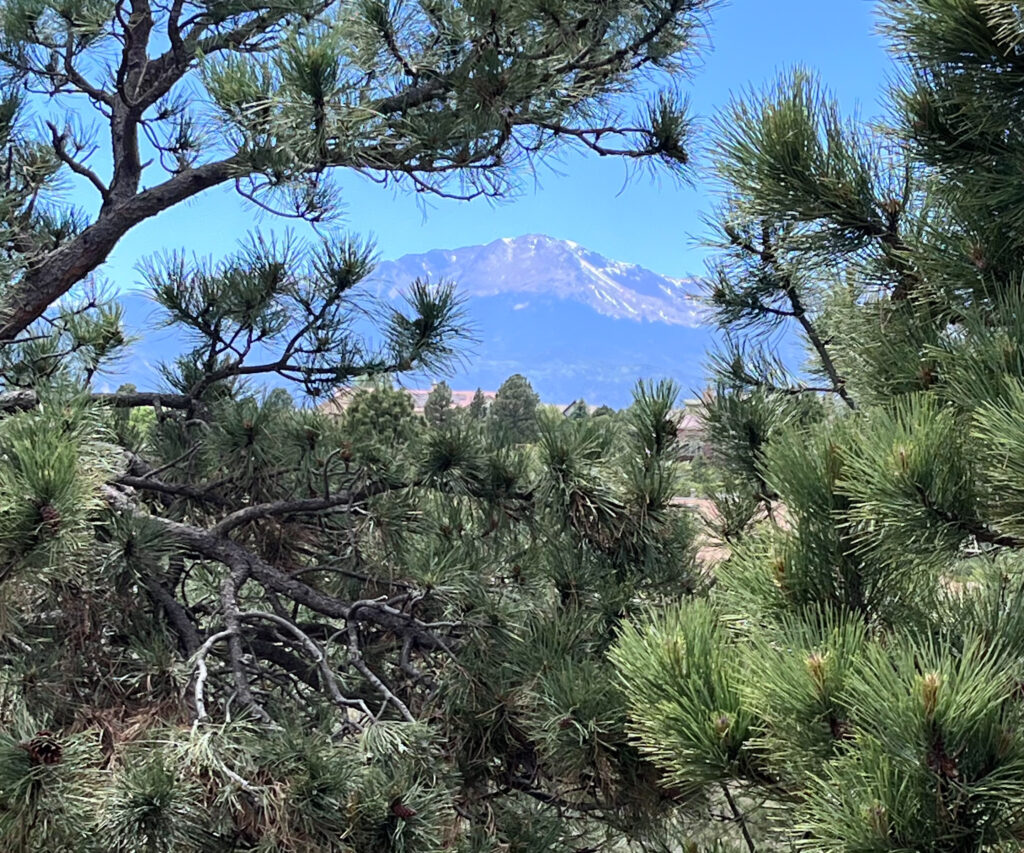
Well, the day finally came to leave Colorado. Over the past several weeks, the mountains had become part of my daily life, always there in the distance no matter where I went. I’ll miss the cool mornings, the “Christmas trees” in the landscaping, and the simple comfort of waking up to mountain views. Colorado had begun to feel like home, and I wasn’t quite ready to say goodbye.
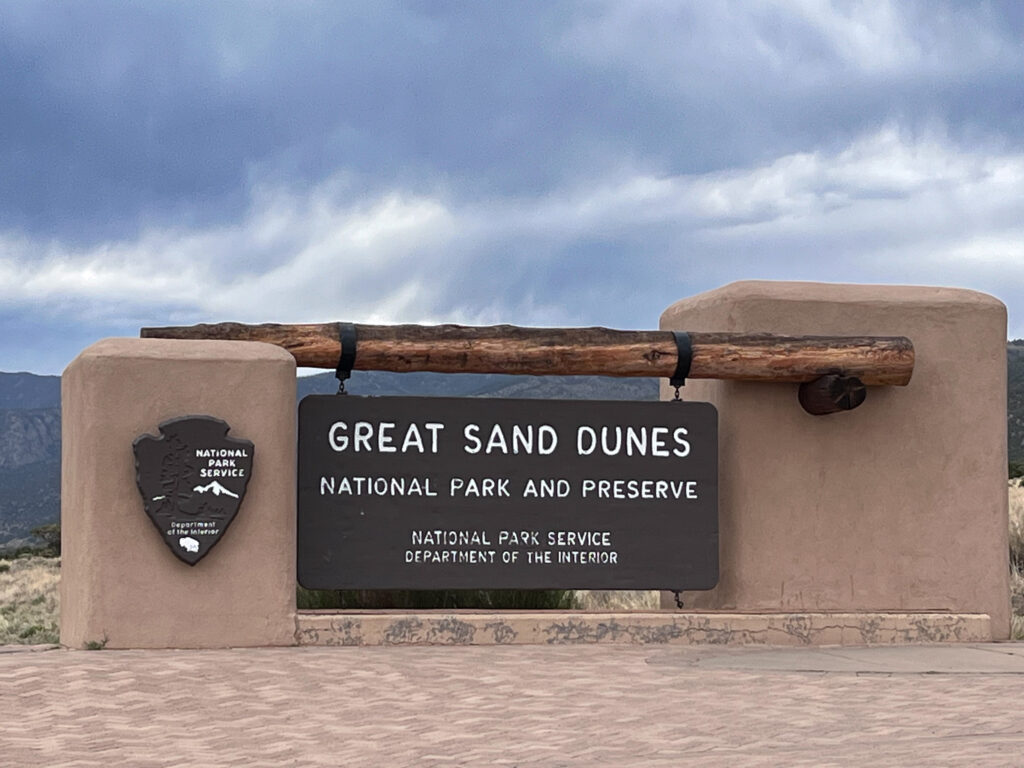
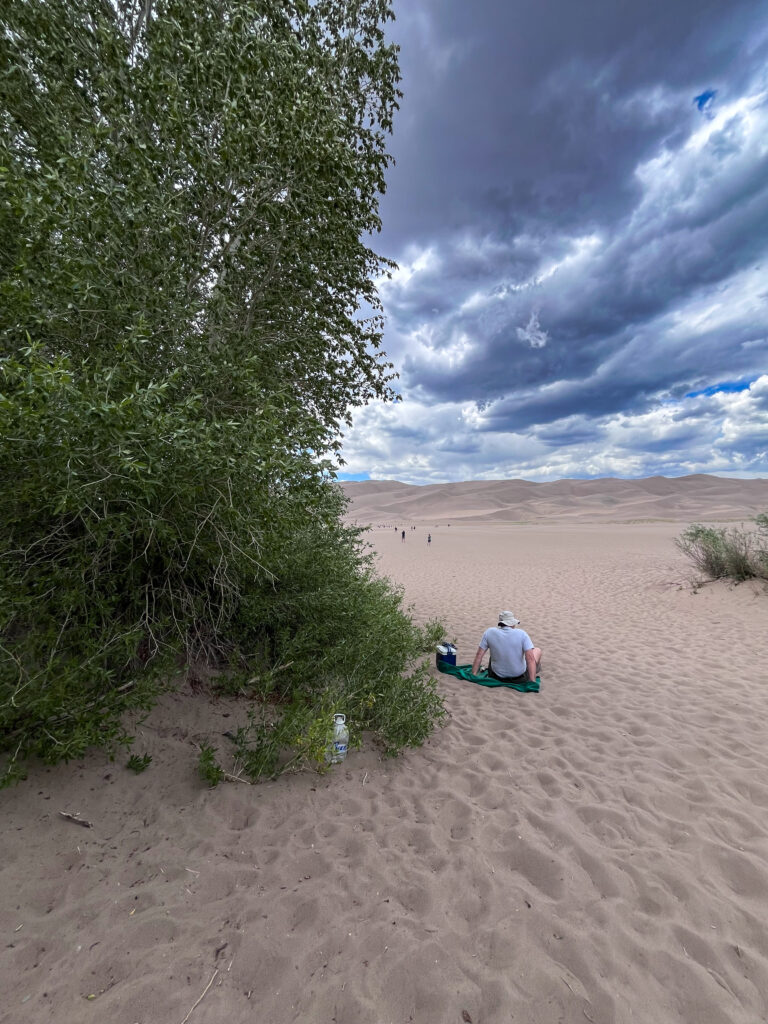
On my way out, I decided to visit Great Sand Dunes National Park. The drive from Colorado Springs seemed incredibly long as I meandered up to a higher elevation. When I finally reached the park, it was so odd to see massive sand dunes right at the base of the mountains. A group of young people had just finished sandboarding down the dunes and were loading up their car. I can only imagine how challenging it must have been to climb the dunes multiple times. I was content just to walk in the dunes a little and take photos.
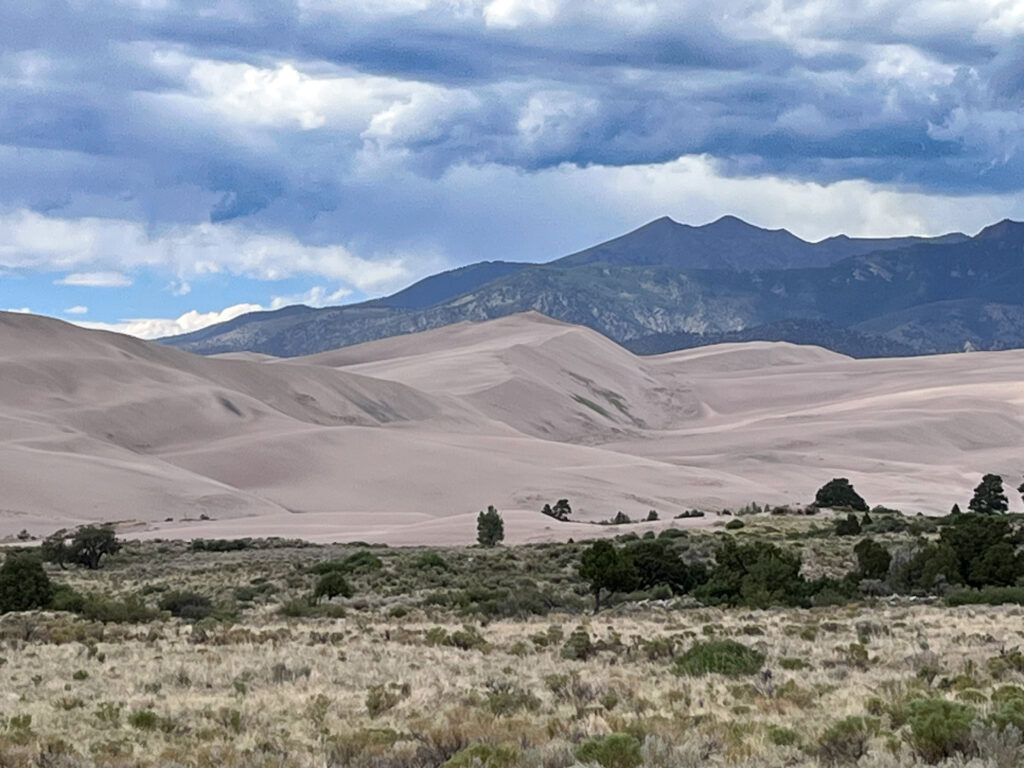
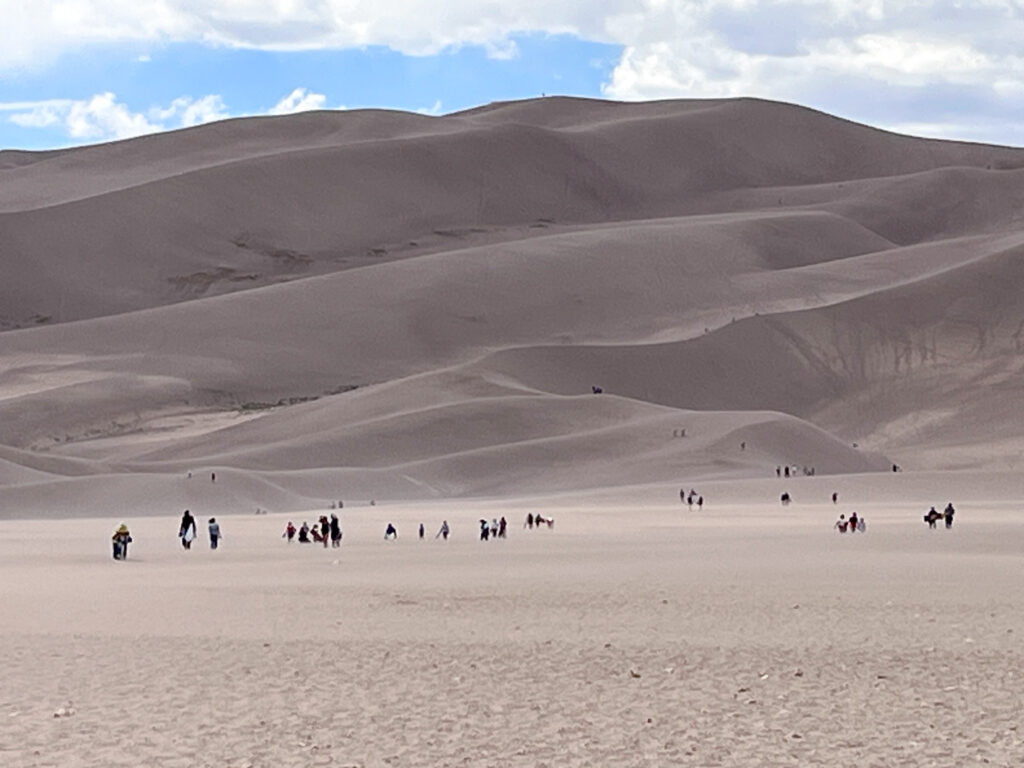
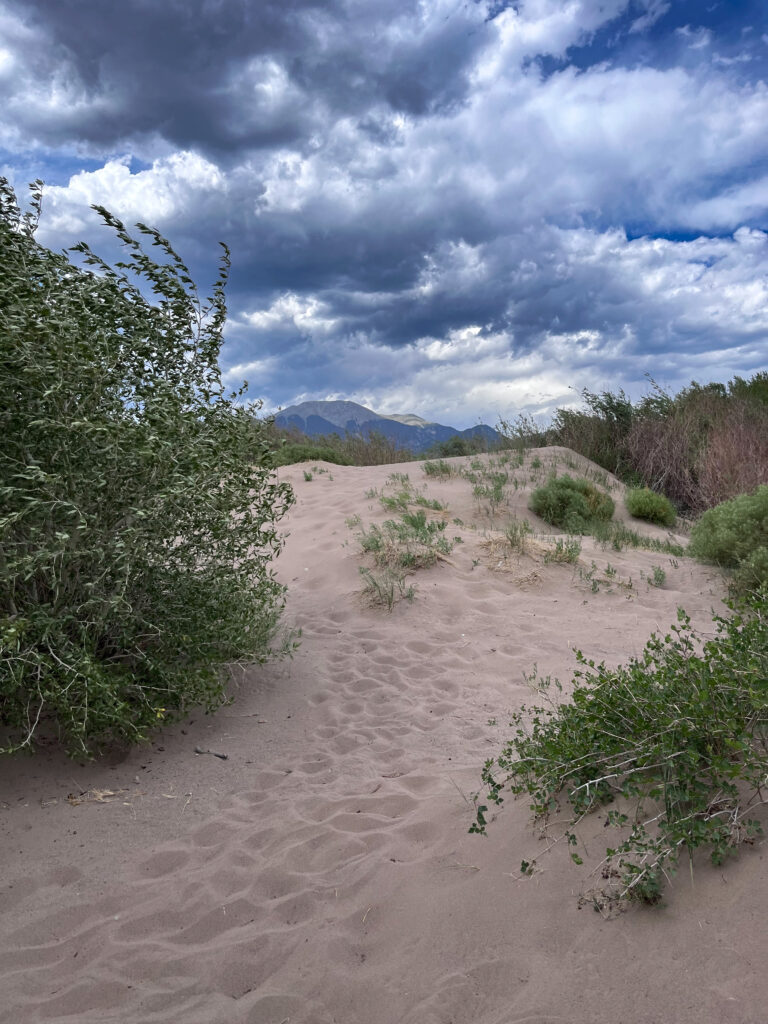
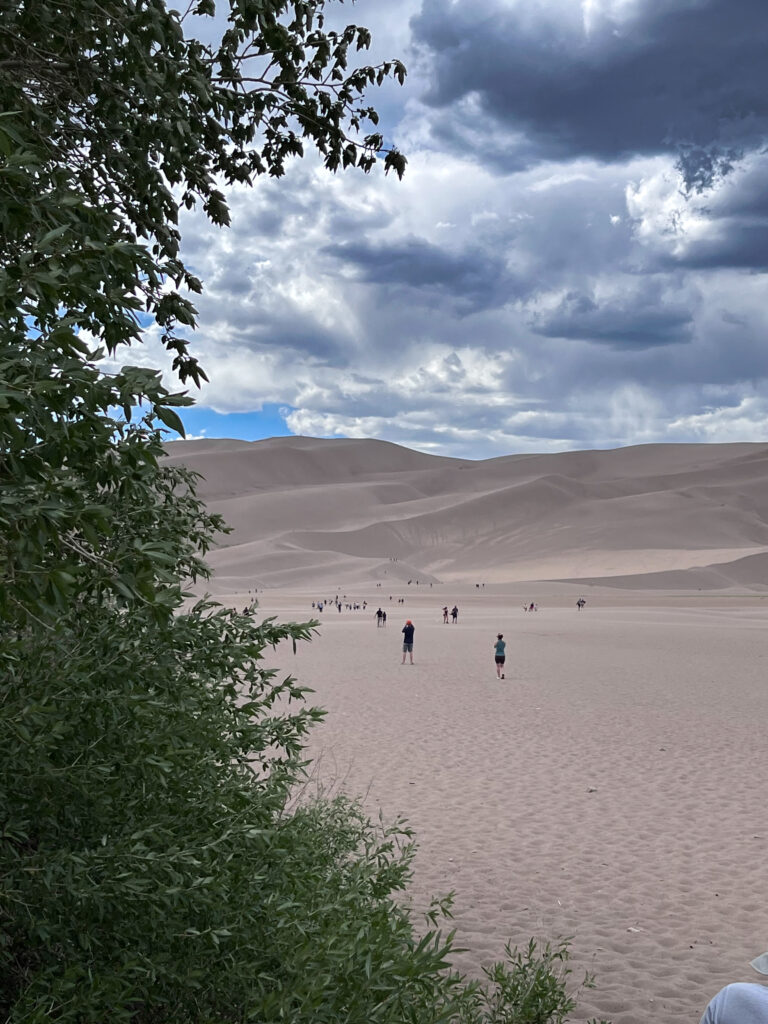
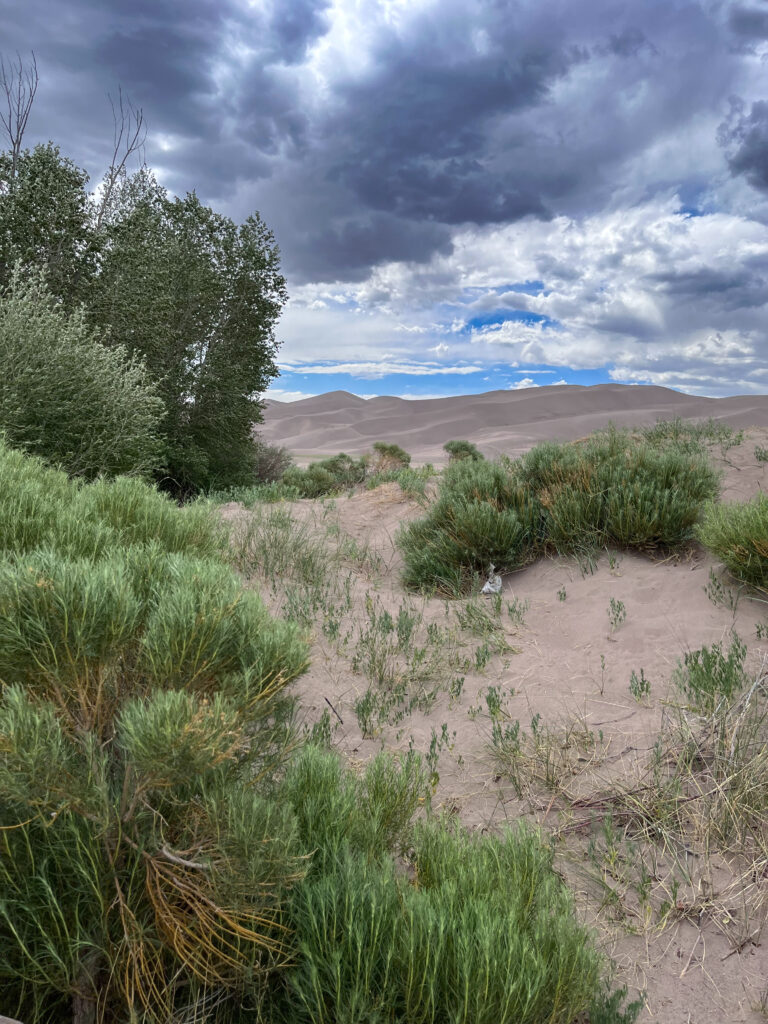
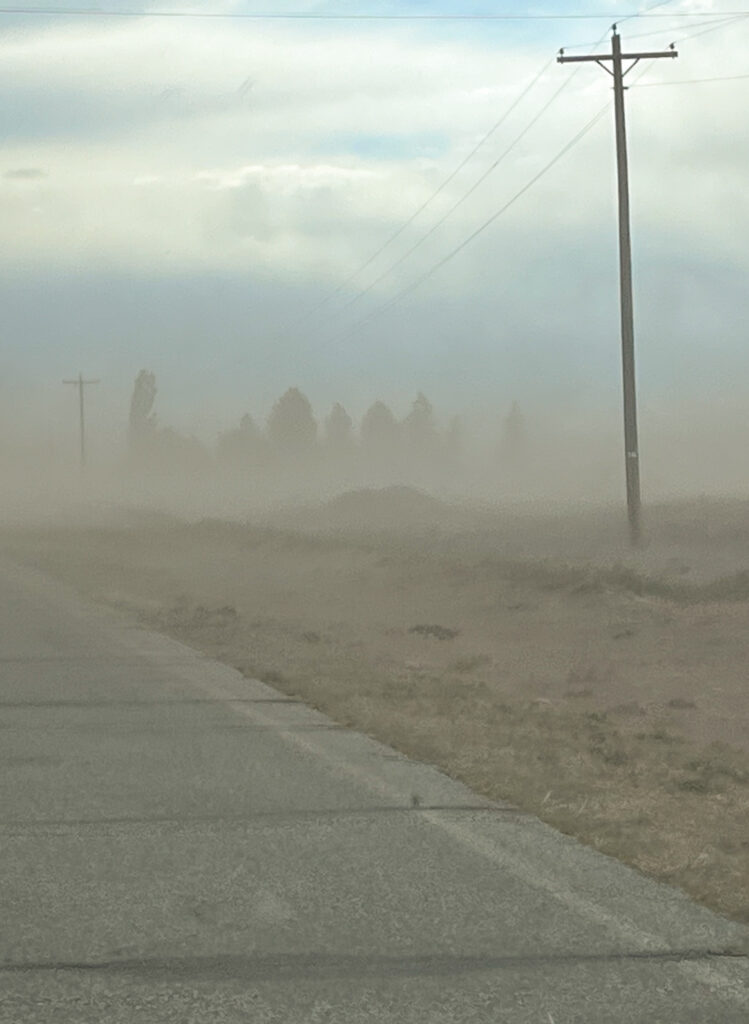
The oddness of the dunes was just the beginning of the odd sights I would see over the next 24 hours. The drive from the park took me across the San Luis Valley, which looked sandy and desert-like. Oddly enough, it is also a thriving farming and ranching region. As I drove along looking at fields of crops interspersed with fields of sand, I drove into a sandstorm that was intense enough that I had to slow down considerably just to see the road ahead.
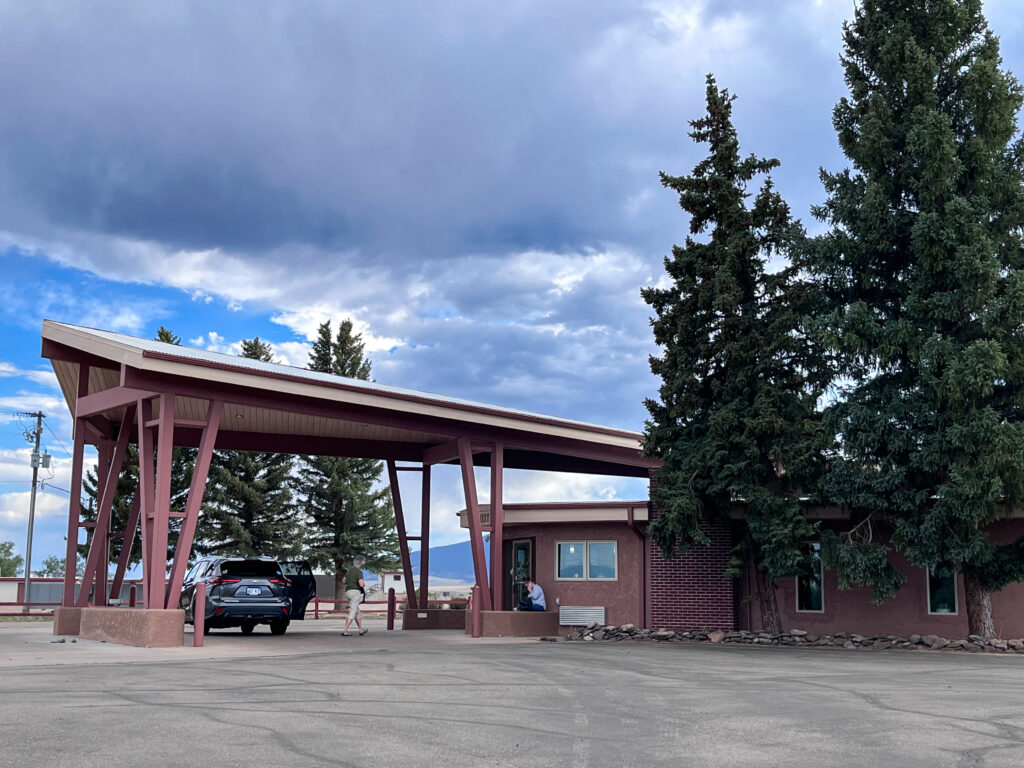
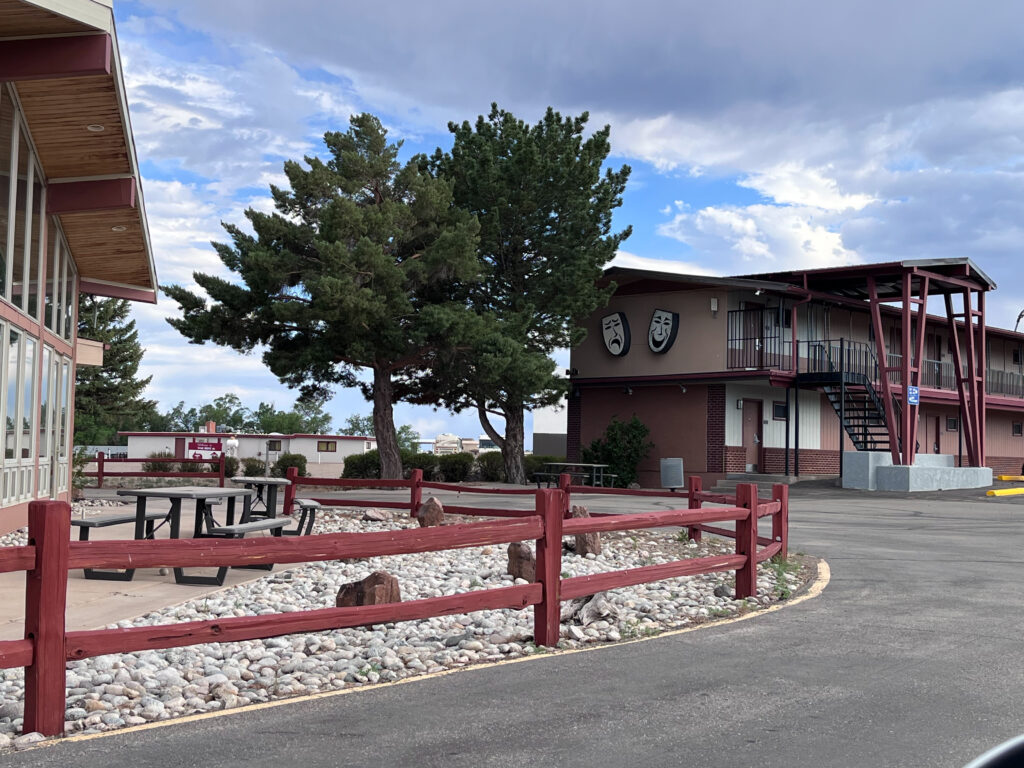
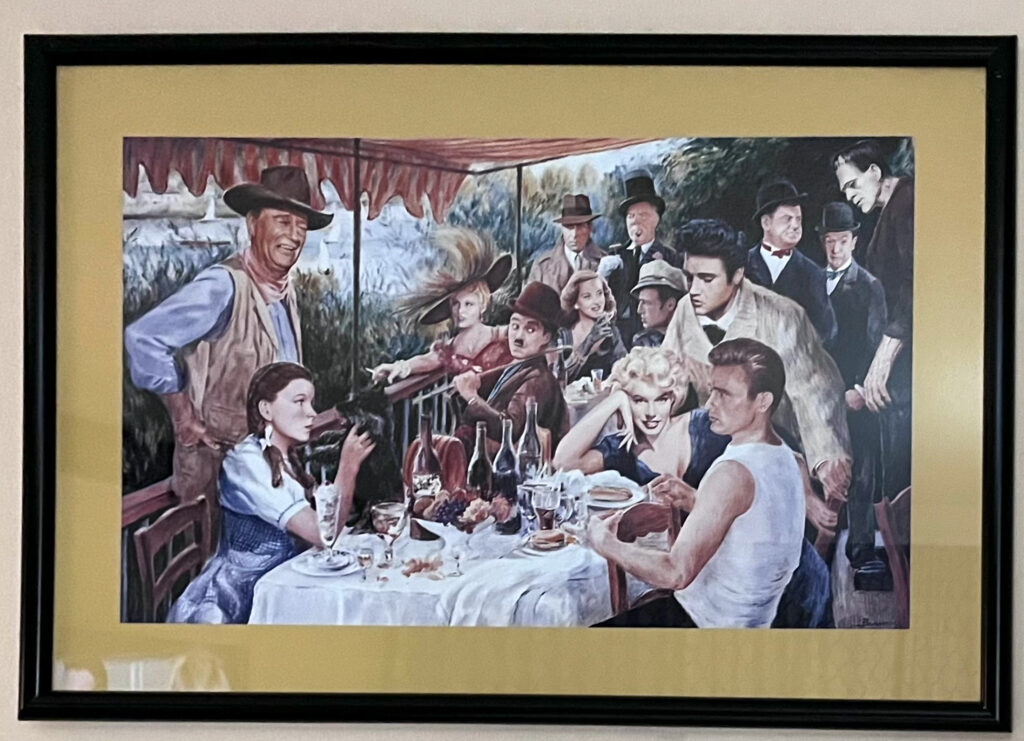
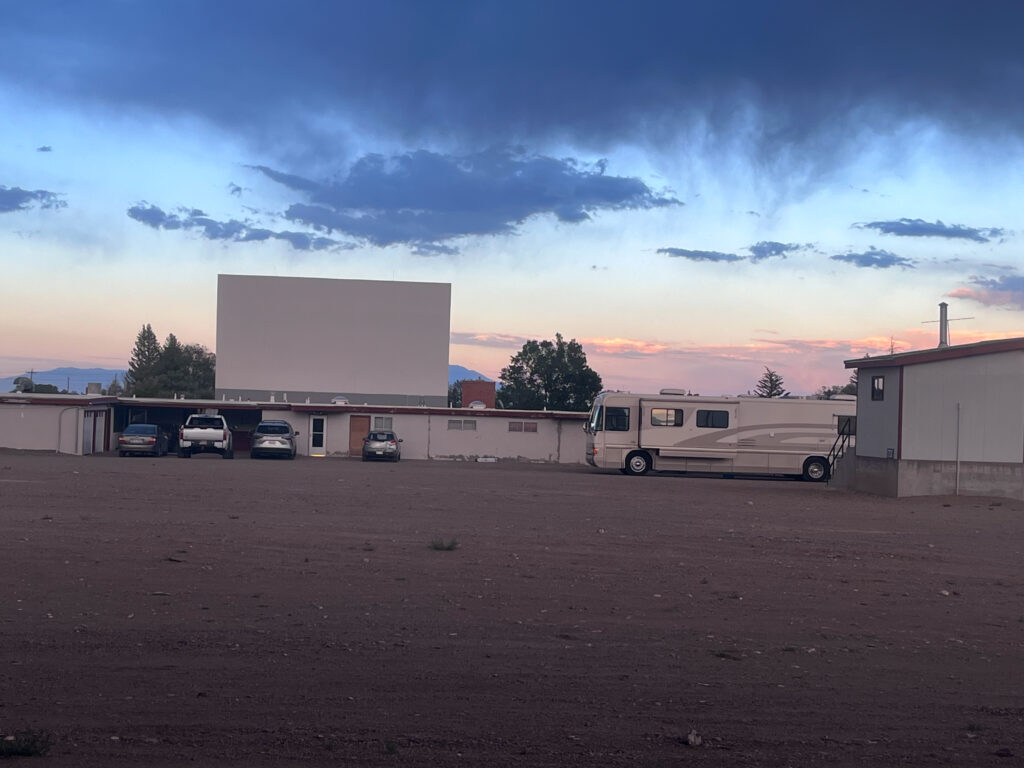
After about an hour, I arrived at my oddly unique hotel for the night. The hotel had a very retro vibe and the exterior of the lobby looked like architecture right out of the fifties. The rooms all opened to the parking lot, and the back had large windows so that guests could watch the drive-in movie owned by the hotel. All of the rooms had a speaker so that you could hear the movie. Each room was named after a movie star. Mine was Spencer Tracy. It felt like stepping back into another era, and I couldn’t help but imagine families pulling in for the night during the heyday of American road trips.
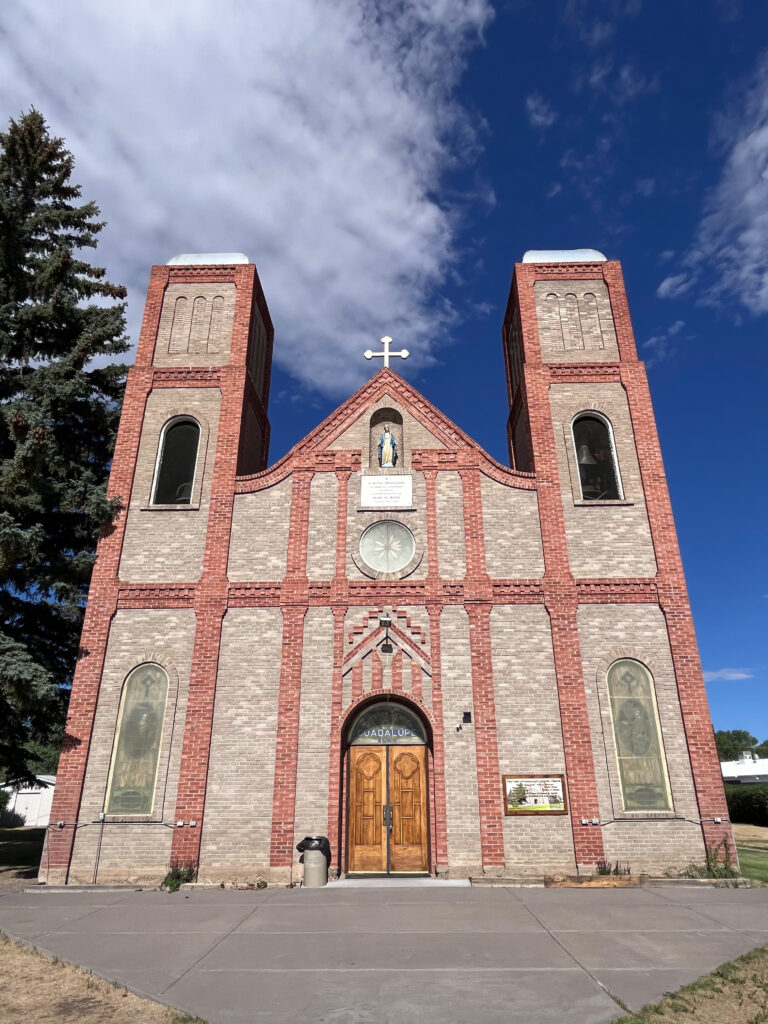
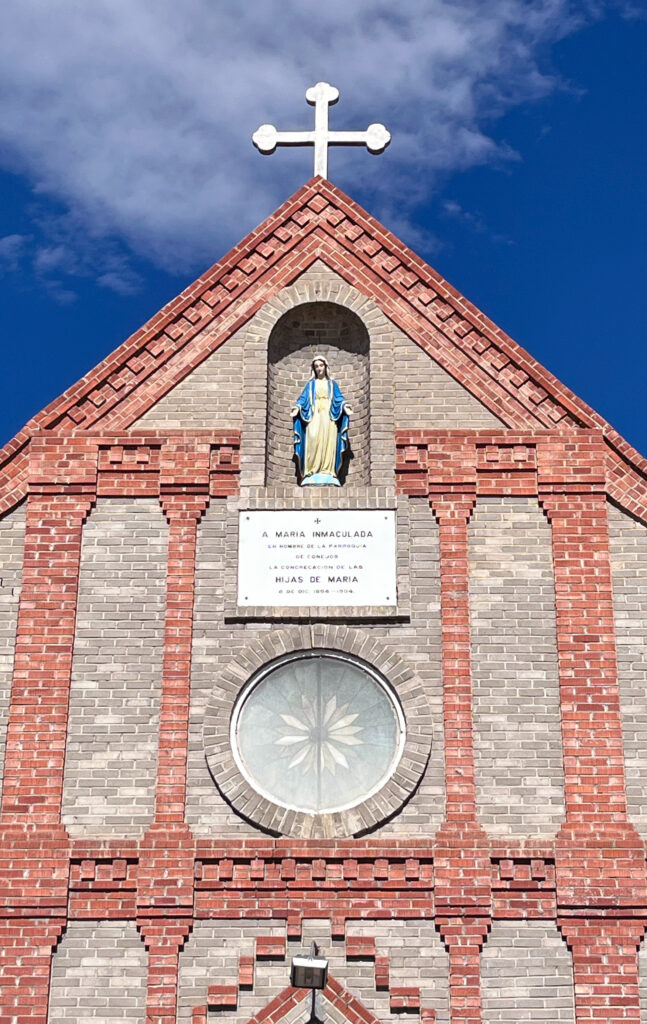
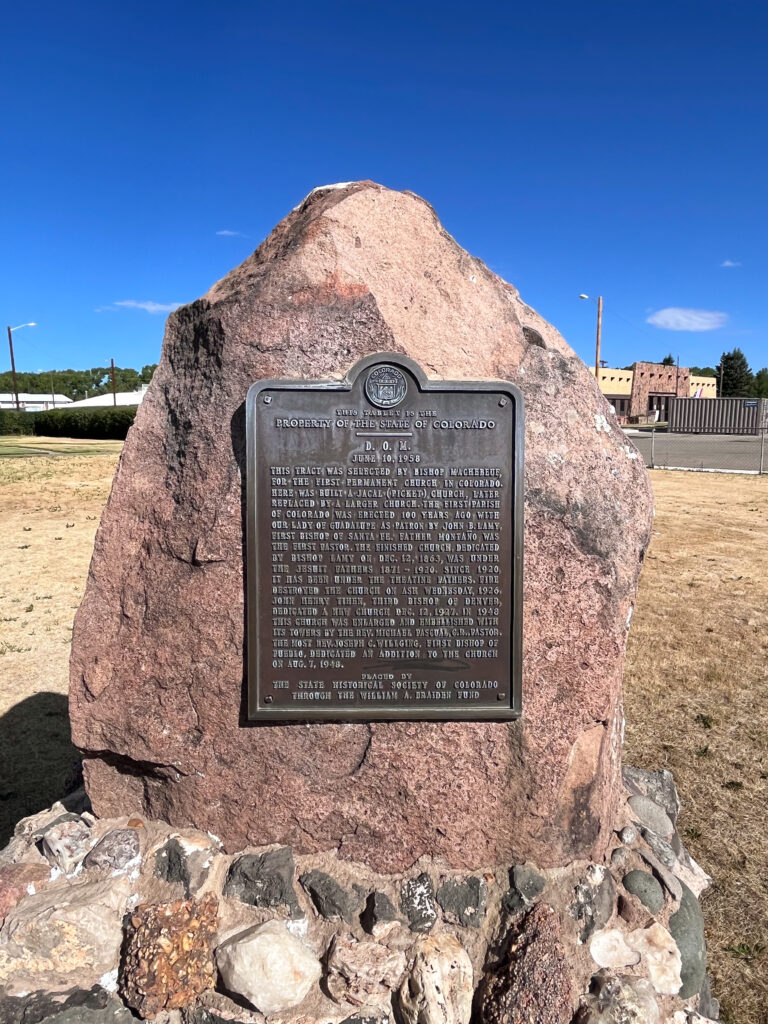
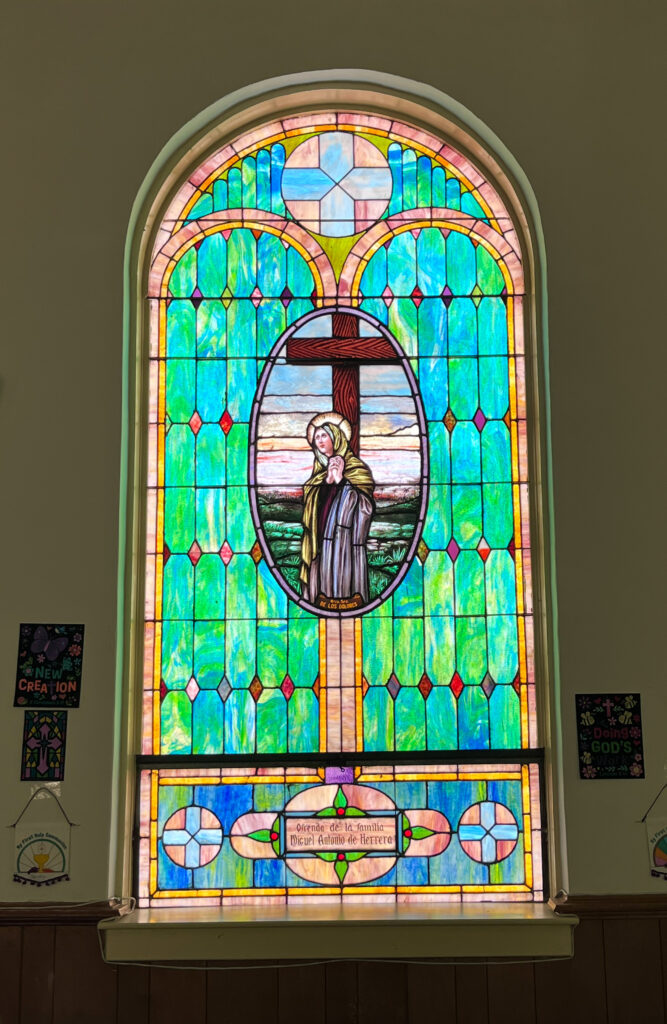
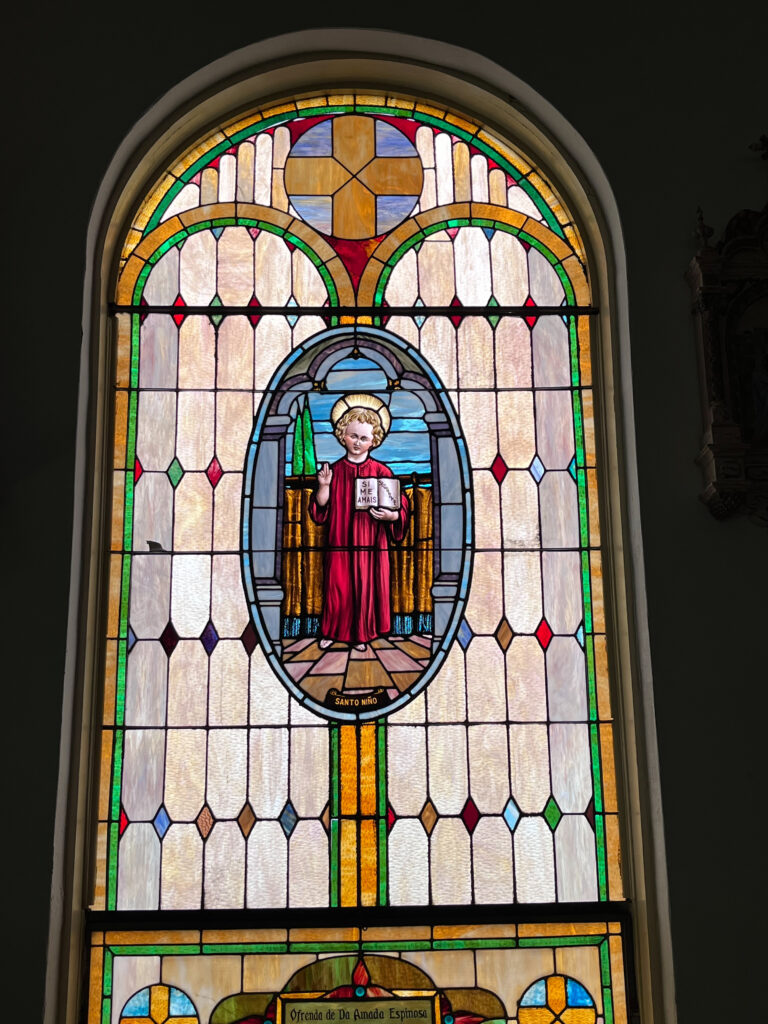
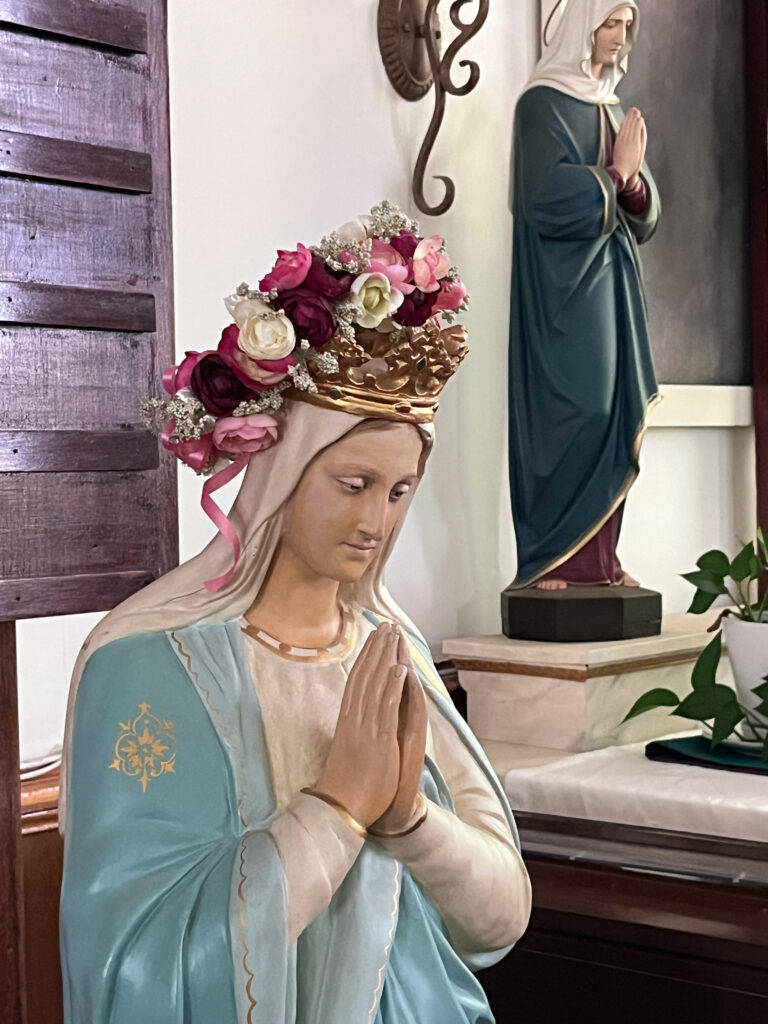
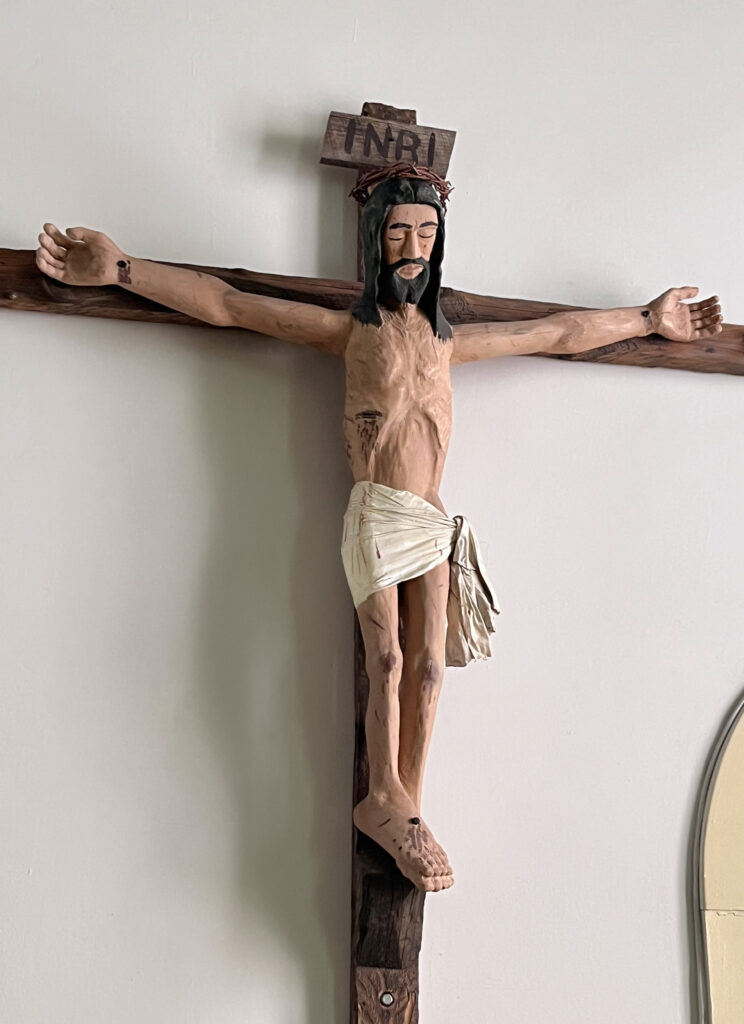
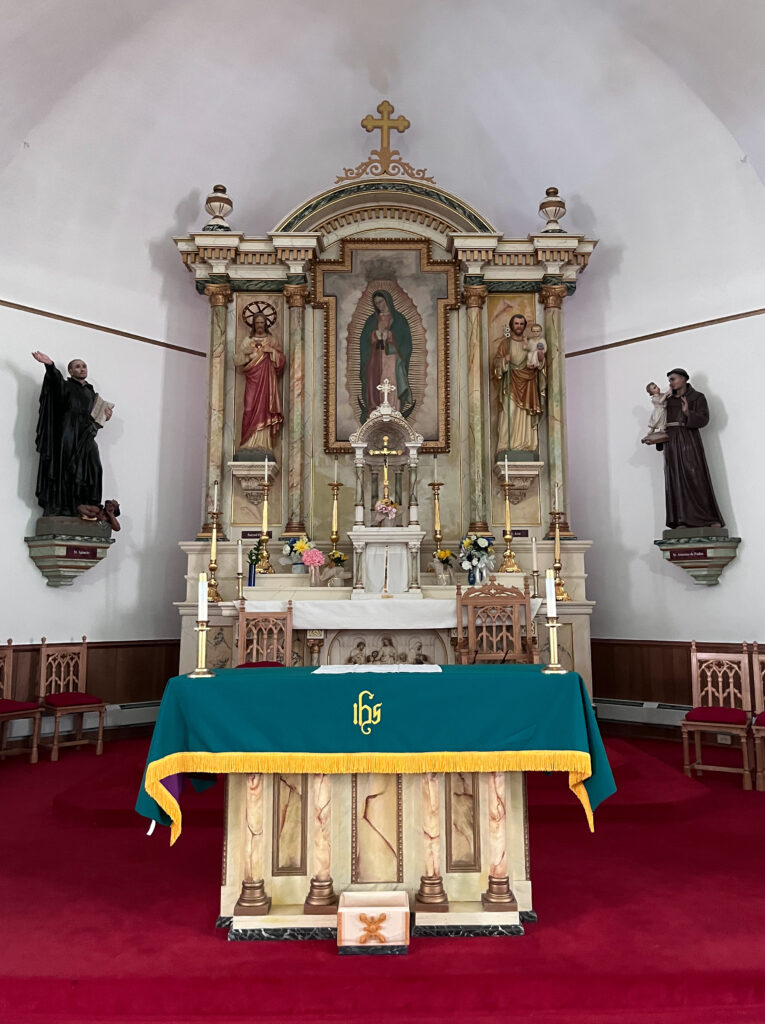
The next morning I began my drive to Albuquerque. Along the way, I spotted a sign for Colorado’s oldest church and, on a whim, made a quick right turn. That detour led me to Our Lady of Guadalupe Parish in Conejos, the oldest church in Colorado. Founded in 1858, the parish began with a small adobe chapel before the current church was completed in 1863. Rising unexpectedly from the rural landscape, the church felt almost cathedral-like. The doors were open, so I stepped inside and was immediately struck by the beautiful stained glass, artwork, statues, and marble altar. I took a few quiet minutes to pray and reflect. Standing there, I found myself thinking about how many lives had intersected in this place over the past century and a half. Although a fire destroyed much of the interior in 1926, the church was rebuilt on its original site and remains an active parish today. It was an unexpected stop, but one that added a meaningful moment to my journey south.
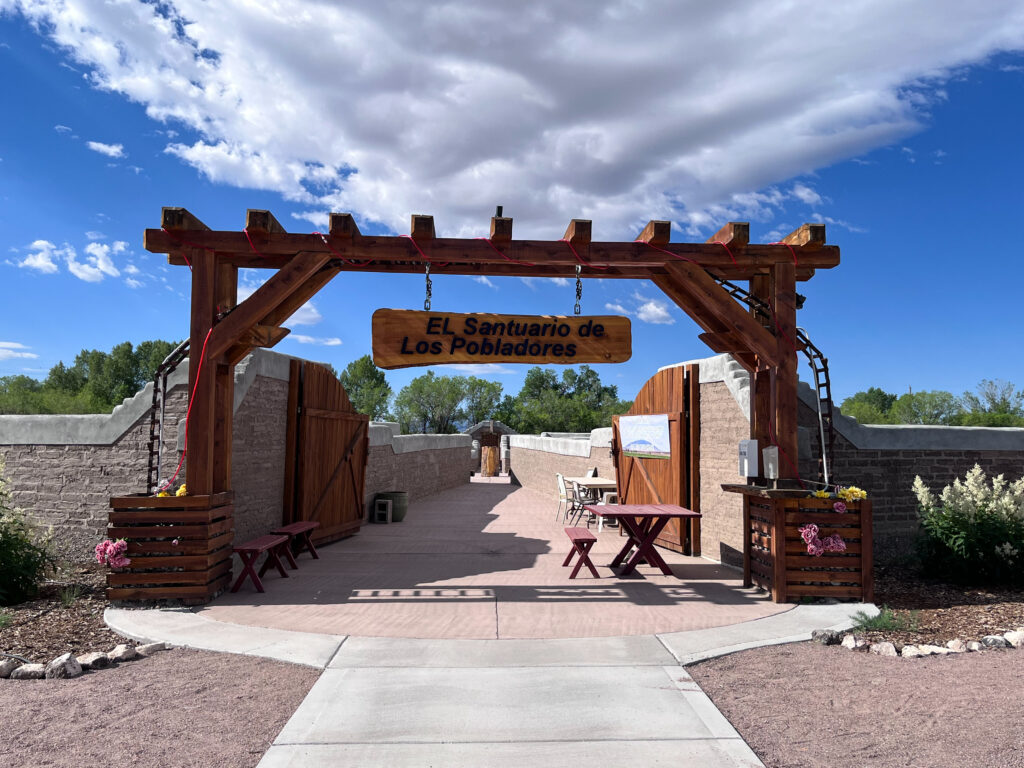
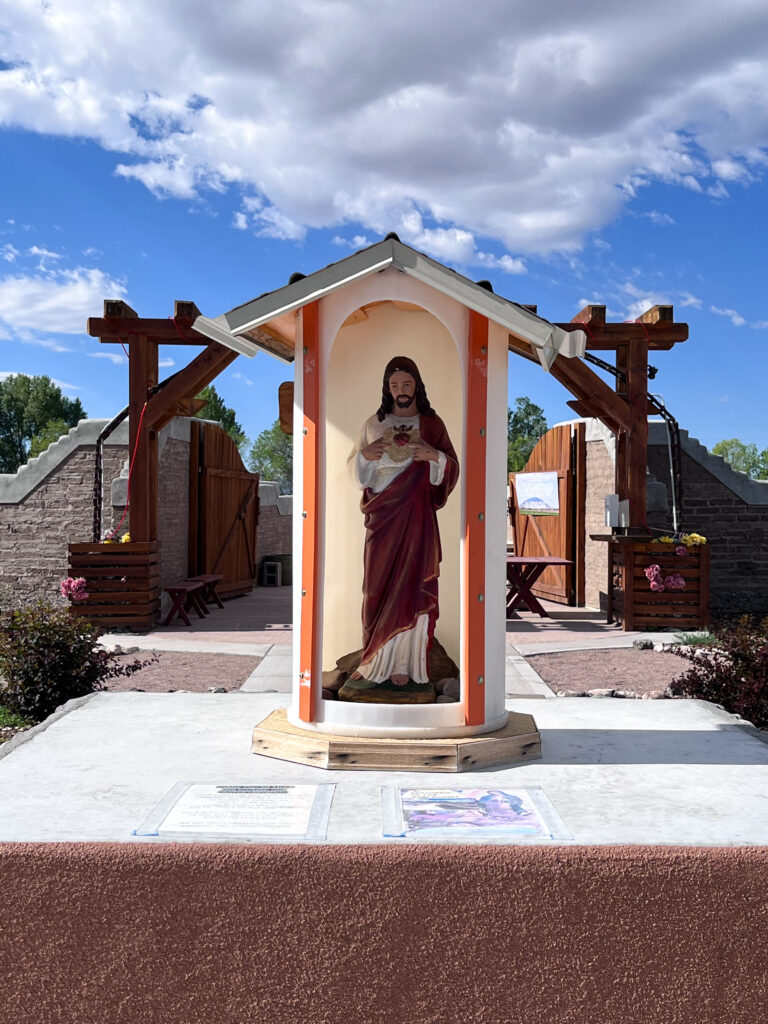
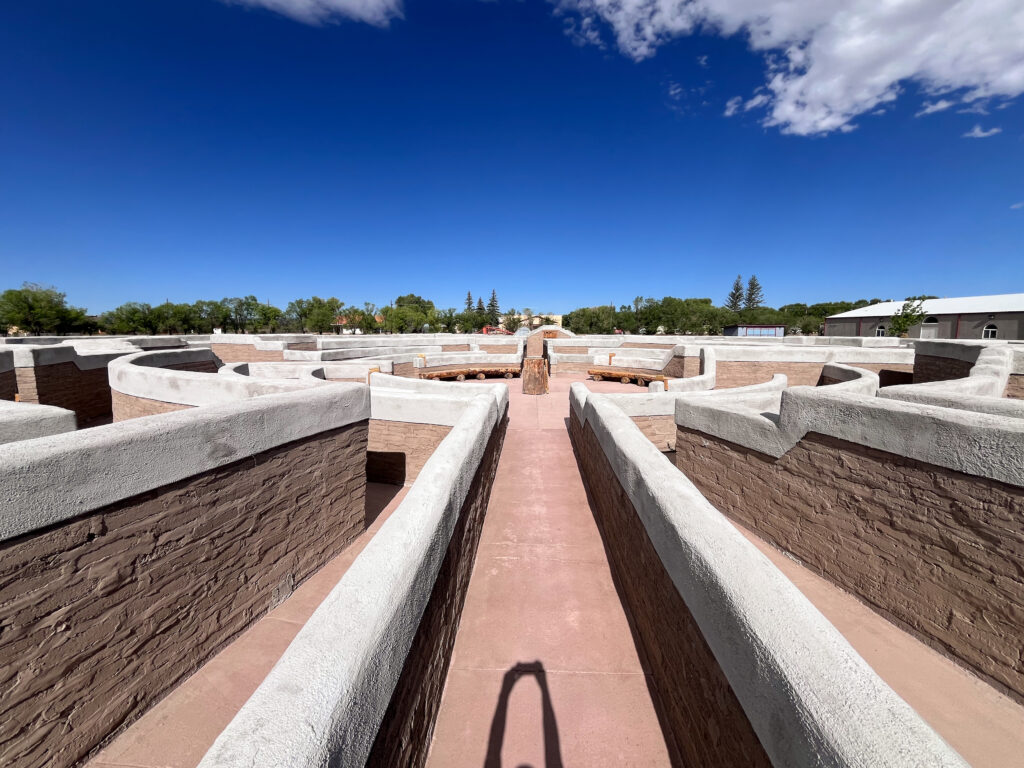
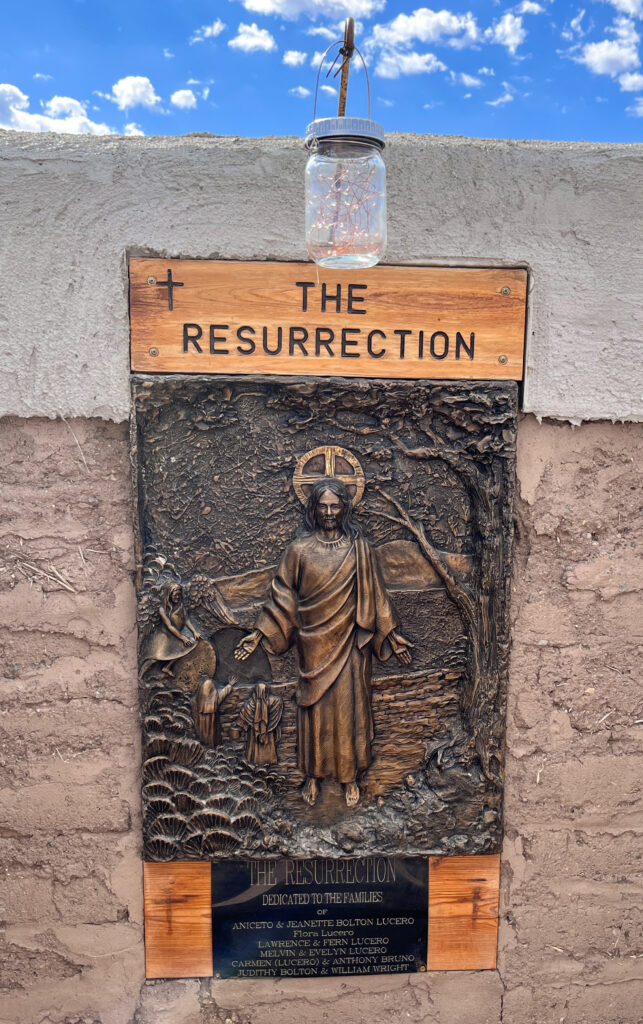
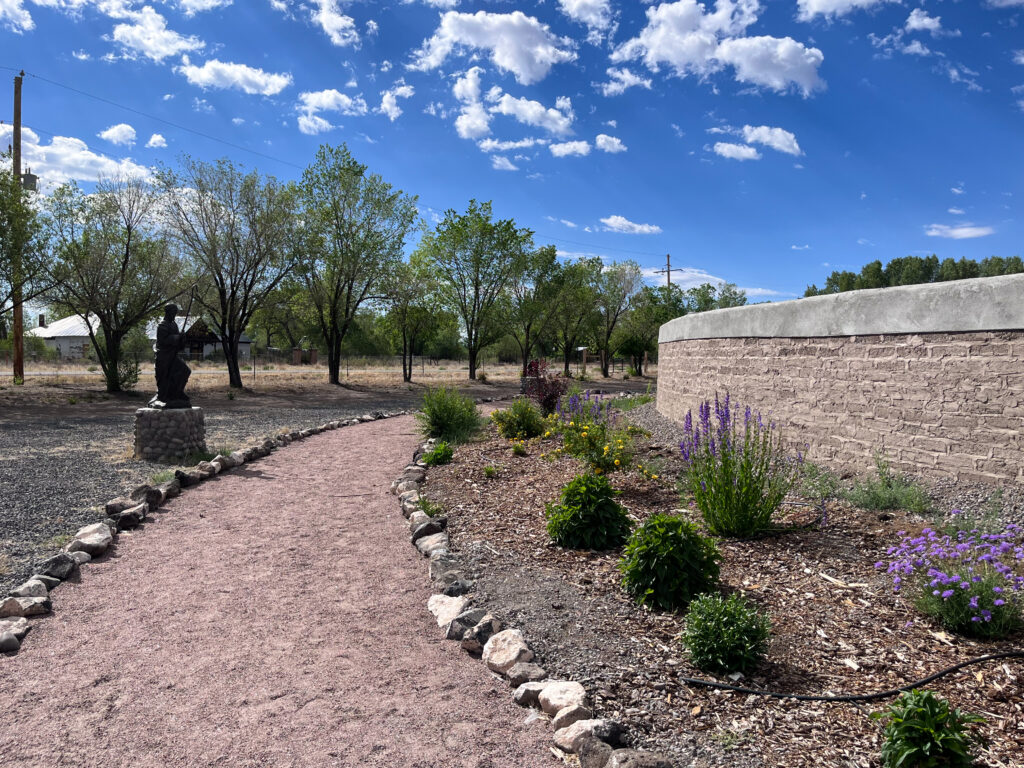
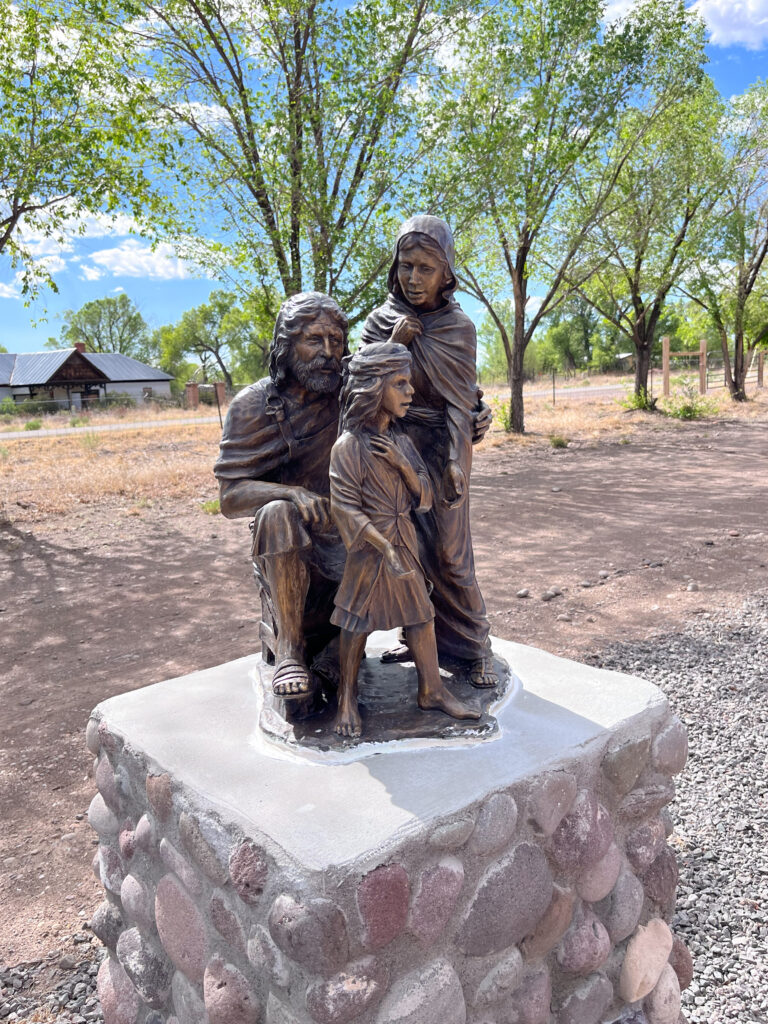
Next to the church, I discovered a beautiful prayer labyrinth at the El Santuario de los Pobladores — the Sanctuary of the Settlers. What I first thought of as simple sculptural accents turned out to be striking bronze bas-relief panels that frame each meditation chapel. Each one represents a Mystery of the Rosary, drawing visitors into the story of Jesus’ life and ministry in a very direct, visual way. The panels are the work of three renowned Valley artists and honor the Spanish mission saints as well as the Virgin of Guadalupe, tying the space deeply to the spiritual heritage of the region. As I walked, I also noticed additional bronze sculptures placed outside the labyrinth itself, depicting mission saints and quietly extending the sense of devotion into the surrounding grounds. Each chapel I stepped into held its own artwork and atmosphere, and I found myself discovering them one by one as I moved through the space, almost like the labyrinth was unfolding the story in real time.
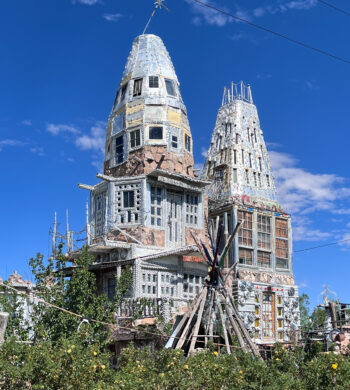
I drove on to the town of Antonito where I stopped to see Cano’s Castle. I was pleasantly surprised by the intricate, almost shimmering construction of the structure, built from a striking mix of stone, concrete, and layers of recycled materials. While it’s often described as being made entirely of beer cans, that only tells part of the story — sections of the castle also reveal stonework and a broader patchwork of salvaged metal, glass, and found objects, all carefully assembled into textured walls that catch the high desert light. The longer I stood there, the more I noticed hidden patterns and unexpected materials tucked into the walls.
The castle was built singlehandedly by Dominic “Cano” Espinosa, a Vietnam veteran who spent more than three decades shaping the structure as a personal act of gratitude and survival. He has described it as his way of giving thanks to God for making it through the war, and that sense of devotion is embedded in every layer of the work. What began as a private expression gradually grew into an expansive, ongoing folk-art environment — part tribute, part spiritual offering, and part lifelong creative calling.
What makes it even more compelling is the way it rises in unexpected forms and towers, each one feeling both improvised and intentional at the same time. It is less a single “castle” than an evolving work of outsider art — beautiful, slightly eccentric, and deeply expressive in the quiet landscape of the San Luis Valley.
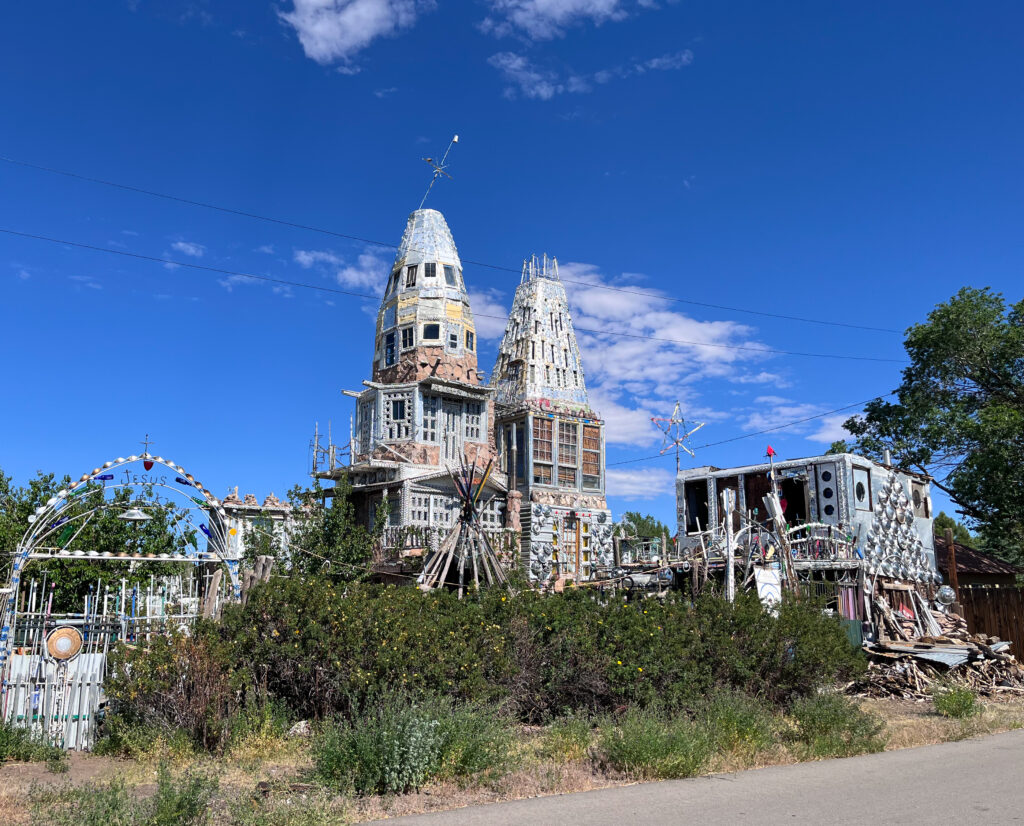
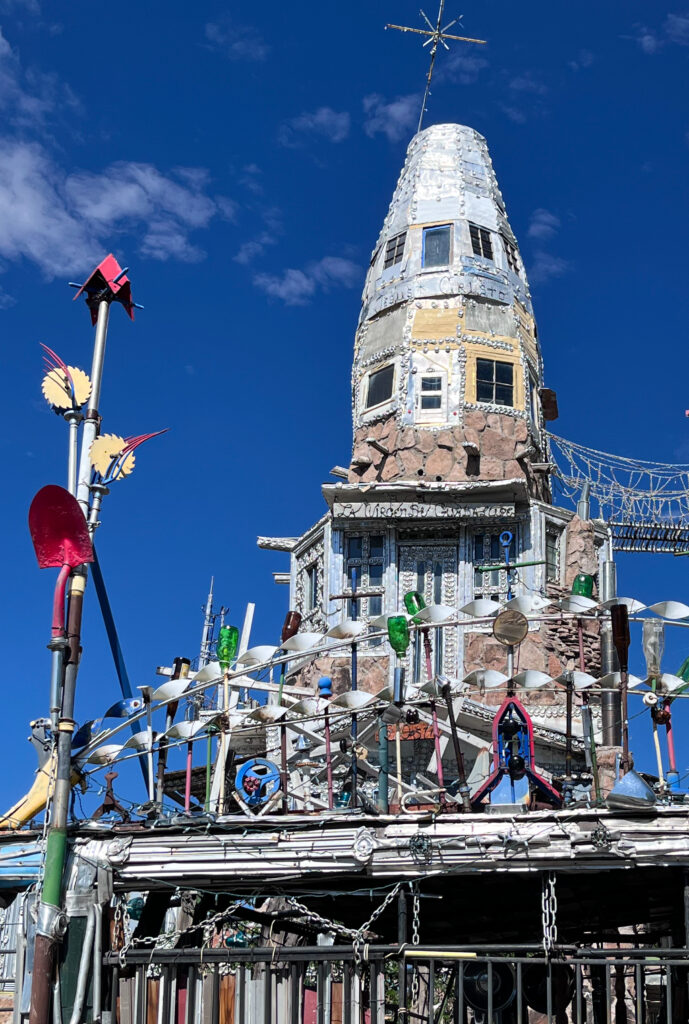
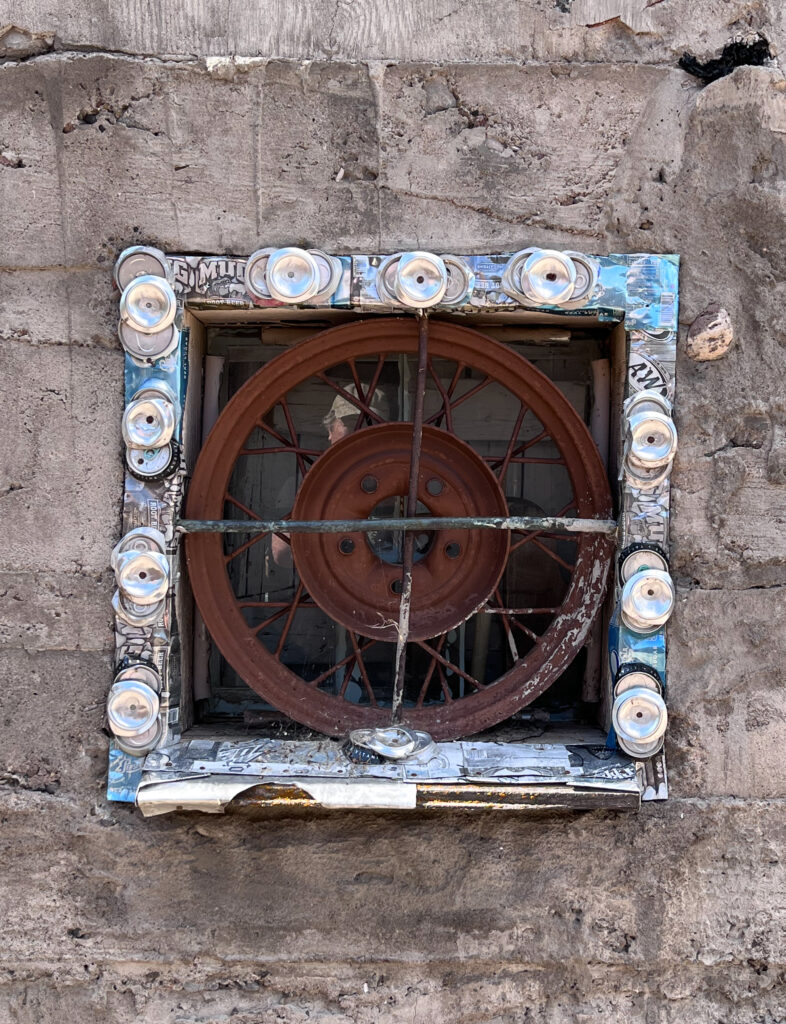
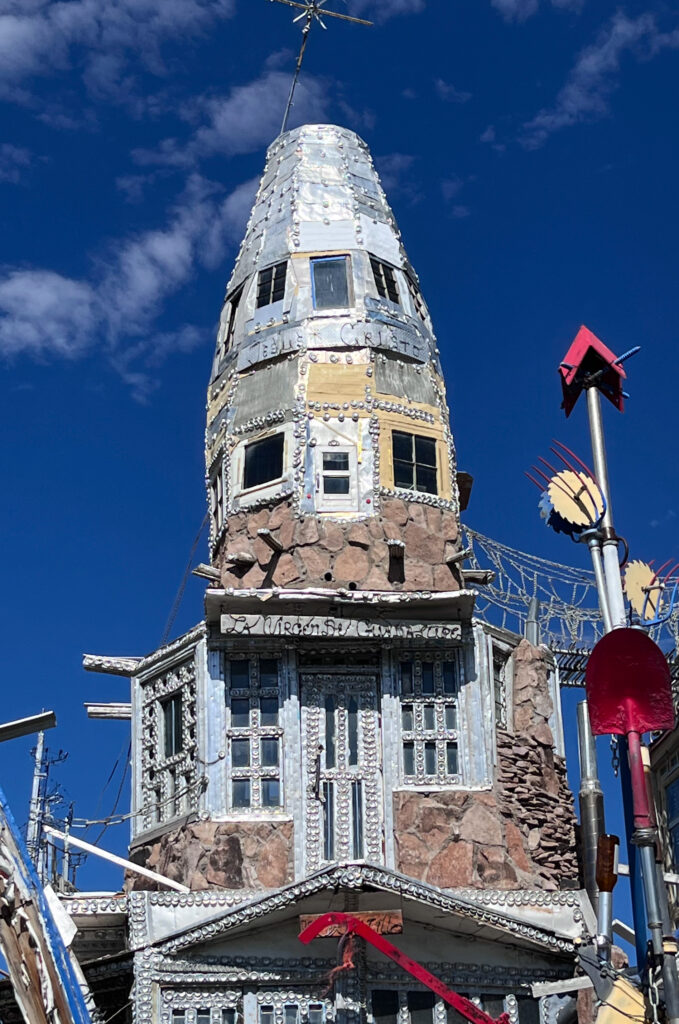
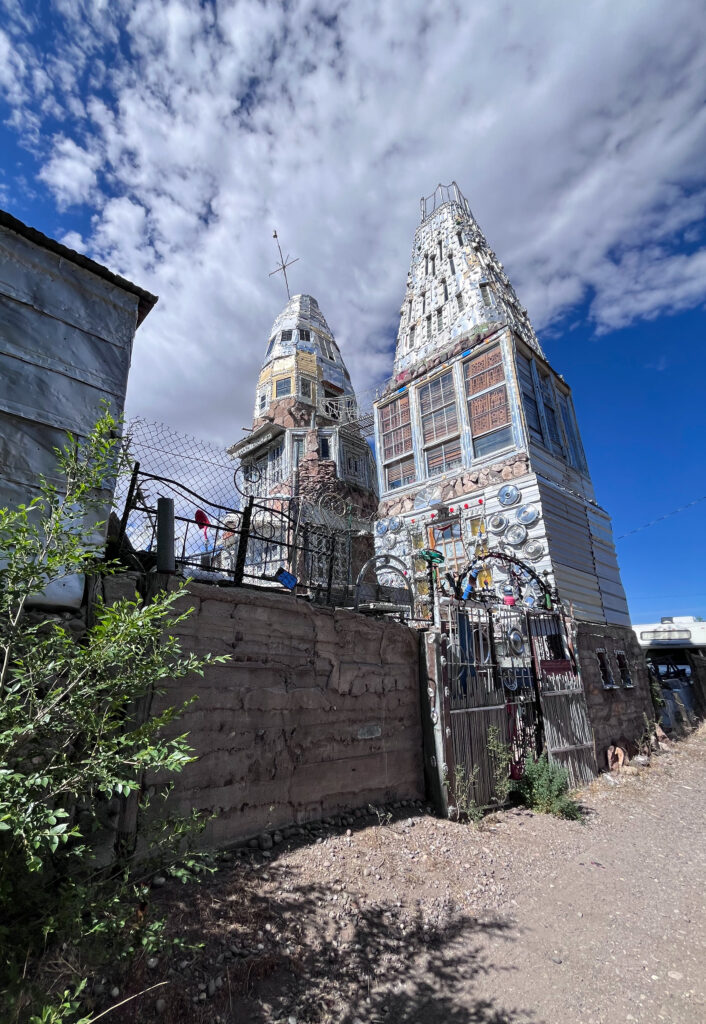
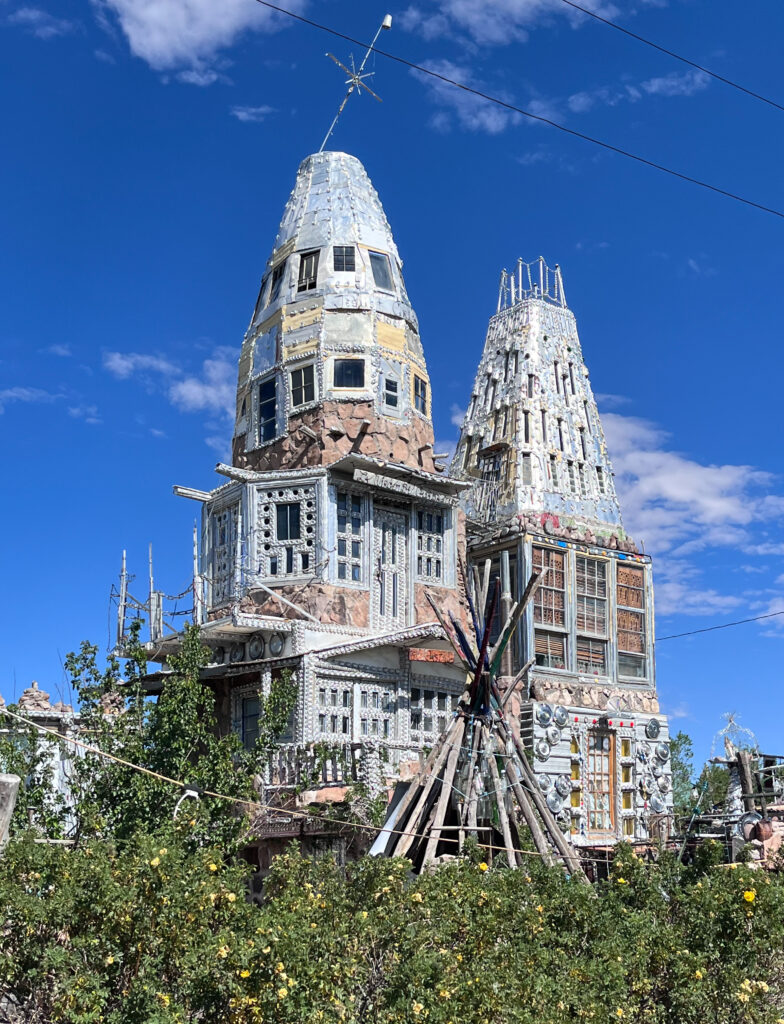
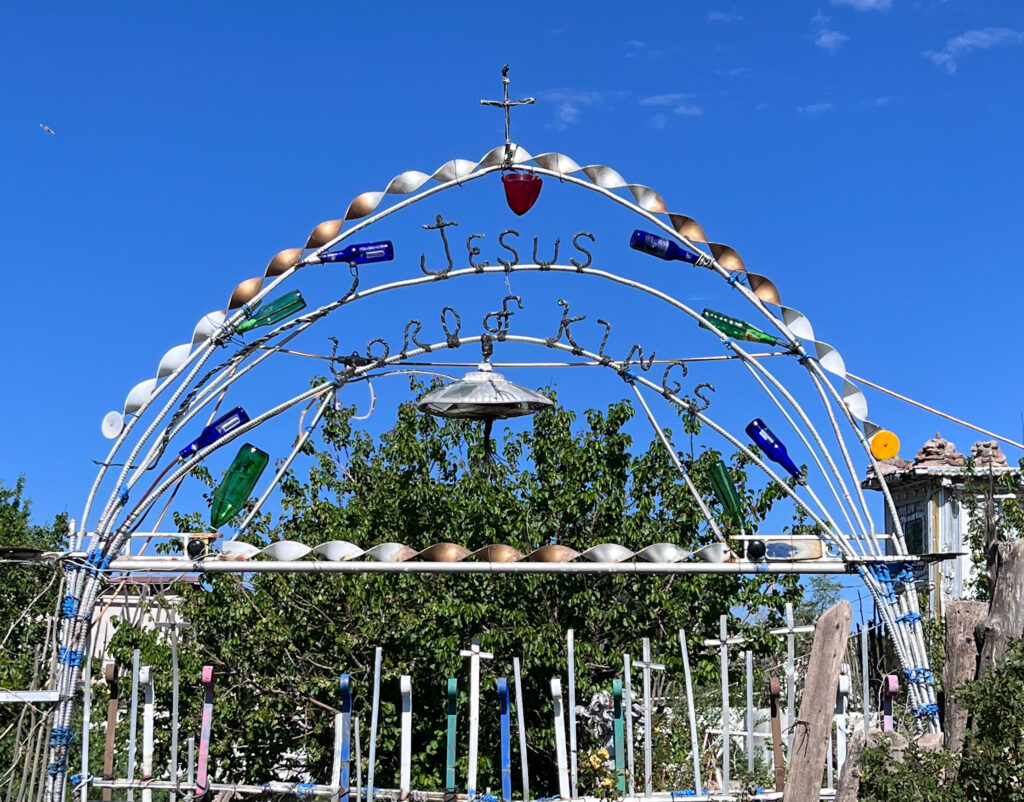
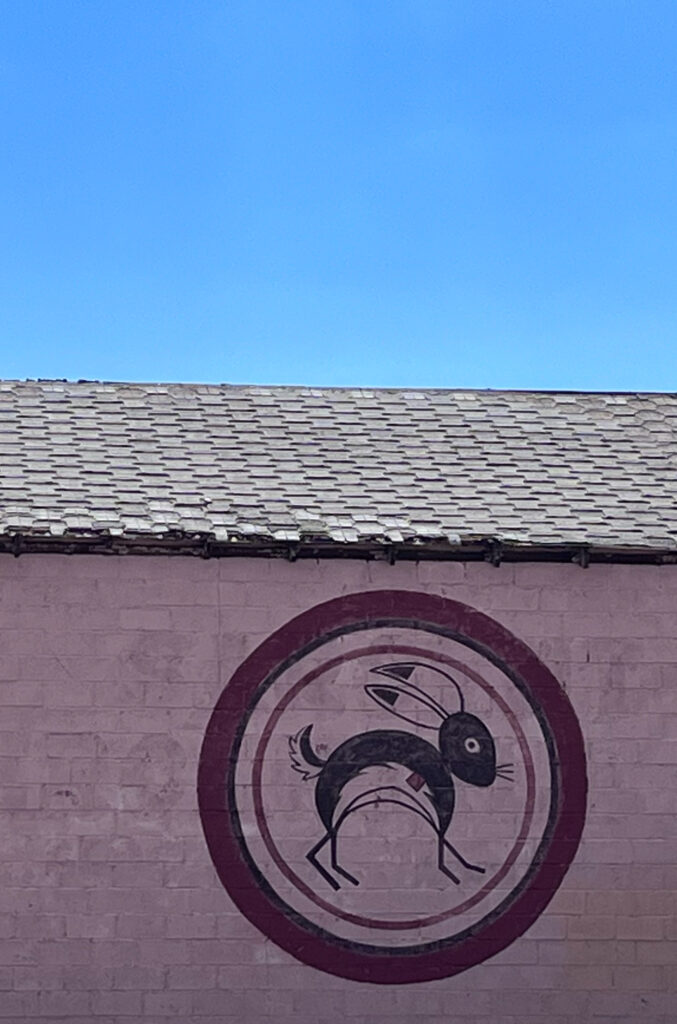
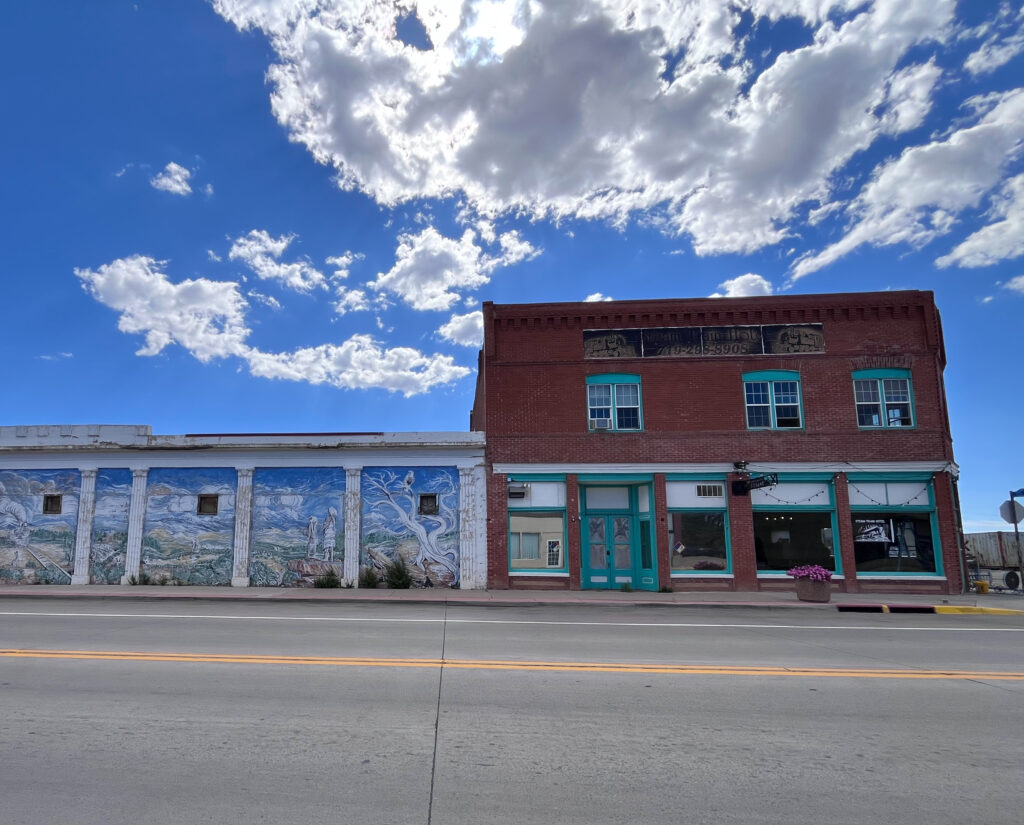
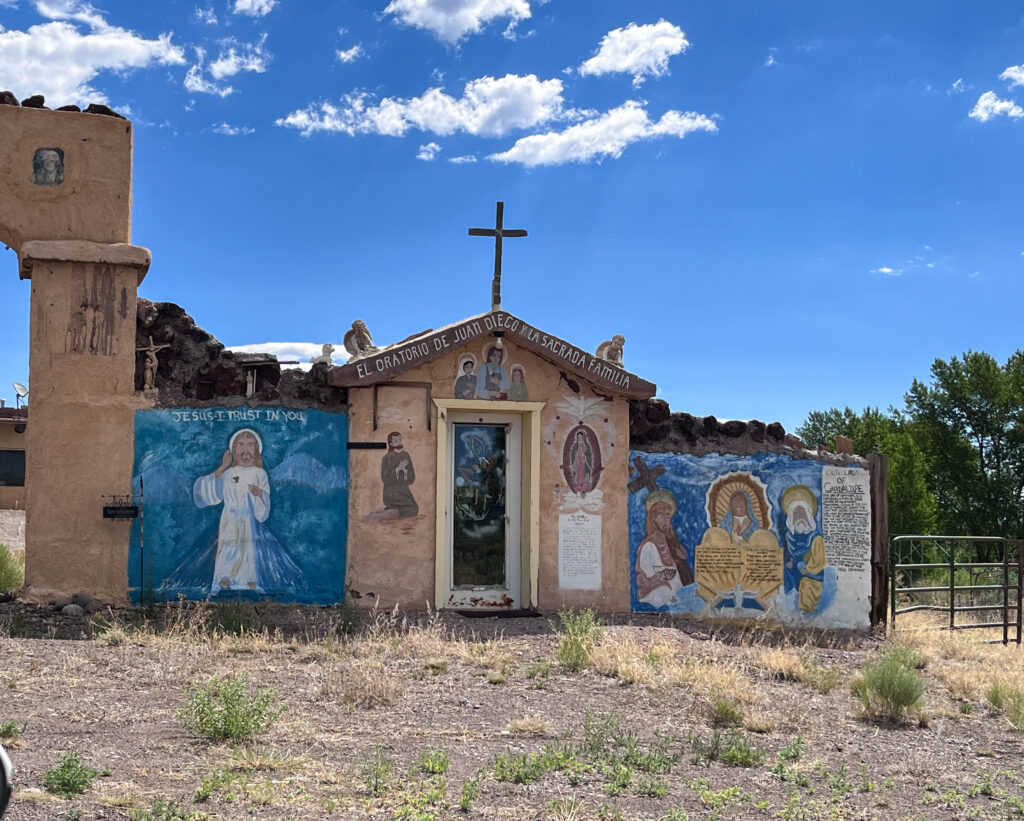
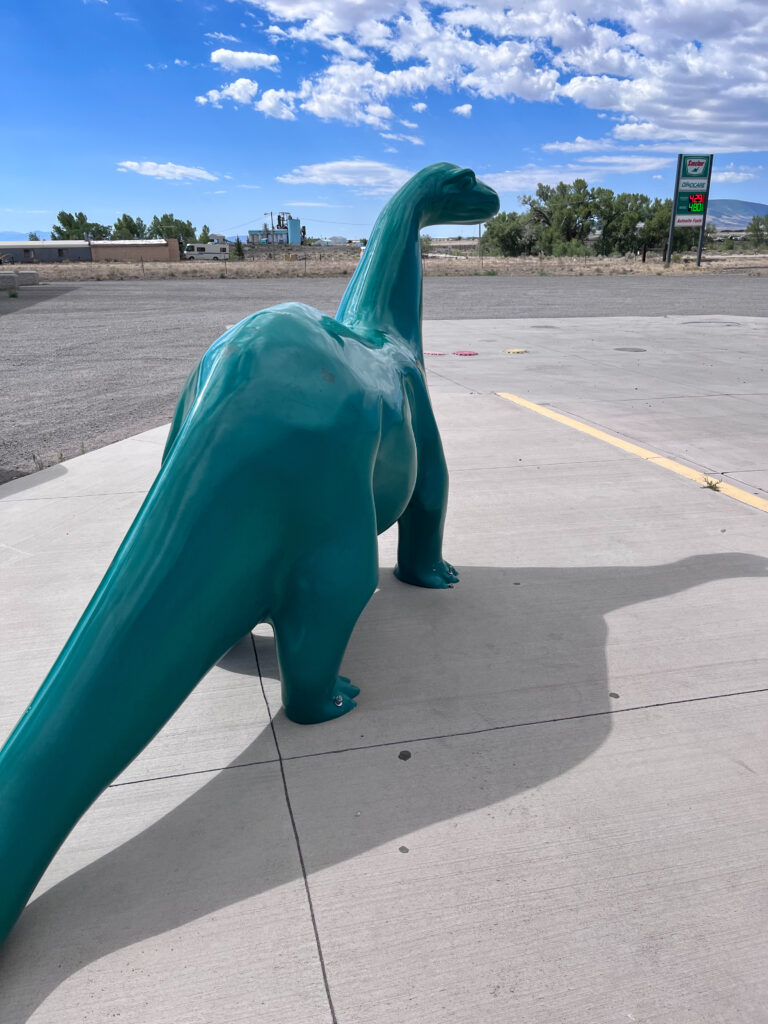
I stopped and took a few photos in town. There always seems to be something quietly quirky in these high desert places, as if the landscape itself invites a different kind of imagination.
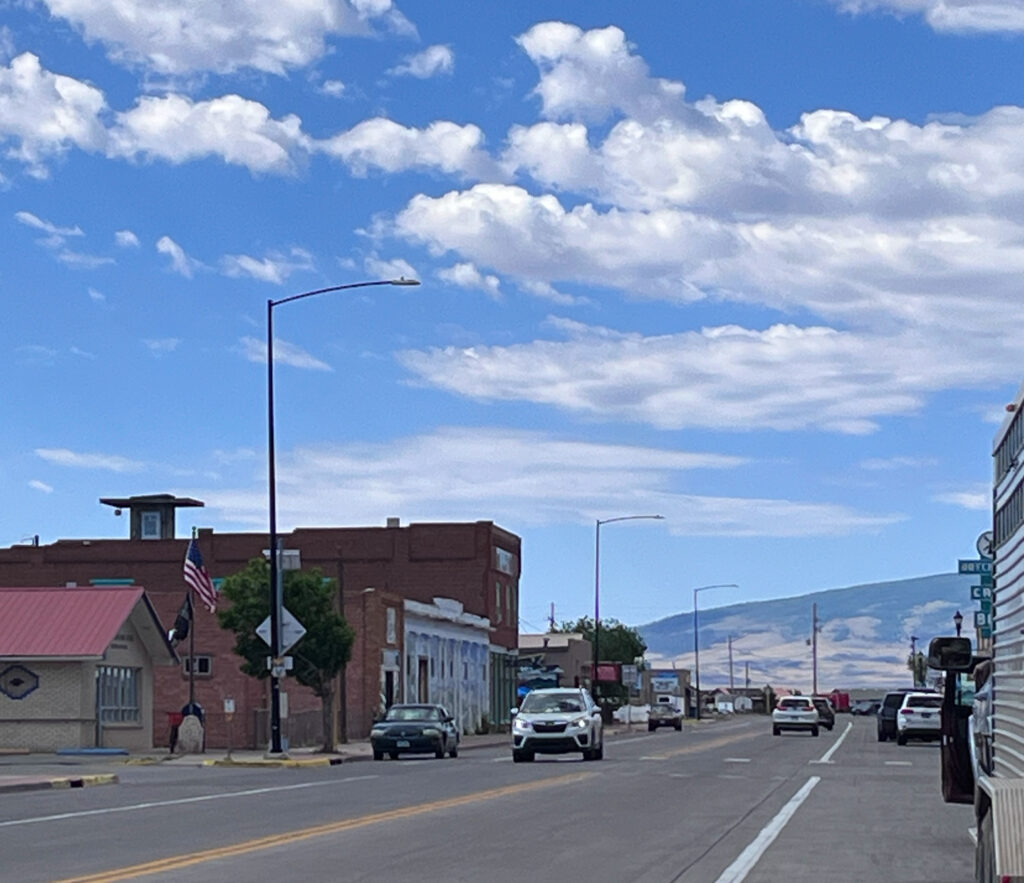
Not long after, I crossed into New Mexico and began noticing homes partially tucked into the earth, almost like they had grown out of the mesa rather than been built on it. Curious, I pulled over at the Earthship Visitor Center, and what I found there felt like stepping into another version of what “home” could be.
The Earthship Biotecture Visitor Center is part of the larger Greater World Earthship Community near Taos, a sprawling 600-acre-plus experiment in off-grid living created by architect Michael Reynolds, who began developing the Earthship concept in the 1970s. These homes are built into the earth using an unexpected mix of recycled and natural materials — tires, bottles, cans, adobe, and glass — designed to work with the environment rather than against it. What stood out most was how self-sufficient they are: solar and wind power, rainwater collection, greenhouse food production, and internal systems that recycle water and waste all work together to create a home that can function independently of traditional utilities. Inside, the temperature stays remarkably steady year-round, held in that quiet 60–70°F range by thick earthen walls and thermal mass.
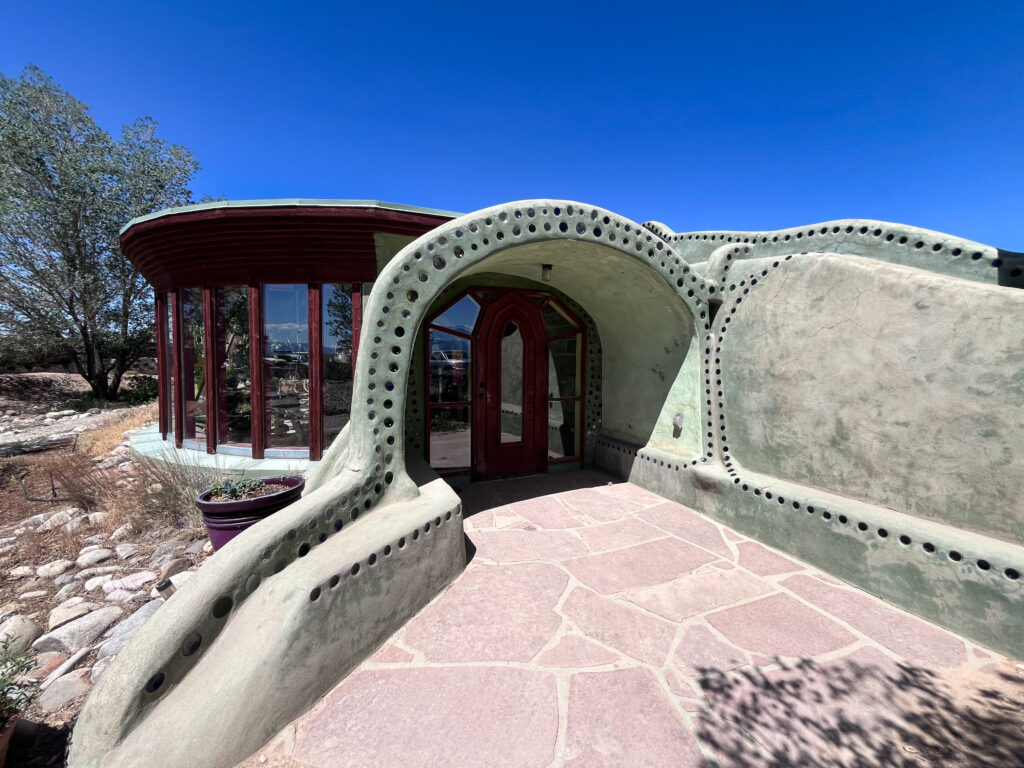
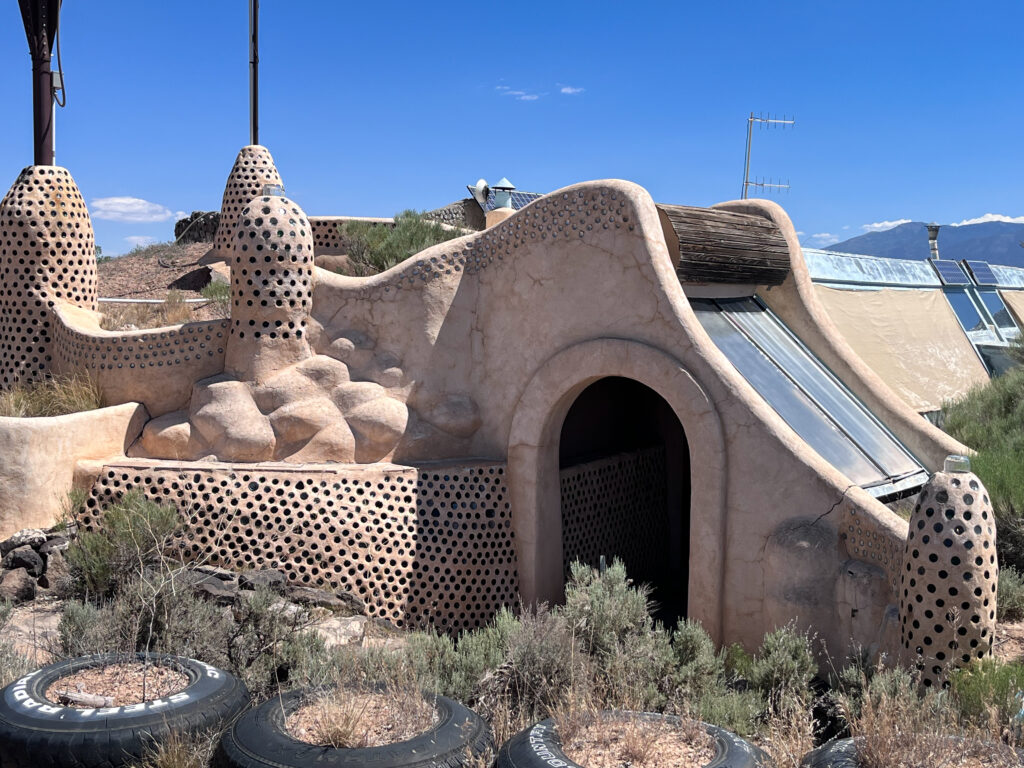
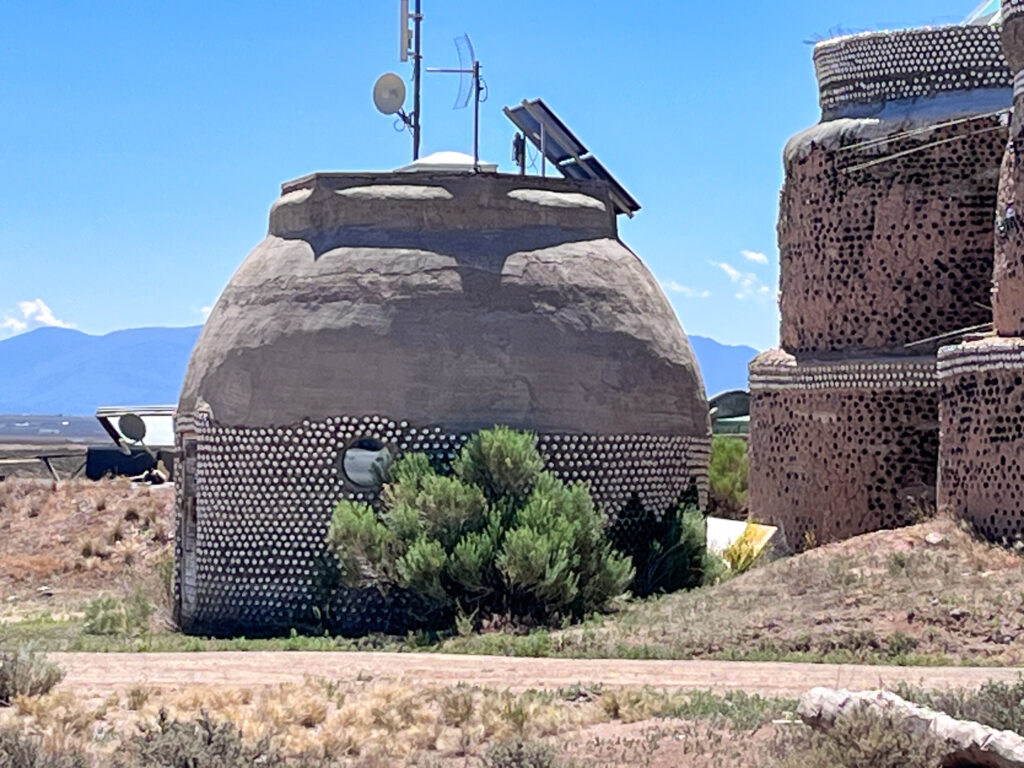
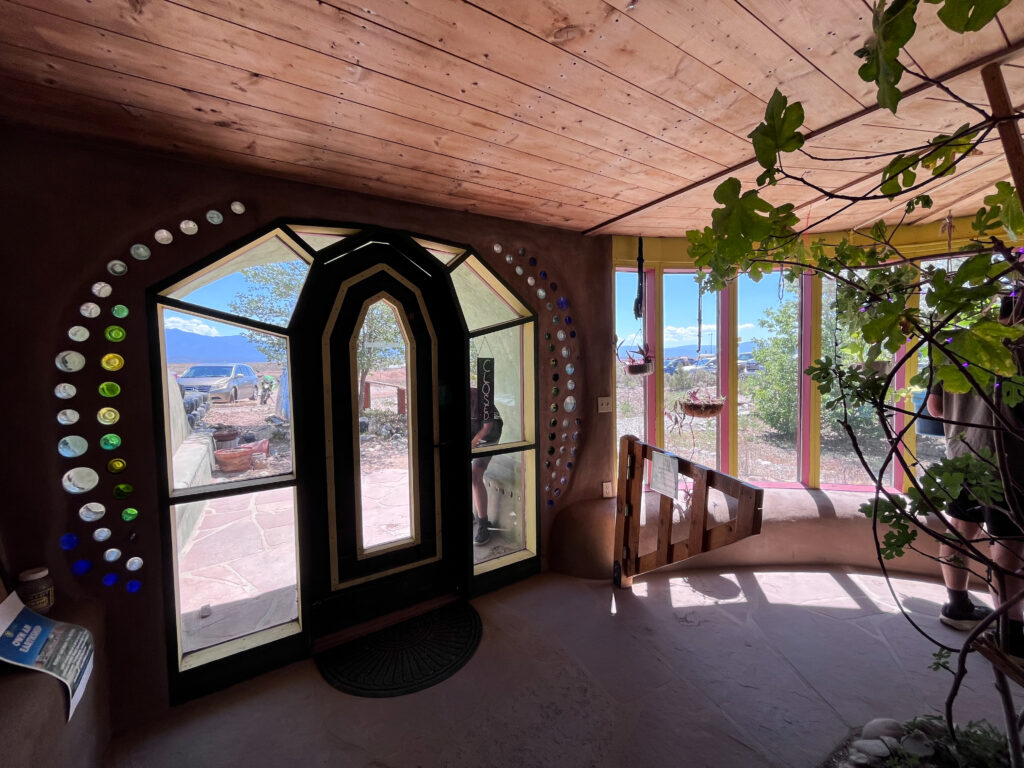
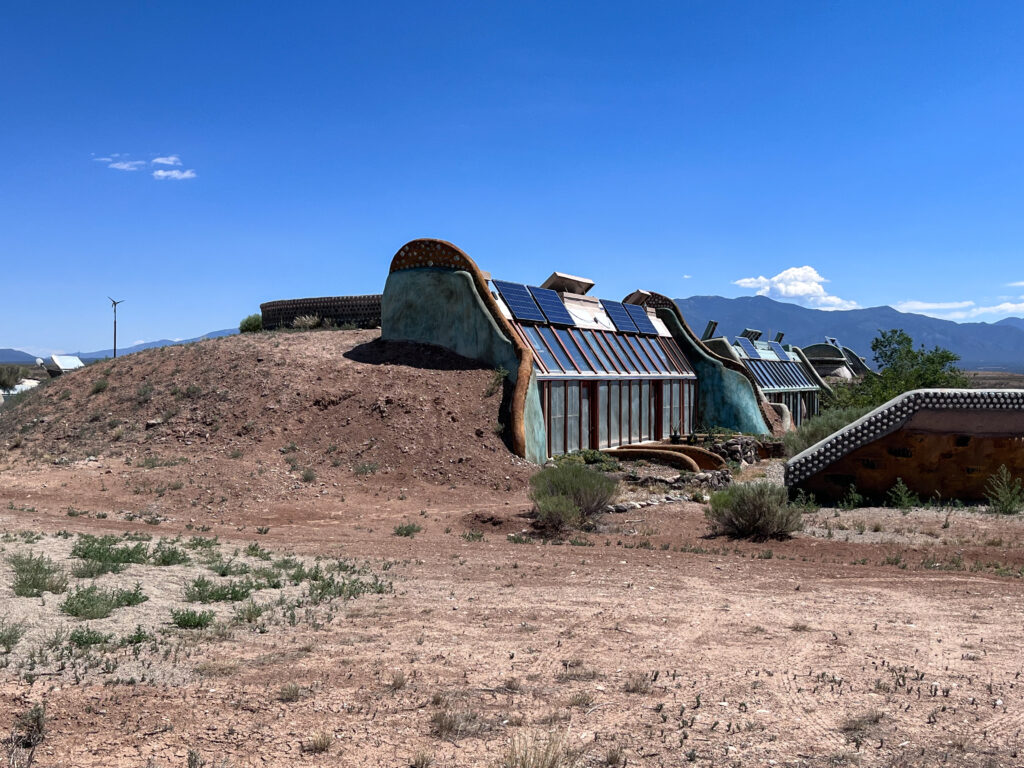
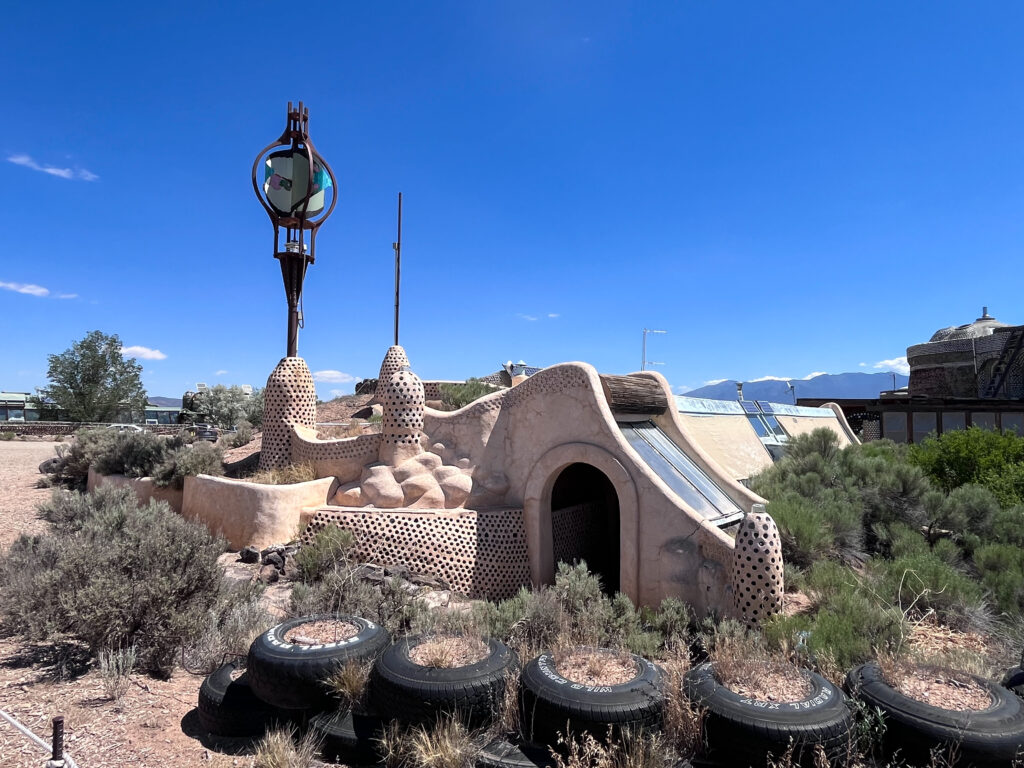
Standing there, it felt like I had left Colorado and stepped into a different kind of story — one where sustainability, creativity, and necessity all meet in the middle of the desert. Over the past 24 hours, I had walked on towering sand dunes, weathered a sandstorm, slept beside a drive-in movie theater, wandered through a historic church and labyrinth, explored a castle built from recycled materials, and toured homes built into the earth. If this was my introduction to New Mexico, I couldn’t wait to see what came next. Farewell, Colorado and hello, New Mexico!