I had been toying with the idea of a digital detox for a while. I just didn’t realize how much I actually needed it.
With so much change over the past several months, I had begun to feel the need for less input, less noise, and more clarity. I decided to make that my April project—a digital detox of sorts: less TV, less scrolling, and more space to think.
With simple, clear rules—no TV and just 15 minutes of scrolling each day—I set out to clear the mental clutter. It felt like a natural next step after decluttering my life physically a few months ago.
I wasn’t perfect at meeting my goals, but I consistently tried. Like many people, I had justified my screen time because so much of it felt practical—calls, emails, and searches. Even so, by the end of the month, it had noticeably improved. My screen time was less than half of what it had been.
Giving up TV was easy. I really haven’t watched much for years. What surprised me was how much clutter came from social media—even the “helpful” kind. I follow smart people who share great advice on health and fitness, but after a while, even good information becomes overwhelming. Scrolling had quietly turned into a form of procrastination.
So I started putting my phone down and doing the next small thing instead. I began finishing things I had been putting off, and once I started, it became easier to keep going. My attention felt less fragmented, and my mind felt clearer.
Instead of consuming more ideas, I wanted to live the ones I already had. So I began putting some of my favorite advice into practice. Something shifted. I was taking action instead of endlessly thinking about taking action.
This month I read more, played with my grandsons, and walked after meals. One afternoon I sat outside without my phone—just the sound of birds, crickets, and frogs. The quiet felt deeply familiar, like stepping back into a slower rhythm I had almost forgotten. It helped that my son’s place is both peaceful and full of the everyday sounds of life—kids playing, laughter drifting in and out. I also began trying a couple of new habits from my list of “someday” ideas.
My goal was to simplify, decompress, and reclaim my attention. What I thought would be a project about reducing screen time turned out to be something deeper. It wasn’t just about using my phone less—it was about returning to life as it was happening and being fully present for it.
As the year draws to a close, I always feel a quiet pull to turn inward. While the world seems to speed up with holidays, plans, and expectations, I instinctively slow down. This has become one of my most meaningful annual rhythms—a time to reflect, take stock, and gently imagine what might come next.
Each year, I create a new list—one I’ve been making annually since 2013—of 100 ideas for the year ahead. It’s not a rigid checklist or a set of resolutions meant to be conquered. Instead, each list is a snapshot in time: a collection of possibilities shaped by where I am in life that year. I keep these lists and return to them occasionally, not to measure success, but to reflect on how my interests, priorities, and sense of curiosity have evolved. Each year, my list returns to familiar themes: places I want to visit, books I hope to read, habits I’d like to build, skills I’m curious about, and experiences I want to try—even if I’m not sure how or when they’ll happen. Some things shift year to year, but these anchors remain.
At the end of the year, I look back at that year’s list and see what found its way into my life. Some items are neatly checked off. Others remain untouched. A few surprises appear—things I never could have planned, but that mattered deeply all the same. I’ve learned not to judge the list by how many boxes are checked. Instead, I notice patterns: what I was drawn to, what I made time for, and what quietly fell away. At the same time, it’s satisfying to see how many items I actually checked off—this year, I completed 60, a tangible reminder of the experiences and moments that curiosity and openness can bring.
As part of this reflection, I also pause to consider the one thing that really defines the year—the experience, lesson, or theme that stood out most over the past twelve months. It’s a way to see the shape and story of the year, capturing what truly mattered amidst both the ordinary and extraordinary moments.
Then comes the gentle sorting. Some unfinished ideas roll forward into the next year, still carrying energy and possibility. Others are released—not because they failed, but because they no longer fit. Letting go has become just as important as dreaming.
I started this practice in 2013, the year I moved to North Carolina. Everything felt new then—towns to explore, trails to walk, seasons to experience. The list became a way to say yes to curiosity and to life itself.
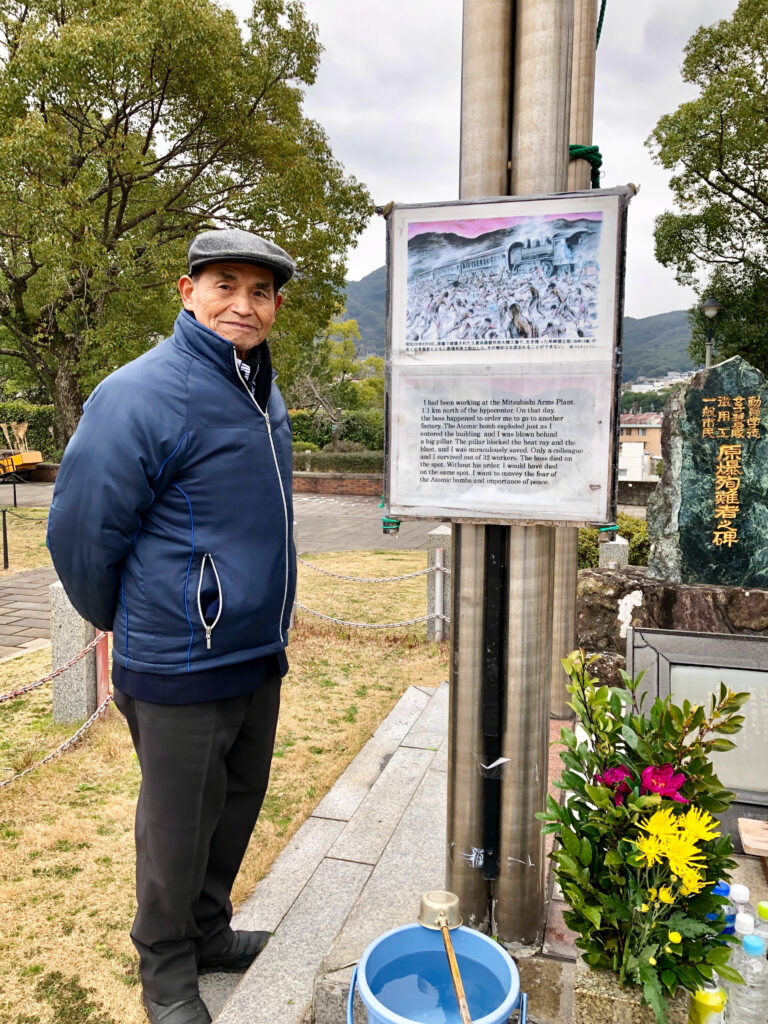
Over time, this practice has shaped my life in ways I couldn’t have predicted. By staying open to what landed on those lists, I’ve found myself swimming with manatees, volunteering alongside sea turtles and witnessing hatchlings make their way to the sea, ziplining despite a lifelong fear of heights, spending a summer in Italy, and traveling as far as Cambodia. I walked on Christo’s The Floating Piers in Italy—an especially meaningful experience after first learning about his work during my undergraduate studies. In Japan, I stood on an active volcano as smoke rose from the earth beneath my feet, and in Nagasaki, I spoke with a survivor of the atomic bombing at the Peace Memorial. I’ve also ridden the Bernina Express through the Swiss Alps, watching the landscape unfold slowly outside the train window. None of these moments came from rigid planning—they came from openness and a willingness to say yes when life offered something unexpected.
Nagasaki bombing survivor. Nagasaki, Japan
A few years ago, another idea found its way into this tradition. I read an article by a young man named Kevin who realized his life had become too narrow, too focused on routine. He created a simple rule for himself: every other month, he and his son would go on an adventure together—something out of the ordinary, something that invited joy. He called it Kevin’s Rule. I loved the simplicity of it. No pressure. No perfection. Just a commitment to experience more life. So I adopted it too, adding a small chart at the end of my list to plan and reflect on these intentional adventures throughout the year. Sometimes they’re big. Sometimes they’re incredibly simple. But they always remind me that joy rarely arrives by accident; it shows up when we make room for it.
Another idea I adopted came from reading about the practice of adding one new habit each quarter. I loved the gentleness of this approach—no overhauls, no all-at-once transformations. I started this about a year ago, and it’s been surprisingly powerful. By focusing on small, intentional changes, I’ve been able to add healthier habits into my life, like morning breathwork and getting early sunlight at the start of the day. When habits are added slowly and thoughtfully, they tend to stay.
Out of this reflection naturally comes direction. During this inward season, I also spend time setting goals for the year ahead—but they grow out of listening, not pressure. I try to keep them realistic and achievable, shaped by what the past year has taught me. I break ideas into small action steps and loose timelines, not as demands, but as gentle guideposts. This part of the process energizes me and helps me move forward with clarity rather than urgency.
Winter, for me, has always been a season for this kind of work. A time to turn inward, to recharge, and to reflect on what’s been—and to reimagine what could be. It’s not about doing more. It’s about paying attention, honoring what matters, and moving forward with intention when the time is right. And when I emerge from this quiet season, I carry with me a sense of clarity and possibility, ready to step into the new year with openness, curiosity, and purpose.