St. Augustine: A Walk Through History


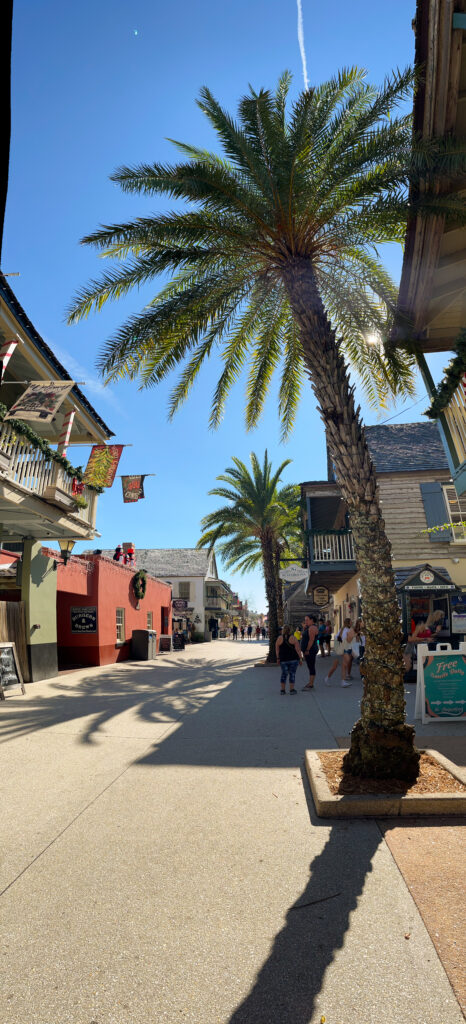
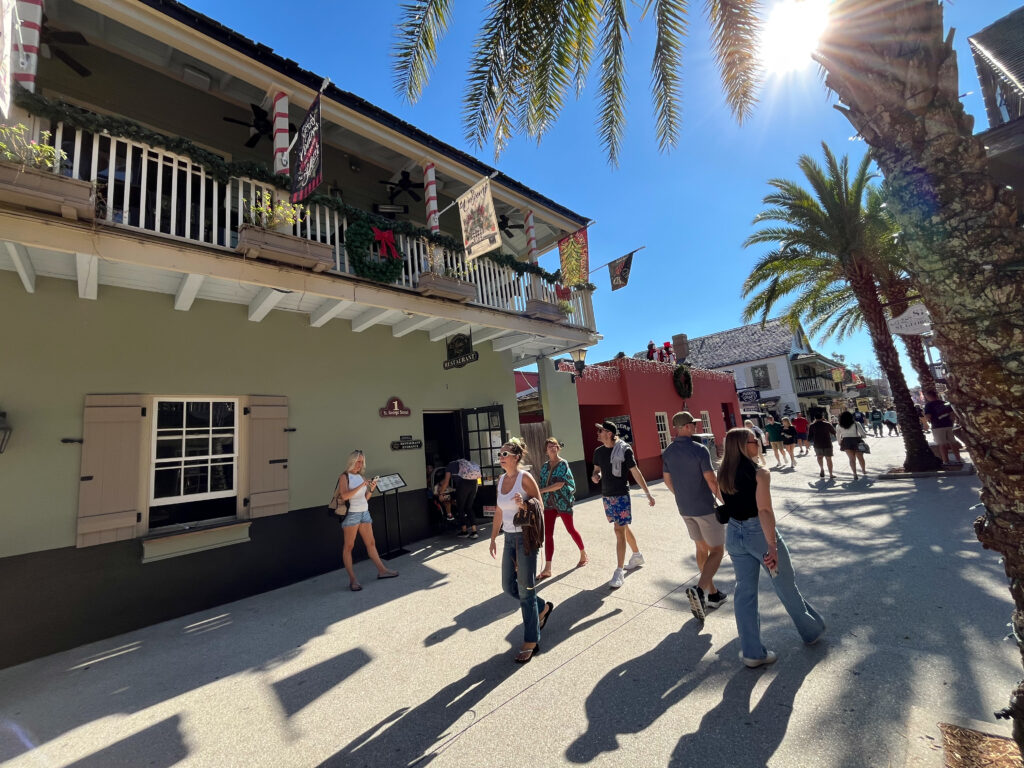
St. Augustine is one of those rare places where history isn’t something you read about—it’s something you walk through. Cobblestone paths, salt-touched air, centuries-old stone walls… the entire city feels like a story unfolding around you. As the oldest continuously settled city in the United States, it holds a richness that’s hard to capture in just one visit—which is probably why I’m already planning a return.
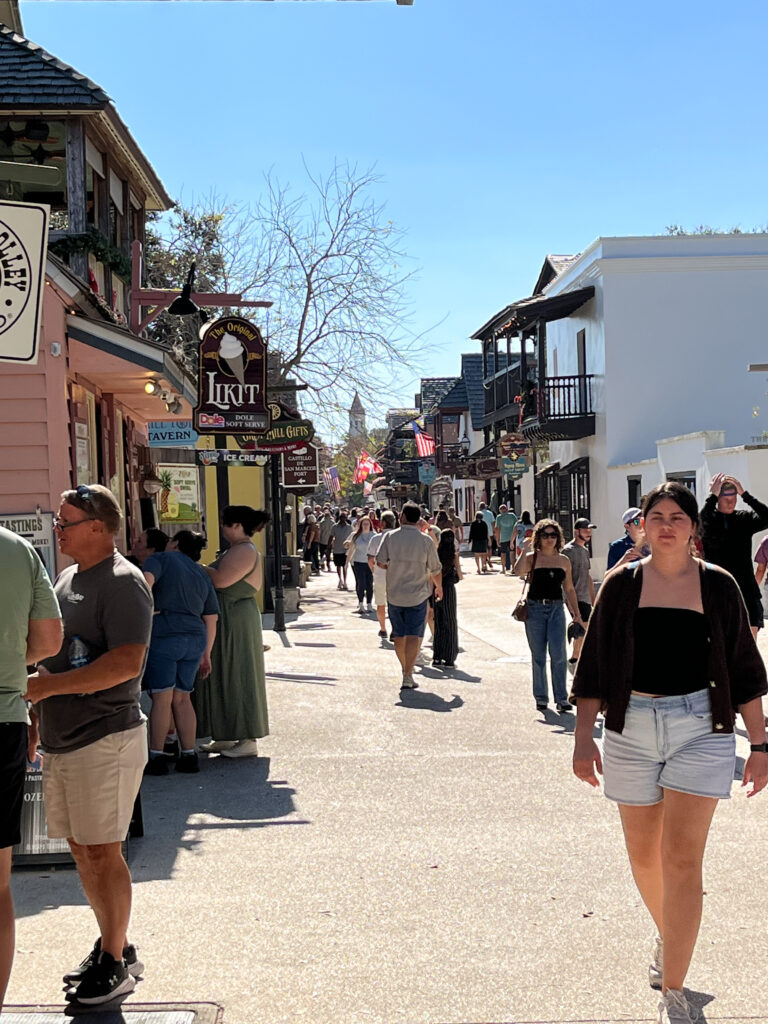
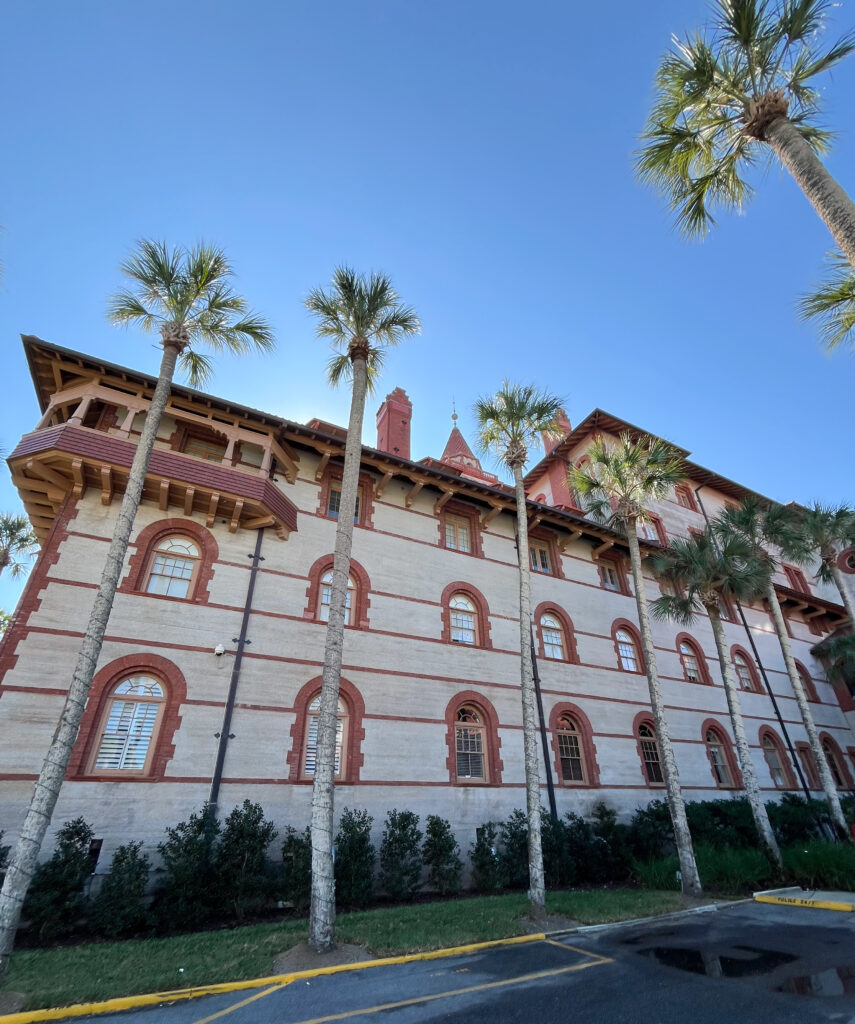
Founded in 1565 by Pedro Menéndez de Avilés, St. Augustine sits between the San Sebastian River and the Matanzas River on a slender peninsula, just inland from the Atlantic. The Spanish influence is everywhere—tile roofs, courtyards, wrought iron balconies, and thick coquina buildings that have stood through sieges, fires, and eras of change.

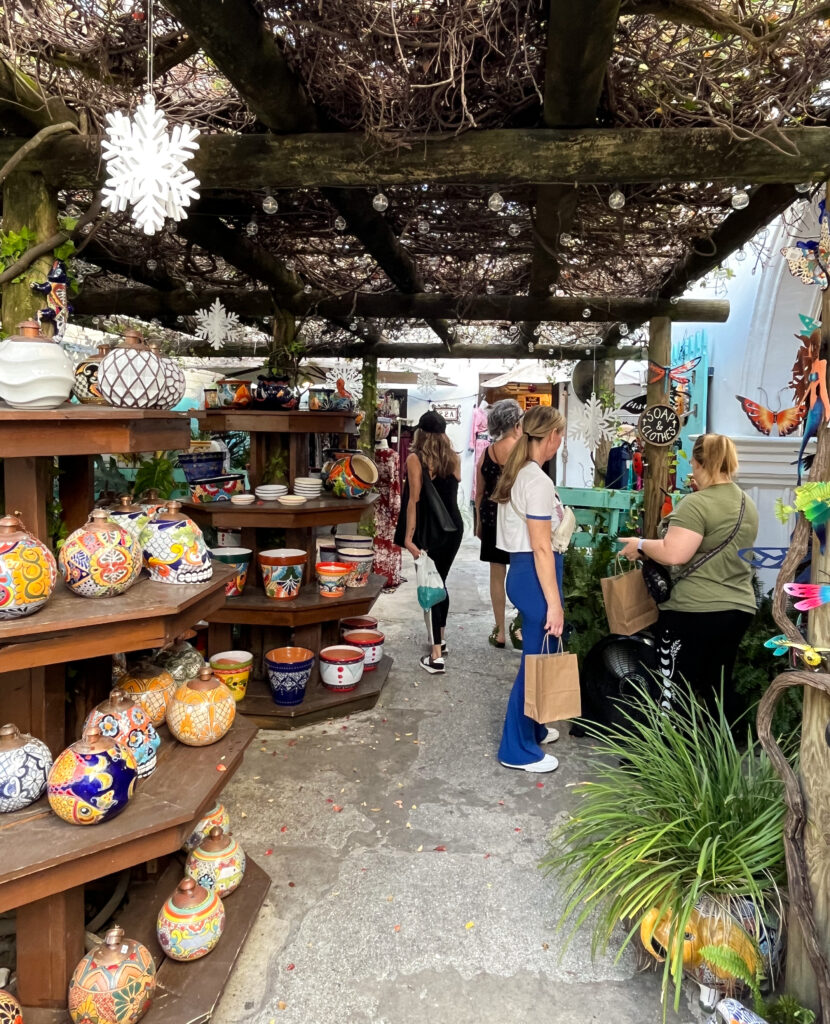
I began my visit at the Old City Gate, where the streets behind it open into a charming network of historic shops, galleries, and preserved homes. Some of the walkways are still brick or cobblestone, and the mix of textures—weathered wood, stone, iron—creates a feeling that’s less like sightseeing and more like gently stepping into another time.

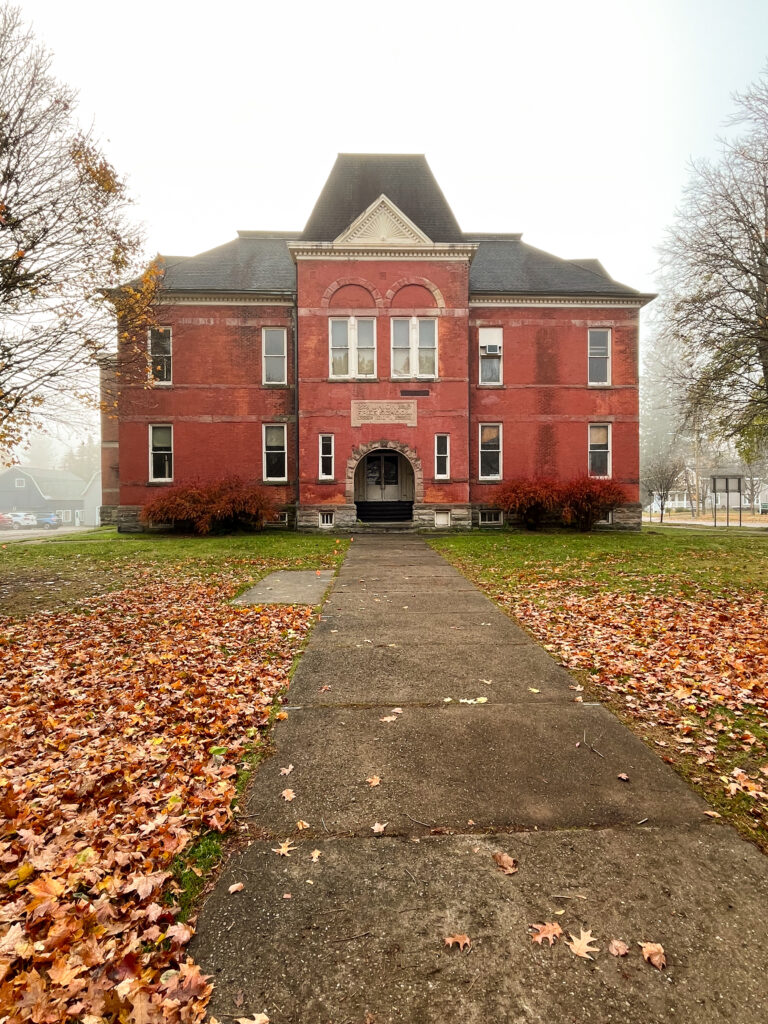
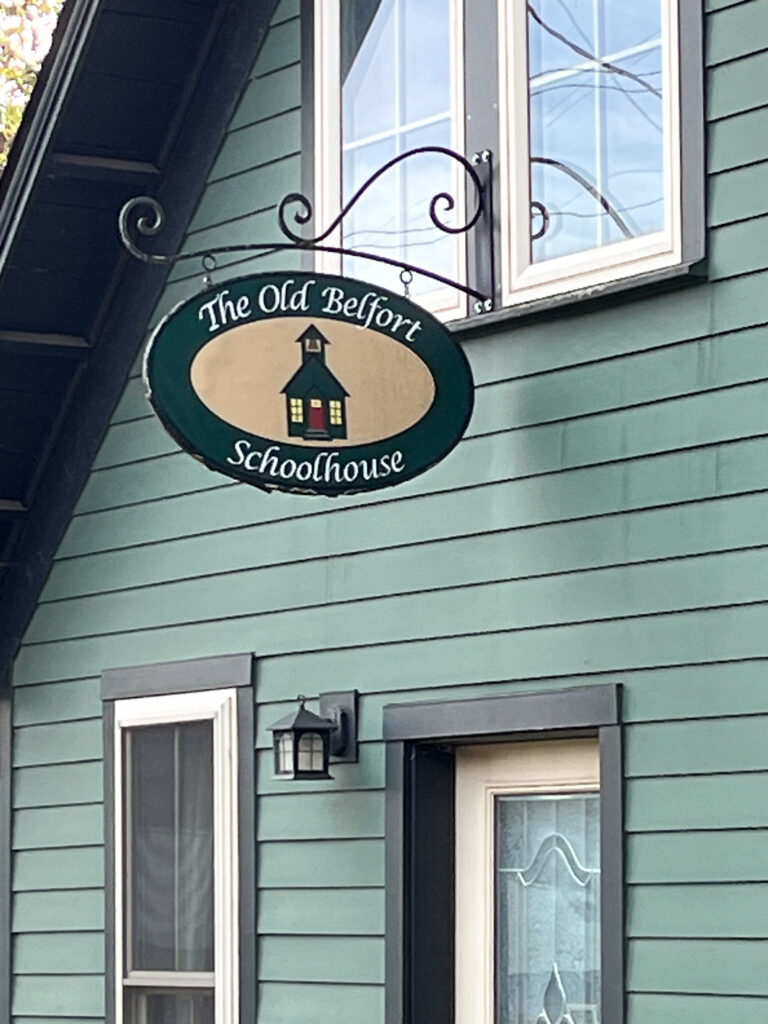
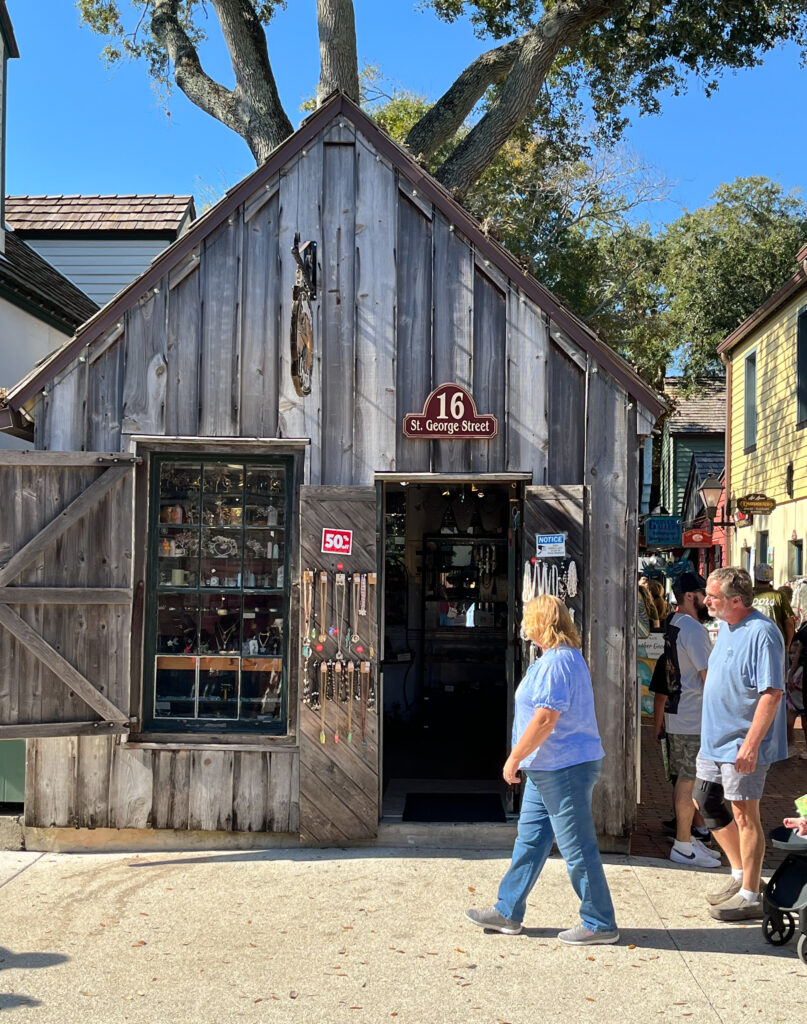
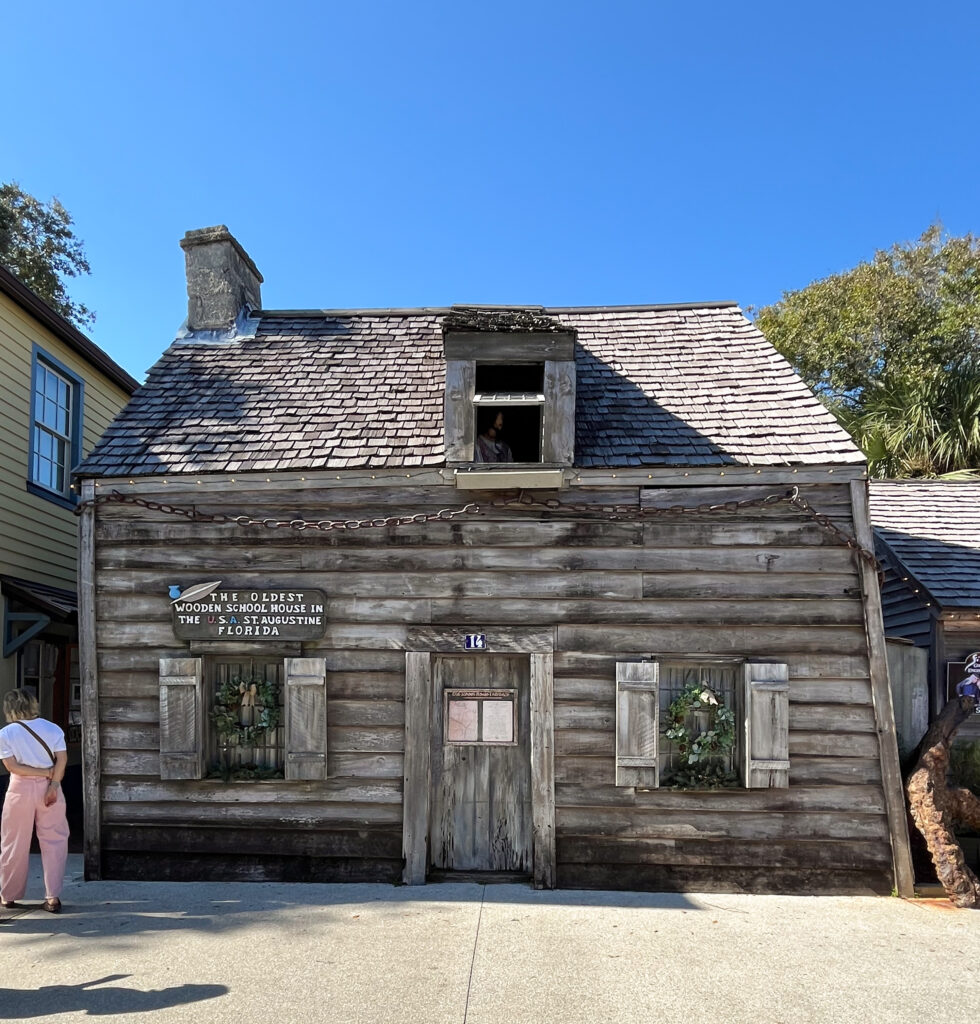
Tucked along St. George Street near the City Gate sits the Oldest Wooden School House, a charming reminder of early colonial life. Built by 1716, it’s one of the earliest wooden structures in the city and offers a glimpse into what school life was like for children in the early 1700s. Visitors can tour the little property and imagine a day in the life of students centuries ago.
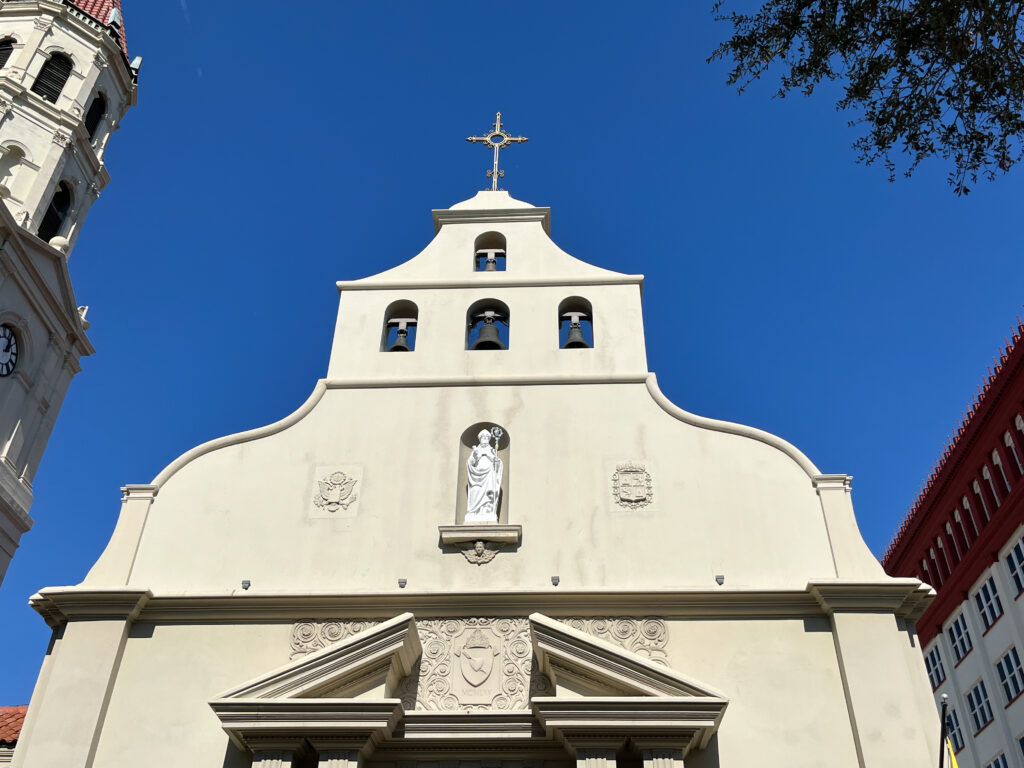
Not far from the gate stands the Cathedral Basilica of St. Augustine, and it ended up being one of the highlights of my short visit. Sitting just off the Plaza de la Constitución, it’s the oldest Catholic parish in the United States, with roots reaching back to the city’s founding. When Pedro Menéndez landed in 1565, a priest traveling with him—Padre López de Mendoza Grajales—presented him with a cross. Menéndez kissed the base, the Spanish flag, and claimed the land for both Spain and the Church. The first Catholic Mass in the continental U.S. was celebrated that day.
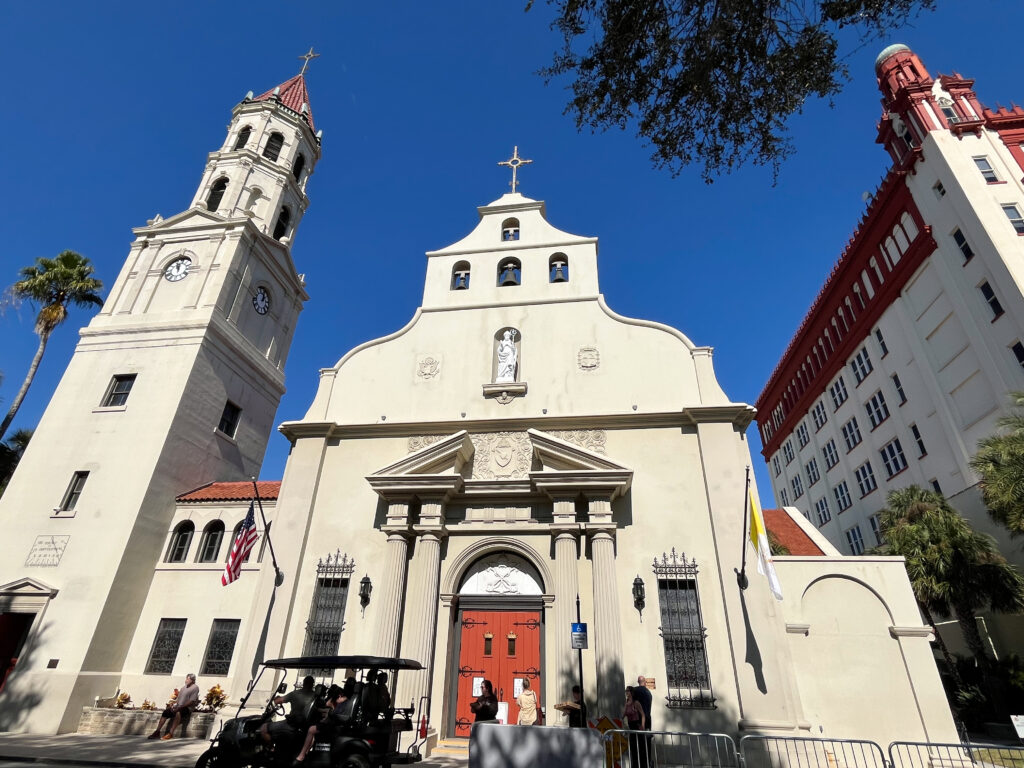
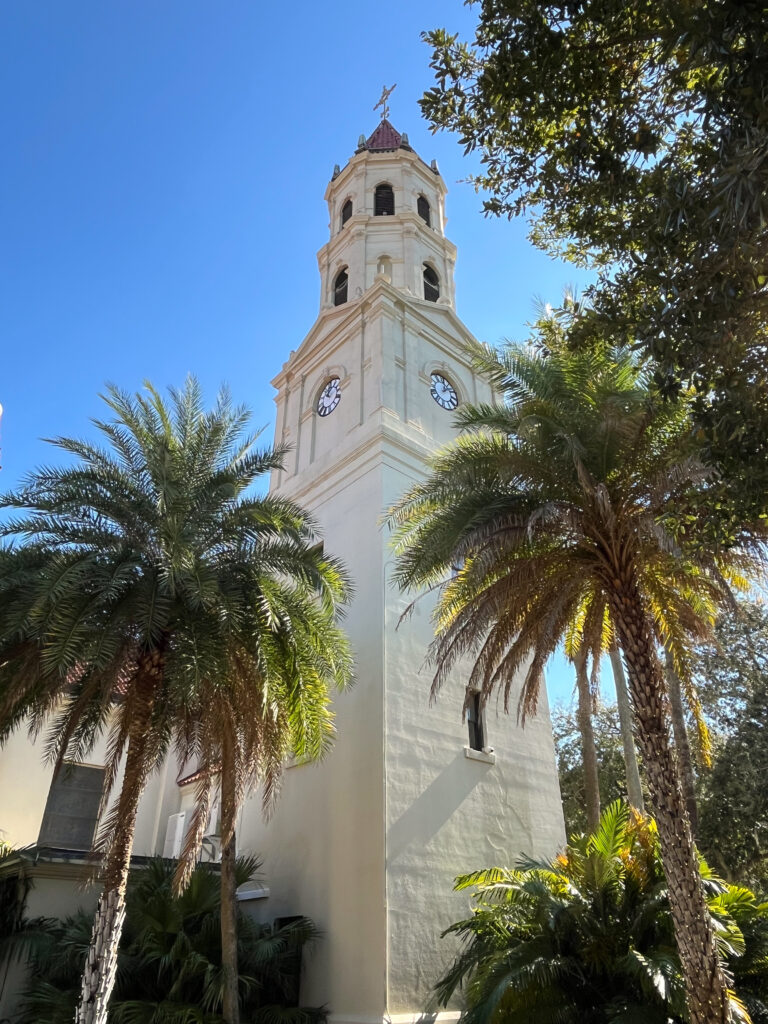
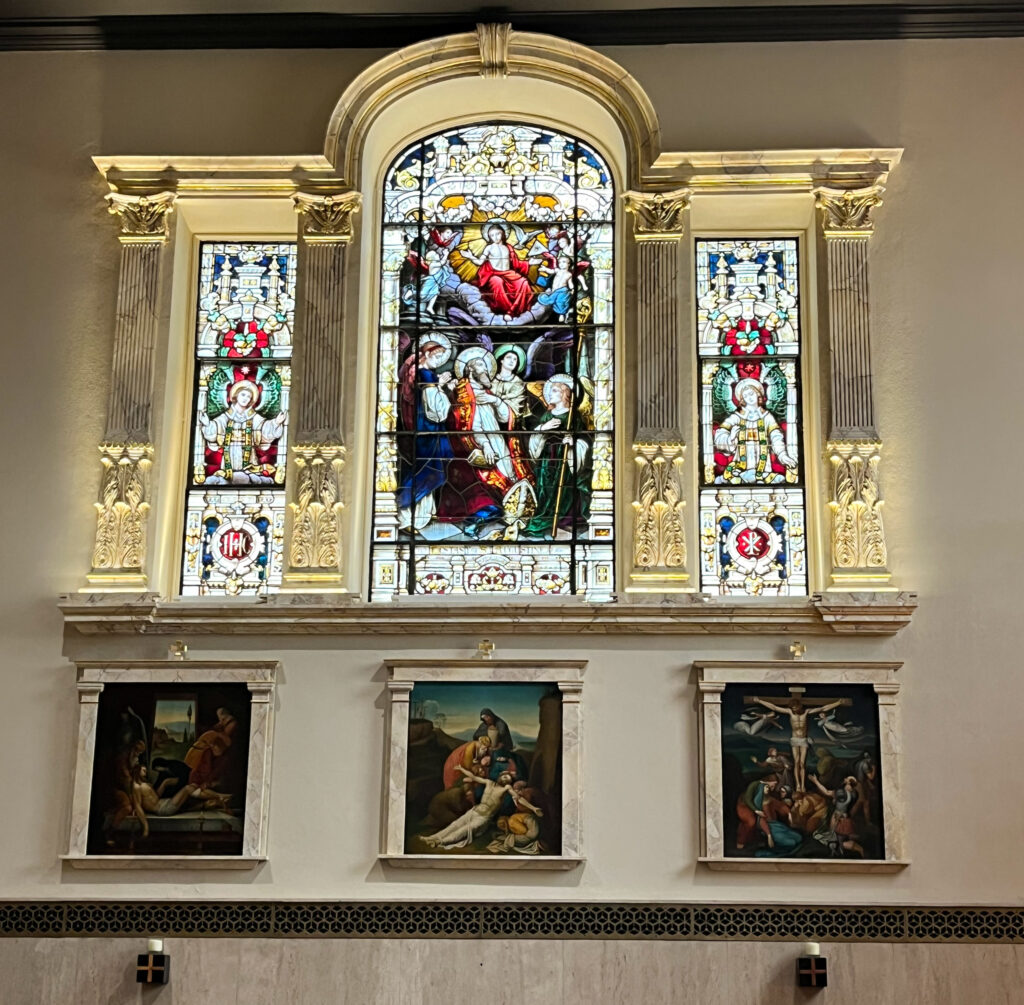
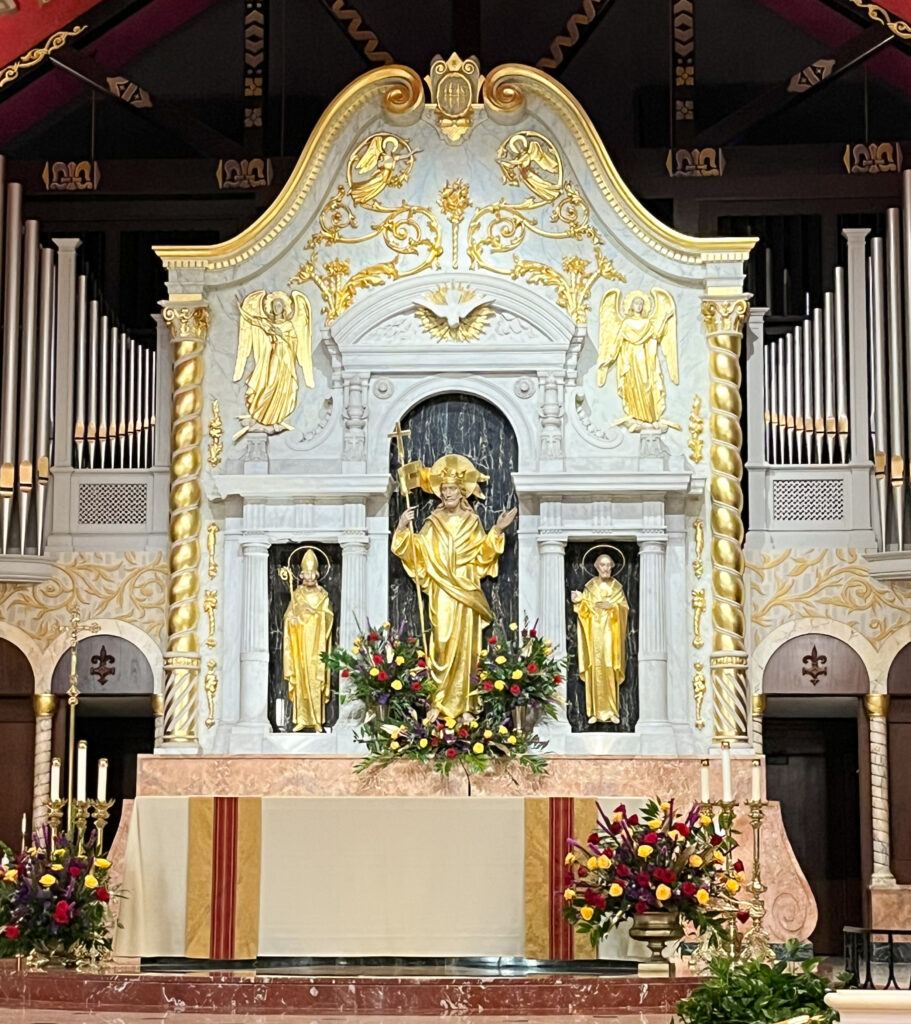
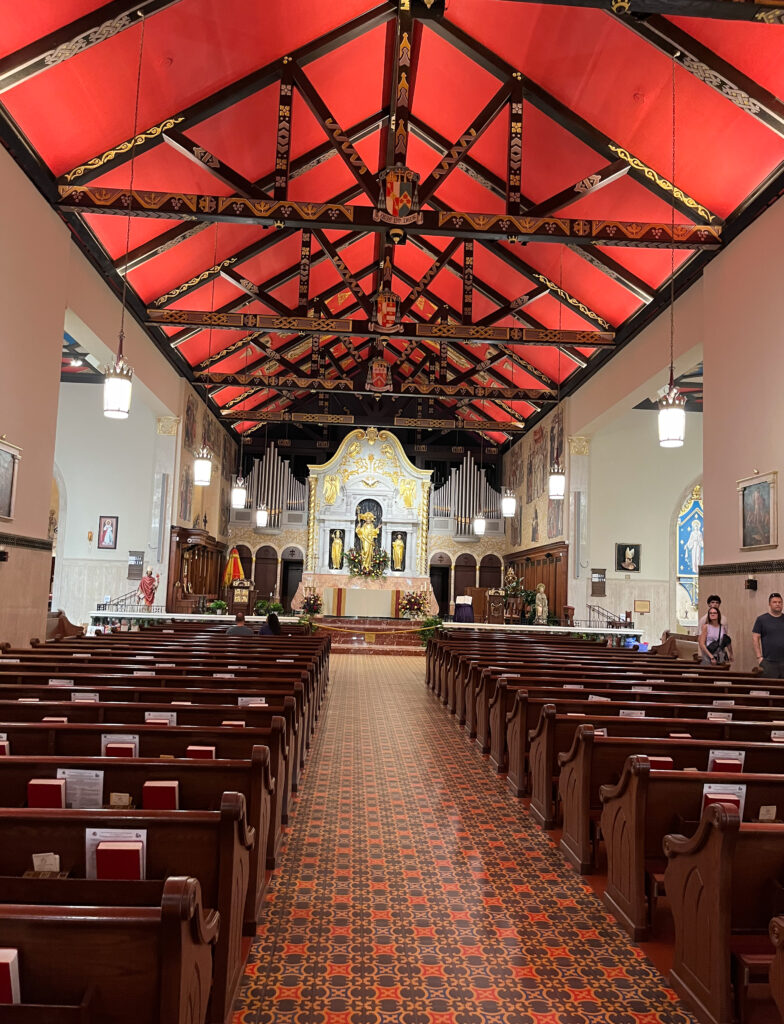
The cathedral as it stands now was completed in 1797, and parts of the original coquina walls still remain. Inside, the blend of history and artistry is stunning:

  • Murals by Hugo Ohlms, installed in the 1960s, sweep across ceilings and walls.
  • Stained glass windows depict scenes from the lives of Saint Augustine and his mother, Saint Monica.
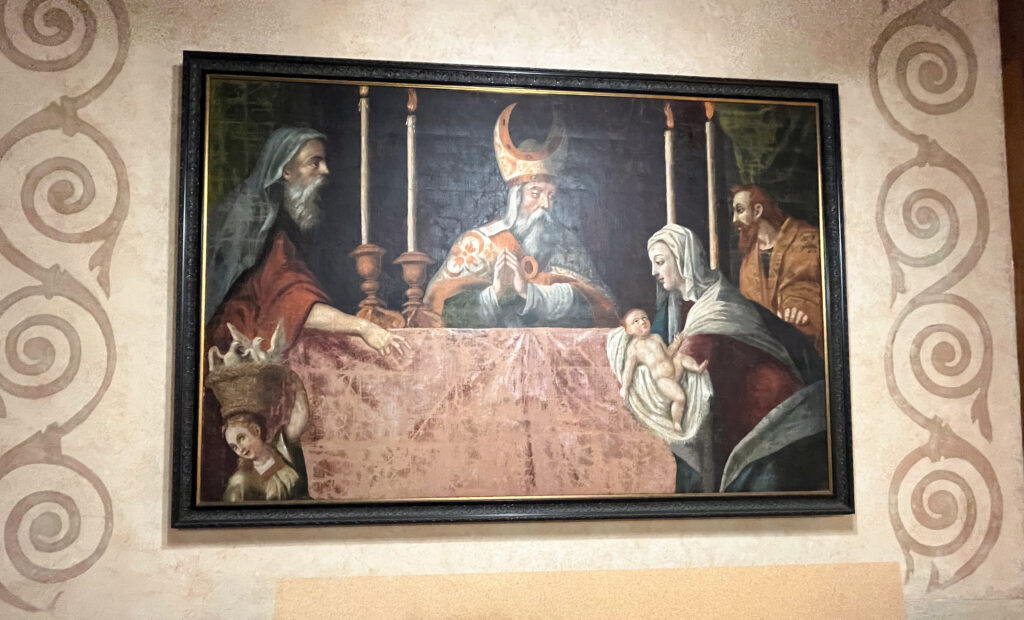
  • Hand-carved sculptures of Jesus, Saint Augustine, and Saint Peter frame the altar—where Jesus is shown in His resurrection, rather than His crucifixion.
It’s a place that feels both ancient and deeply alive.

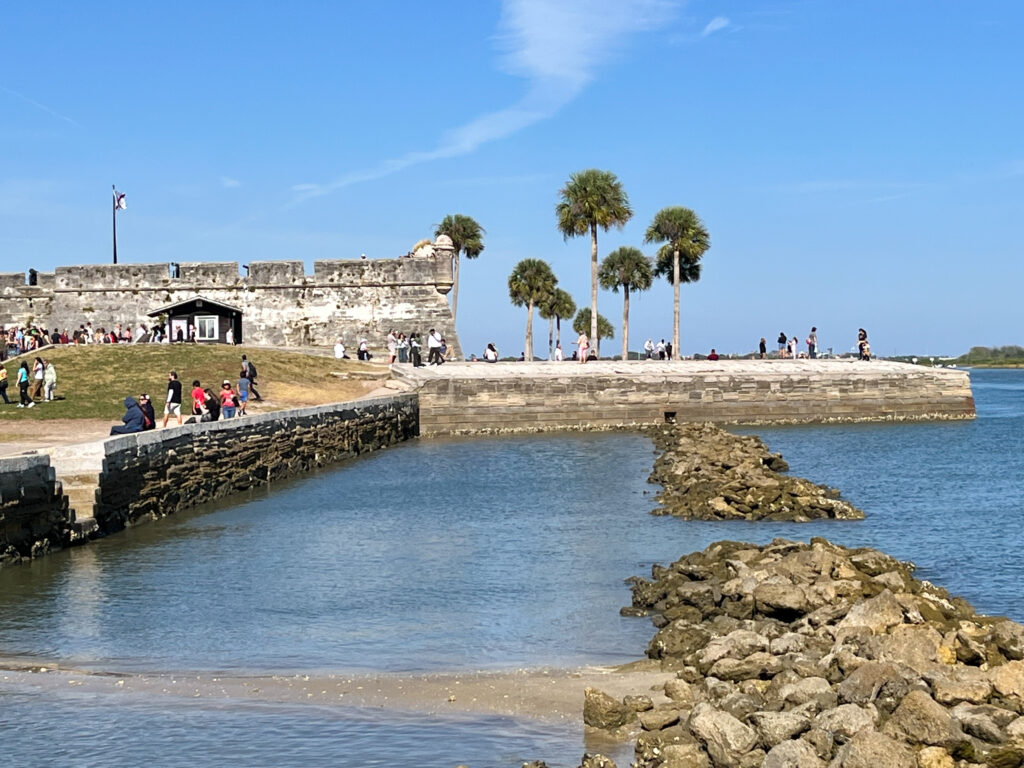
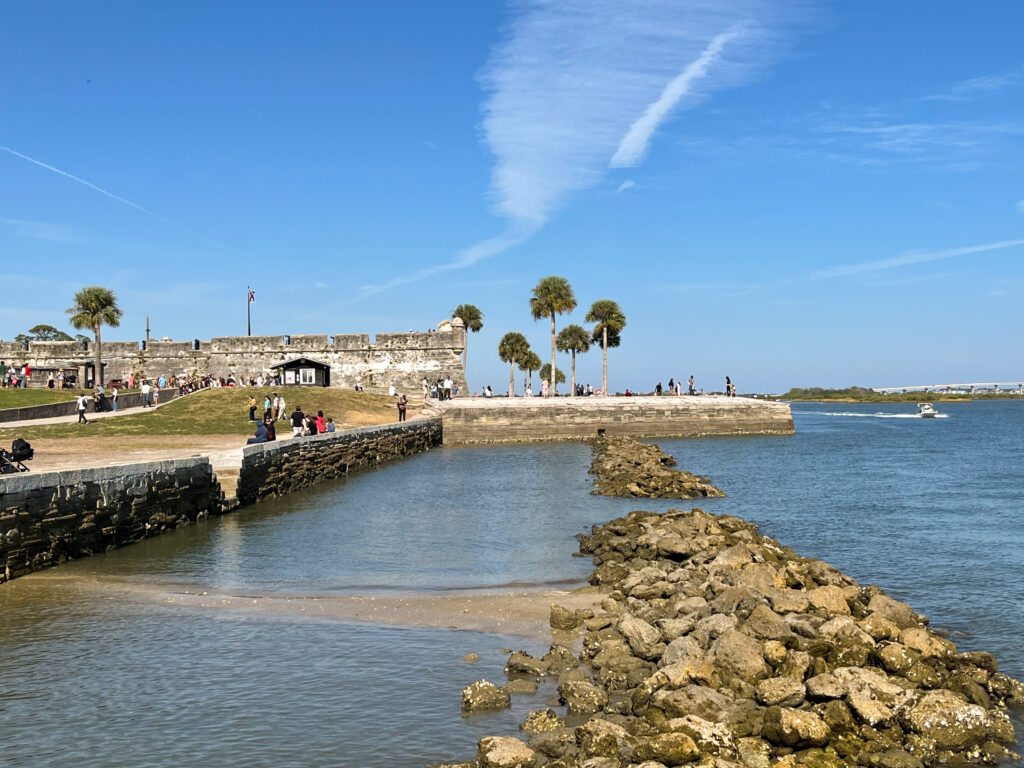
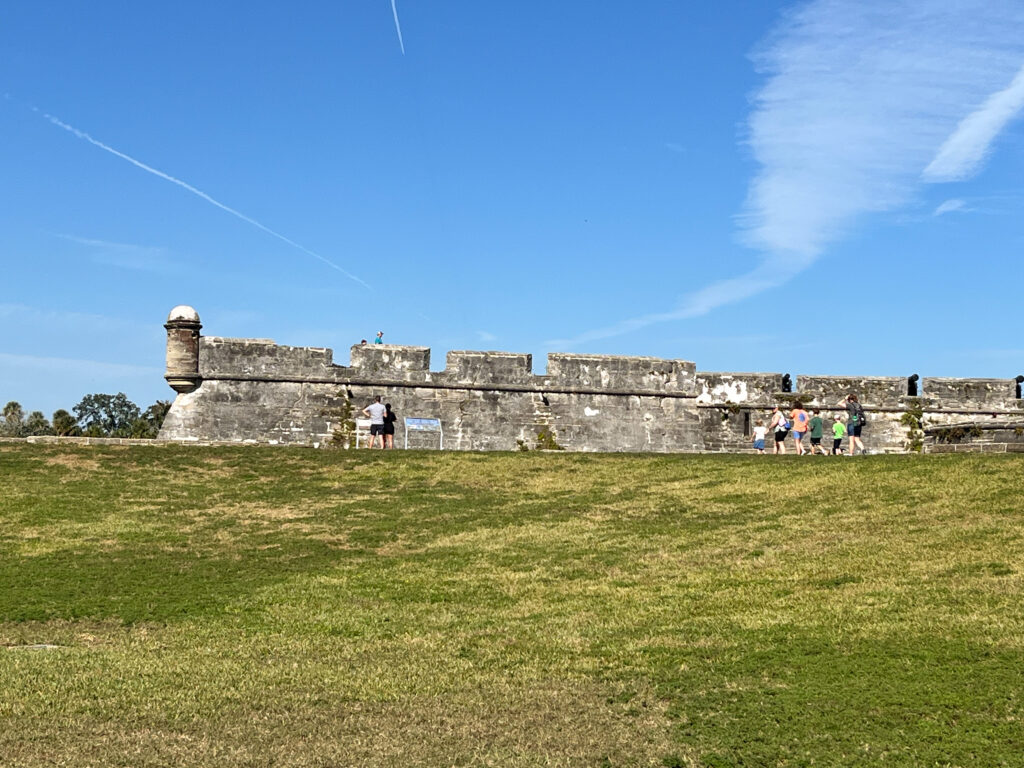
From there, I wandered toward the Castillo de San Marcos, the massive 17th-century Spanish fort that still watches over the water. Built between 1672 and 1695, it’s the oldest masonry fort in the United States. Standing on its grounds, with the Matanzas River shimmering nearby, it’s impossible not to feel the layers of stories—pirates, soldiers, explorers, and ordinary people who lived their lives within sight of those walls.
Though I didn’t have time to visit on this trip, I also want to see the Fountain of Youth Archaeological Park, tied to the legend of Ponce de León’s 1513 landing. Knowing I was that close to the site of his expedition makes me even more eager to return and explore it properly.

Walking along the waterfront and wandering through the historic district, I realized how easily this city settles into you—quietly, but unmistakably. The tucked-away shops, the old stonework, the sound of church bells, the mix of Spanish and coastal southern charm—it all leaves an impression that lingers.
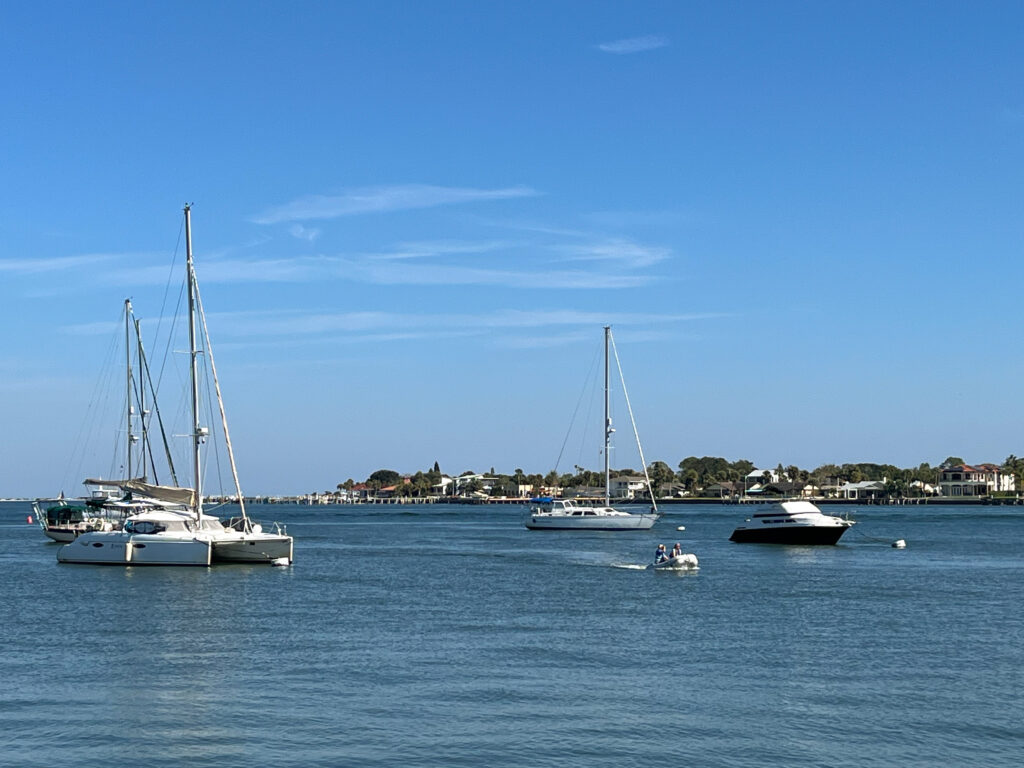
My visit was short, and there’s still so much I want to see. St. Augustine deserves time—time to wander, time to listen, time to let the centuries speak.

I’ll definitely be back. Some places simply ask you to return, and this is one of them.

– Kari

Trolls: A Field Study — A Whimsical Adventure at the North Carolina Arboretum

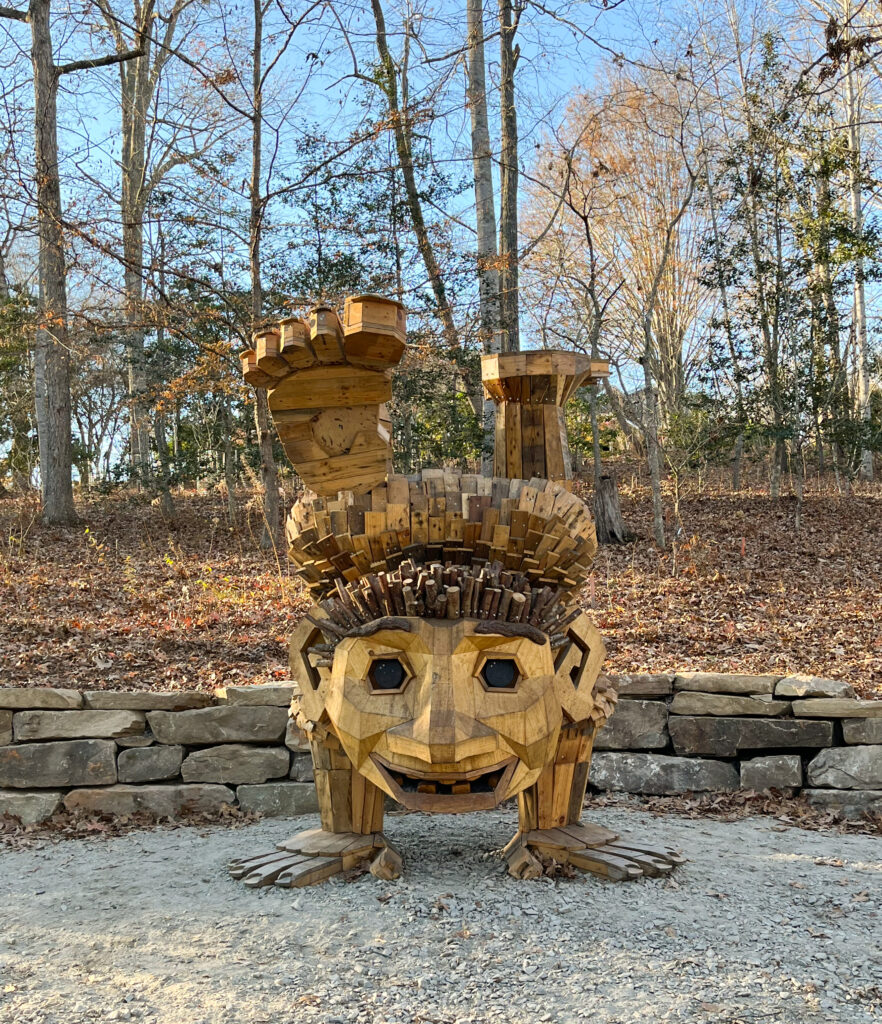
After my time in Hendersonville, I made a quick stop in Asheville to visit something I’ve been quietly excited about ever since I first heard the news: Trolls: A Field Study, the newest traveling exhibit by Danish recycle-artist Thomas Dambo. I’ve seen four of his giant 30-foot forest trolls on this trip — quirky, gentle giants tucked into woods across the U.S. and around the world — but this exhibit is different. These trolls are his “Baby Trolls”, standing only seven to nine feet tall… small by troll standards, but every bit as magical.

A Field Study of Us — Through Troll Eyes

The exhibit tells a story:
On the night he was born, a little troll named Taks wandered into the human world. What he saw surprised him — noisy machines, people rushing, screens glowing everywhere, and almost no one stopping to talk to the trees. When he returned to the forest, he shared his discoveries with his eleven siblings, and together they set out on a mission to study humankind.

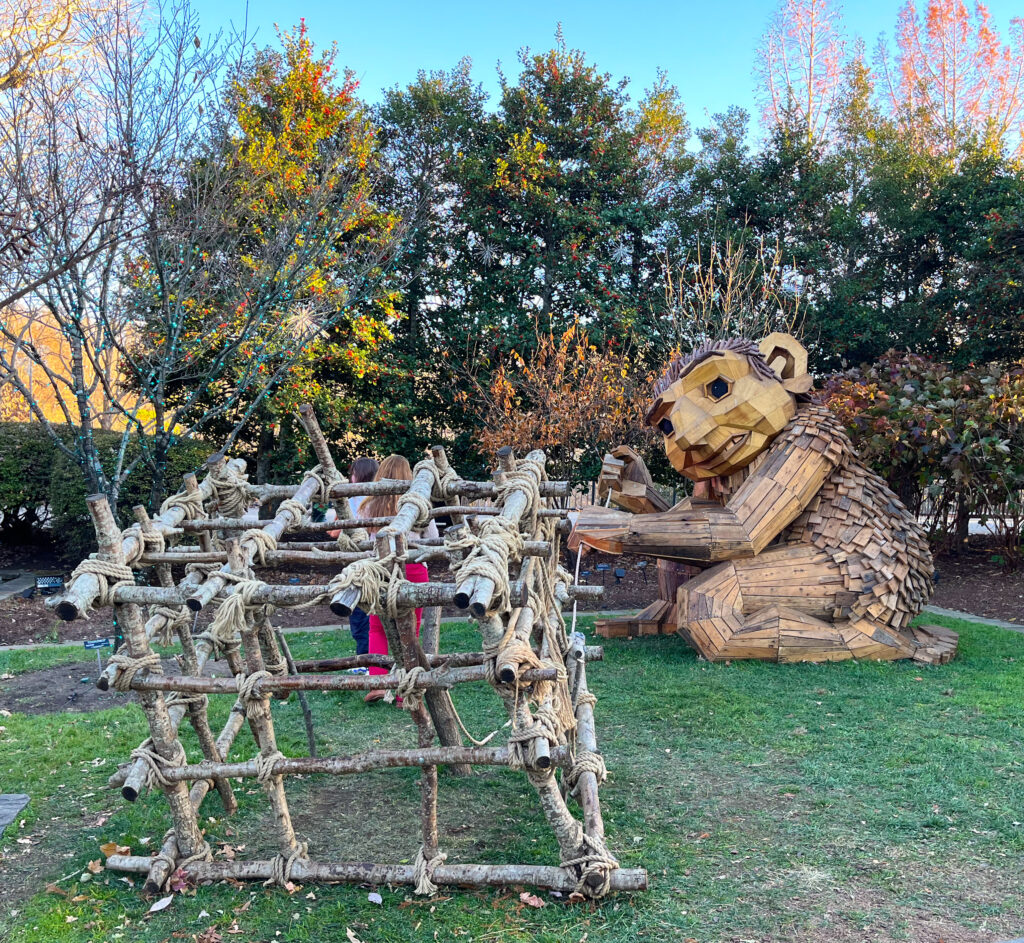
That’s the heart of Trolls: A Field Study — twelve whimsical troll sculptures exploring the grounds of the North Carolina Arboretum from November 15, 2025 through February 17, 2026. Each troll has its own personality, posture, and curiosity. And each one is hand-built from reclaimed materials — fallen branches, pallets, twigs, and scraps that Dambo transforms into something imaginative and alive.

There’s so much joy in wandering the paths and stumbling upon them. Some lean in as if listening. Some peer through wooden binoculars. Some crouch quietly, observing. They’re playful, thoughtful, and just a little mischievous.

The Baby Trolls (And Why They’re Special)

Most of Dambo’s trolls around the world are towering, 20- to 30-foot forest guardians tucked into wild places. But these “Baby Trolls” were designed as part of an interactive, family-friendly experience. They’re still large and impressive — especially when you turn a corner and suddenly find one studying you — but they feel more approachable, as if they wandered just far enough from home to be curious.

An Unexpected Treasure Hunt

One of the most fascinating parts of this exhibit is the hidden layer of adventure woven into it. Each troll has a symbol, and if you collect all of the symbols from the twelve trolls in Asheville plus a couple of symbols from other Dambo troll locations in North Carolina, you can complete a sort of treasure map that leads to The Grandmother Tree.

I didn’t have time to do the full symbol hunt — I was only able to stop for a quick visit — but I love the idea of it. A slow-travel scavenger hunt, a bit of whimsy for adults and kids alike, and a reminder that exploration is always rewarded for those who linger a little longer. If you’re in the area for a few days (or traveling through multiple NC towns), this would be such a fun experience.

A Gentle, Playful Reminder

What I love most about Dambo’s work is that it always carries a message, and this exhibit is no exception. These trolls — made from recycled materials — invite us to see the world differently. To look up more. To wander slower. To return to the kind of curiosity we had as kids, when finding something unexpected on a trail felt like magic.

And in a world that often feels busy and fast, it felt grounding to walk among them, even briefly.

If You Go

Location:
The North Carolina Arboretum, Asheville, NC

Dates:
November 15, 2025 – February 17, 2026

What to Expect:

  • 12 Baby Troll sculptures
  • Gentle walking paths
  • Kid– and adult-friendly exploration
  • Symbol-hunting “field study” opportunity
  • Beautiful forest and garden surroundings
  • Peak whimsy

Whether you’re visiting Asheville for a day or exploring Western North Carolina for a season, Trolls: A Field Study is absolutely worth adding to your list.

Western North Carolina: A Mountain Getaway of Charm, Color, and Quiet Wonder

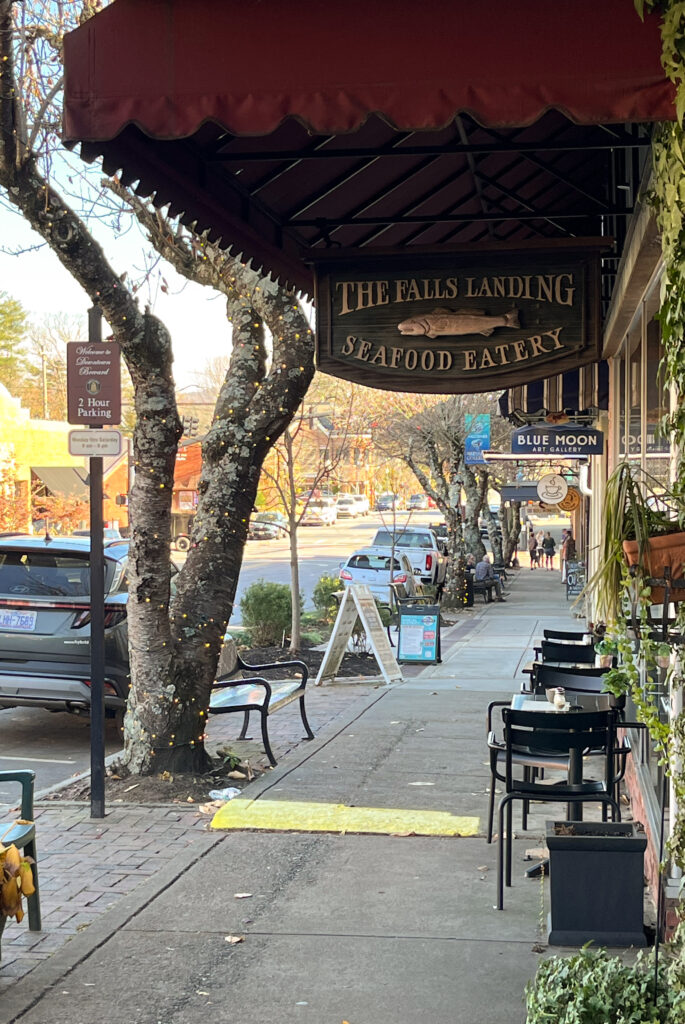
My time in Western North Carolina felt like slipping into a familiar, comforting rhythm — a mix of mountain air, small-town charm, and the kind of slow wandering that lets you really see a place. This region has long been one of my favorites, and once again, it didn’t disappoint. I split my visit between Hendersonville and Brevard, two towns close together yet each with its own personality.

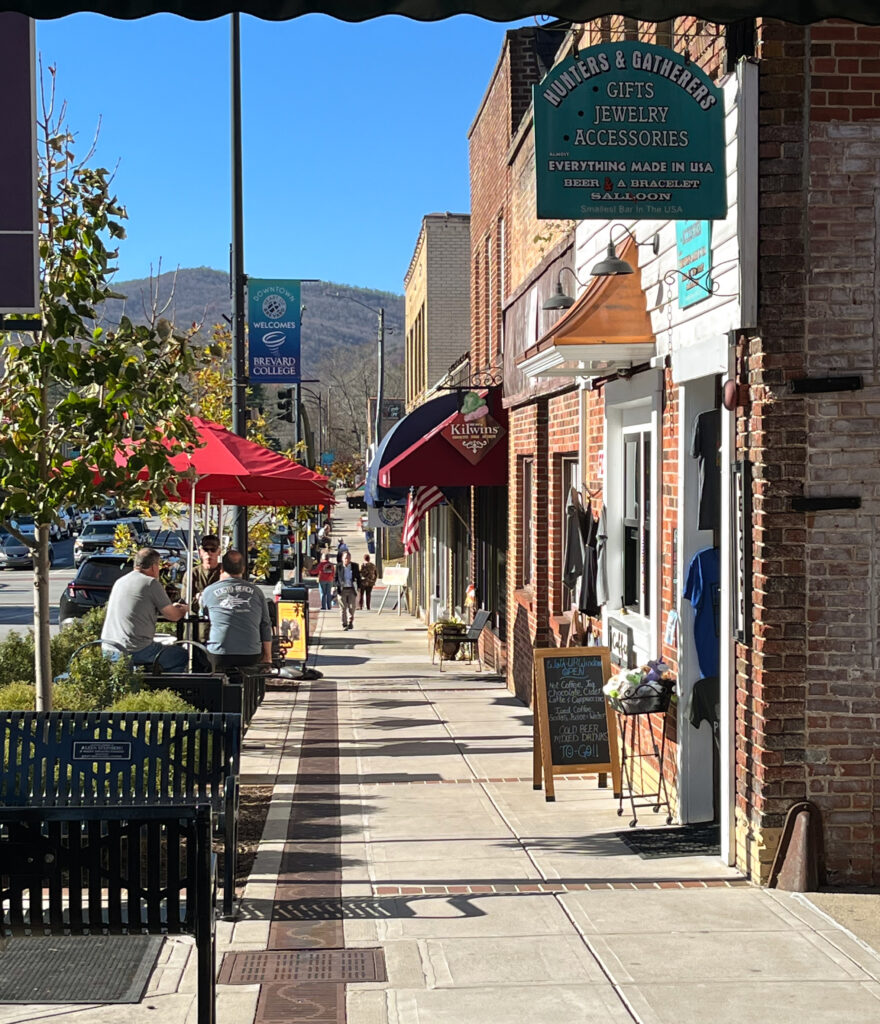
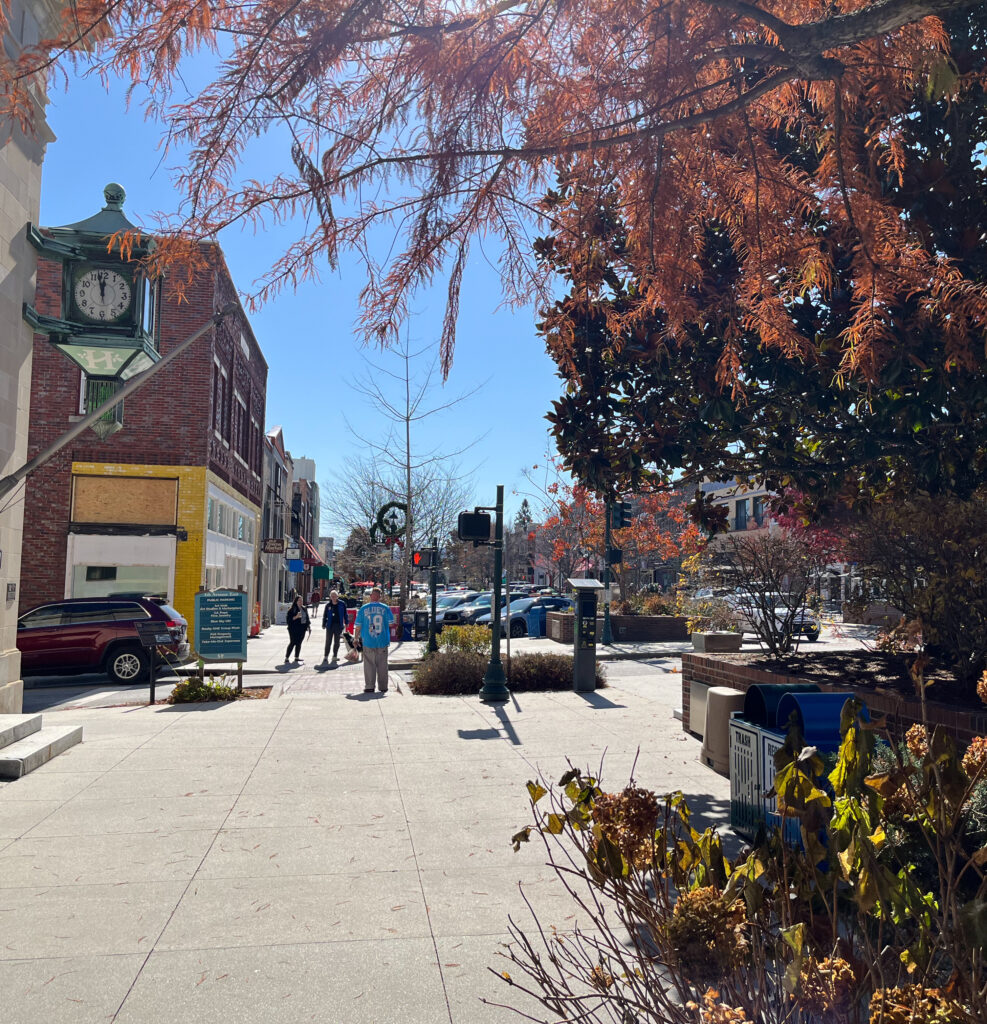
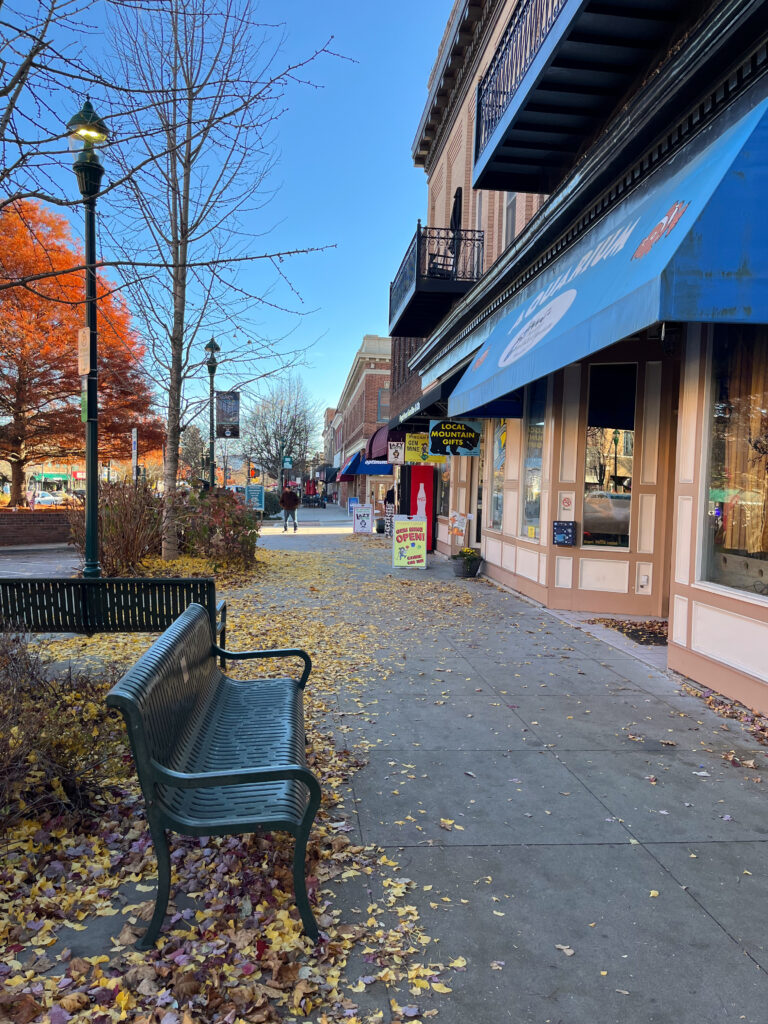
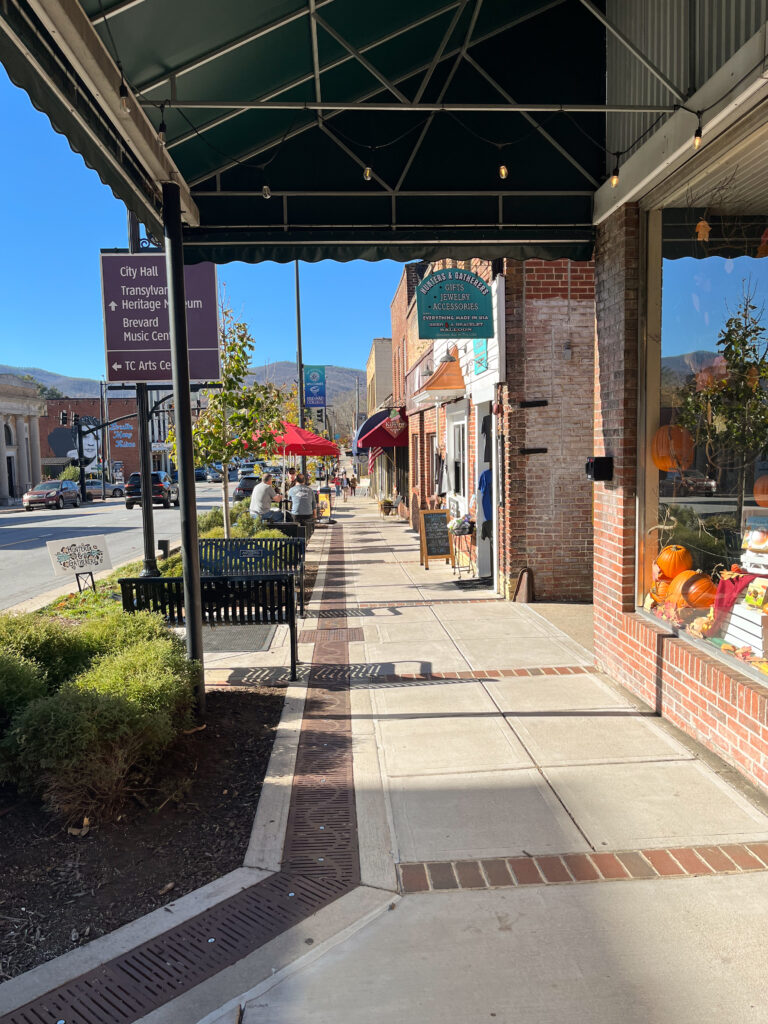
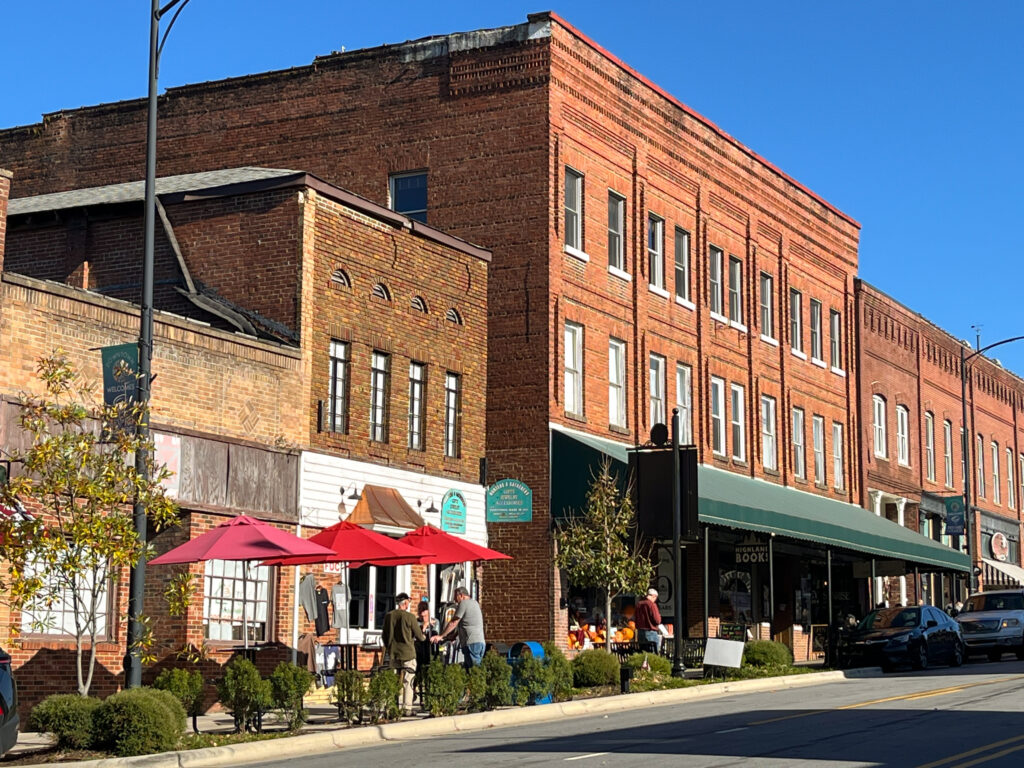
Hendersonville was my first stop. It’s nestled in the Blue Ridge Mountains, wrapped in soft ridges and shifting layers of color depending on the time of day. The town has grown since the girls’ trip I took here a few years back — more people, more energy — yet the historic downtown still holds the same charm I remembered. Local shops and friendly faces make you feel like you’ve been there before.

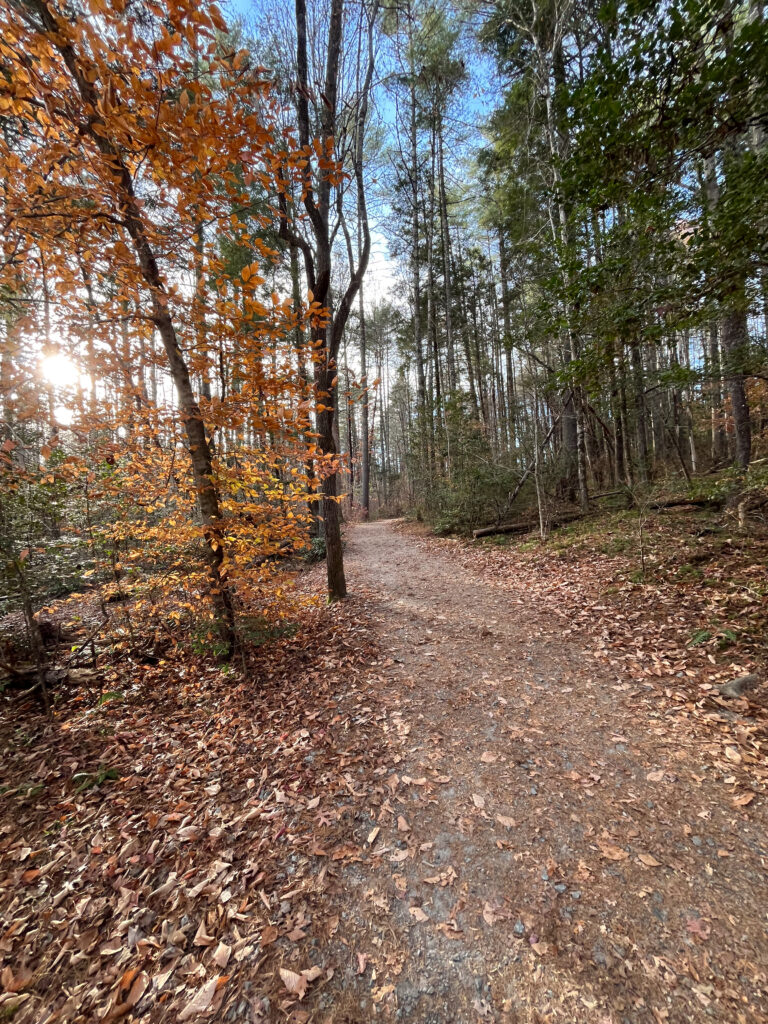
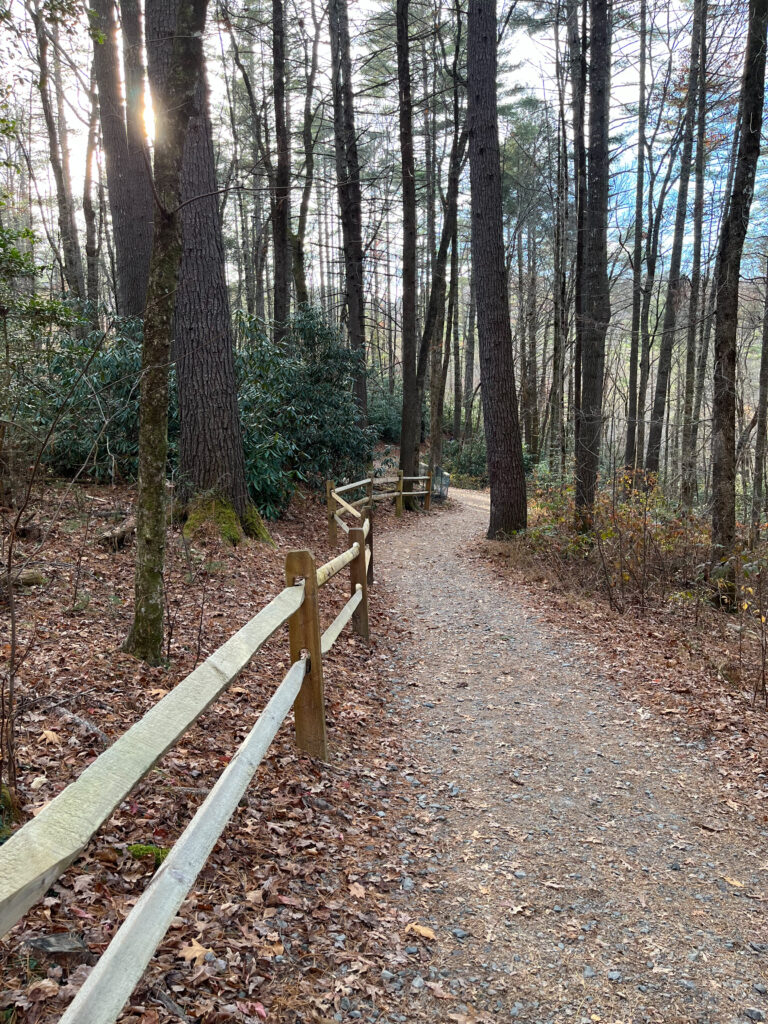
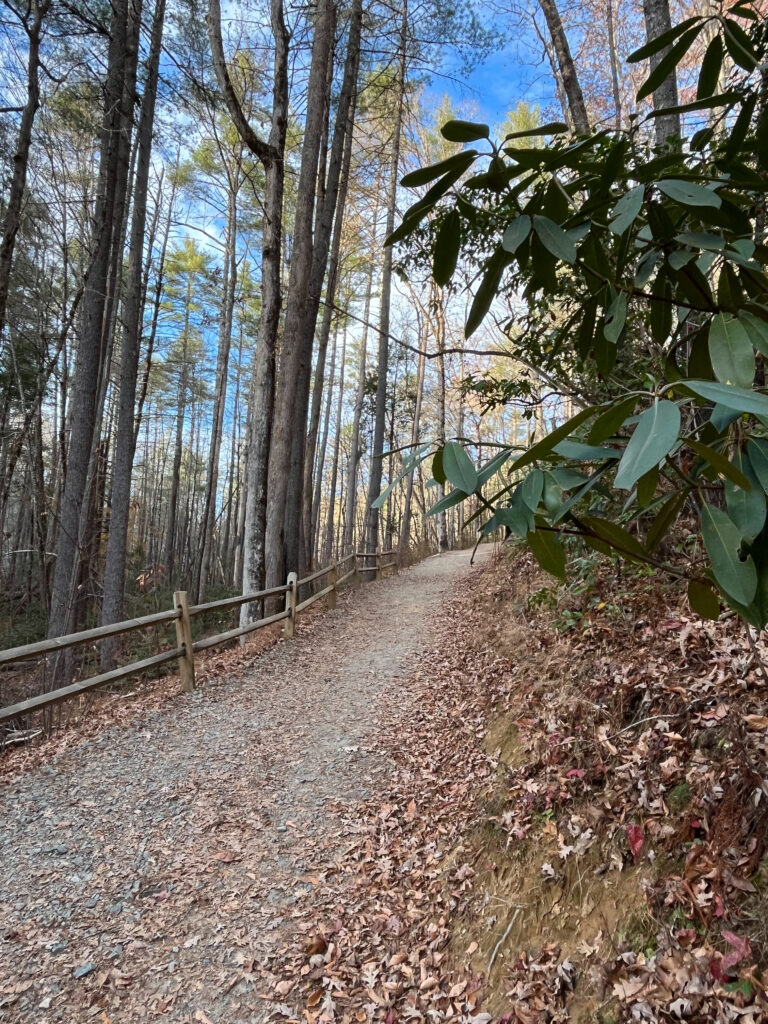
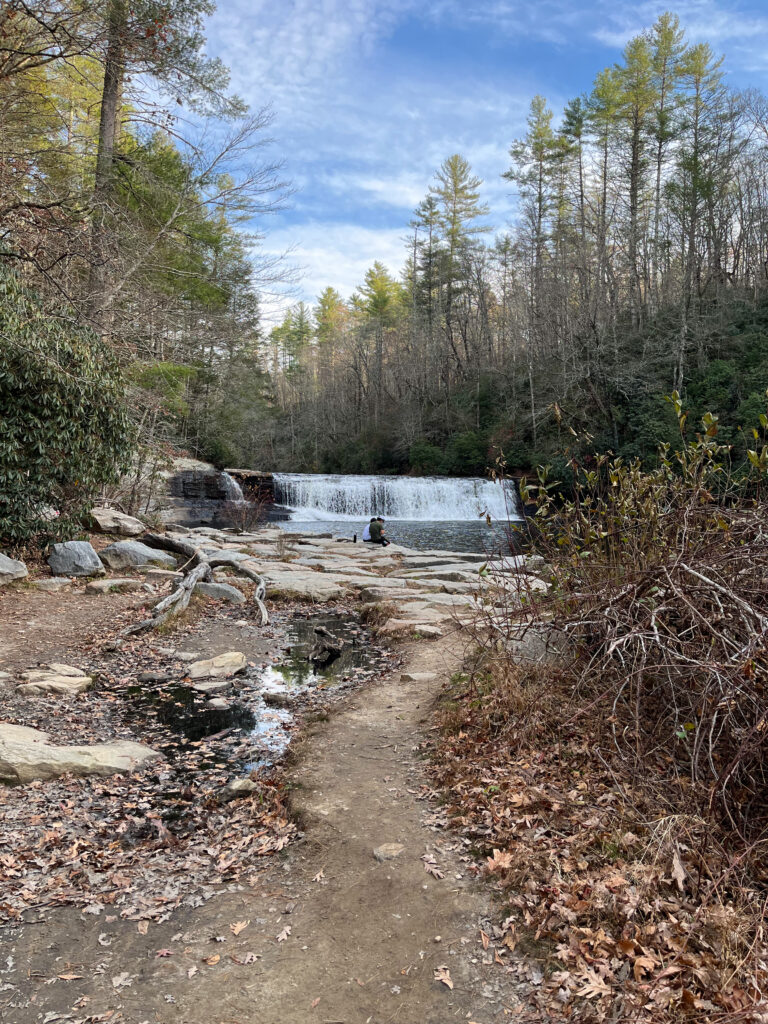
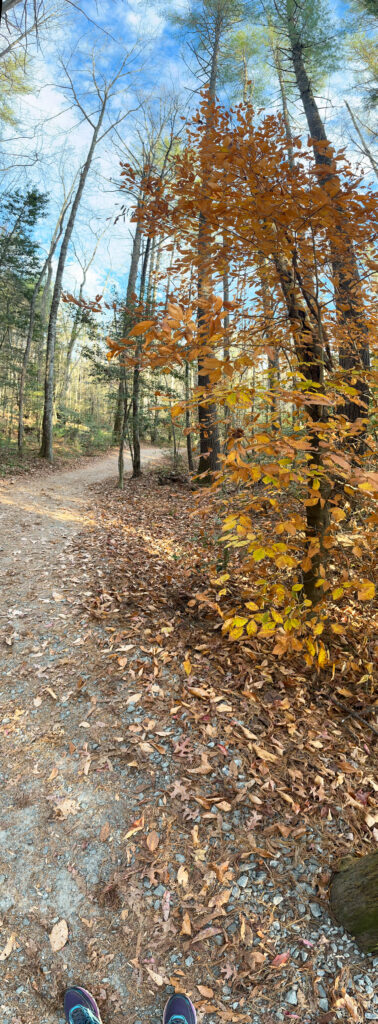
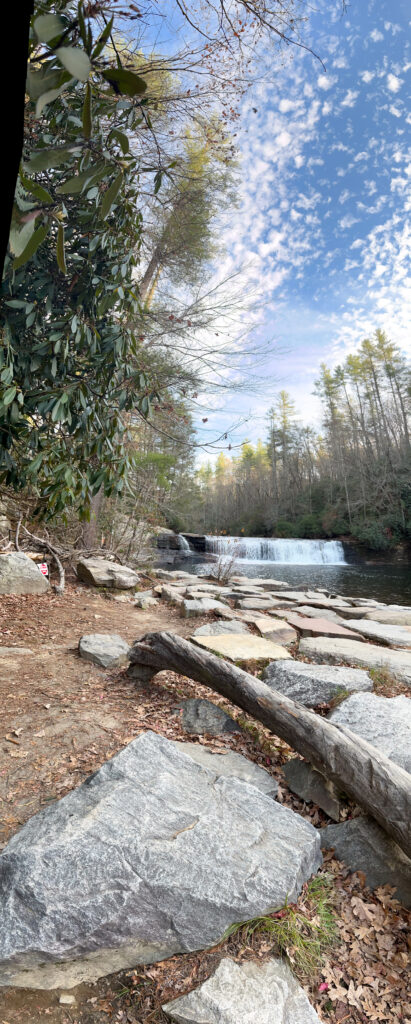
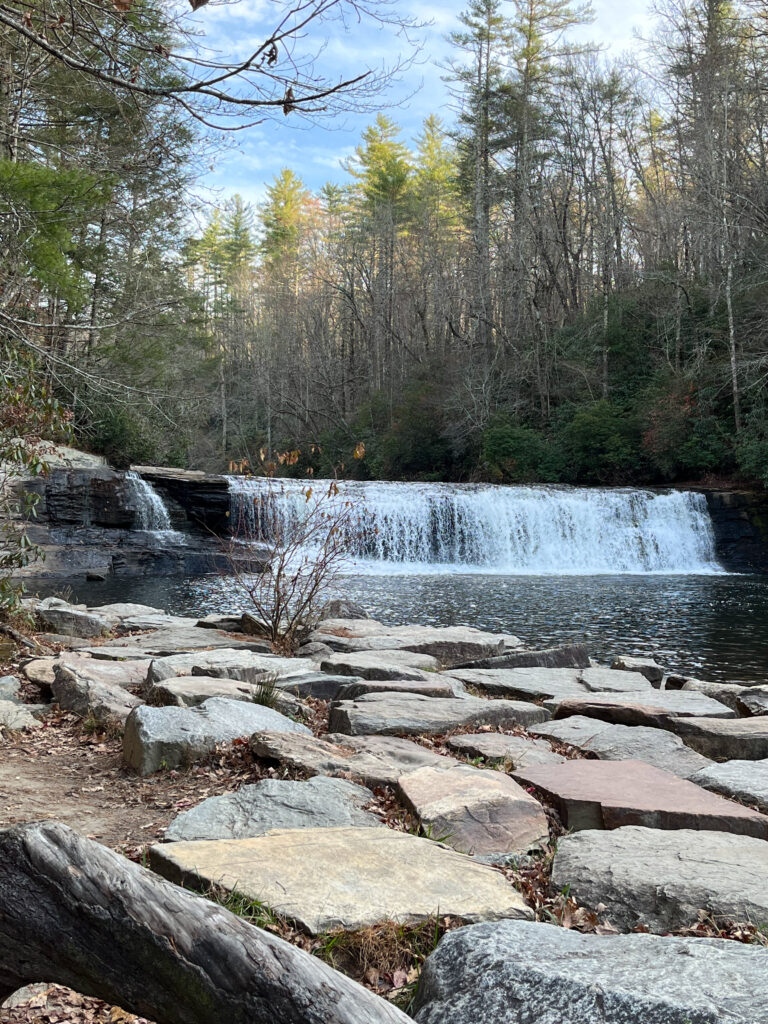
I spent an afternoon wandering Main Street, visiting shops and art galleries at an easy pace. Nothing rushed — just the quiet pleasure of browsing and discovering. I made a short trip to DuPont State Recreational Forest to see Hooker Falls, a gentle hike filled with that clean forest scent you can only get in the mountains. The falls were peaceful, and I lingered there, letting the sound of water become a kind of meditation.

There were still things I didn’t get to — Bearwallow Mountain, the Blue Ghost Fireflies that light up the woods in late spring, Jump Off Rock, Chimney Rock, the town of Flat Rock, and so many more hikes and waterfalls. Transylvania County alone has around 250 waterfalls, so I’ve only just begun to explore what this area has to offer. Plenty of reasons to come back.

A short drive away, Brevard offered a different kind of inspiration. Known for its artsy spirit and temperate rainforest climate, the town has a creative heartbeat that shows up everywhere. It’s also home to the famous white squirrels — little flashes of white that locals adore — though they remained as elusive as the fireflies on this visit. Still, their presence is felt in murals, artwork, and local stories.

Part of what made this stay unique is that it doubled as my first official pet sit — something I’ve started incorporating into my travels. It’s a gentle, practical way to experience new places a little more deeply while also offsetting travel costs. If you’re curious how it works, feel free to reach out.

The galleries in Brevard were a highlight. Many feature dozens of local artists, and the craftsmanship was incredible: wooden bowls shaped like sculptures, vivid paintings, mountain photography, jewelry, and fiber art that felt like stories woven into cloth. Every gallery was a surprise, and every artist offered a different way of seeing the world. I left feeling inspired — the kind of creative spark travel gifts you when you’re paying attention.

Both towns share that unmistakable Western North Carolina blend of nature, friendliness, and creativity. They’re different, but together they made my stay feel full and balanced — one town offering peaceful walks and familiar charm, the other offering color, art, and imagination.

As with every stop on my journey, I’m learning that travel doesn’t have to be dramatic to be meaningful. Sometimes it’s the steady rhythm of small towns, a conversation with a shop owner, the cool air on a forest trail, or the inspiration found in a piece of handmade art. I know I’ll be back — there’s more to see, more to explore, and always more to learn from these beautiful mountain towns.

– Kari

A Sweet Stop in Rochester: The Charlotte–Genesee Lighthouse & Savoia Bakery

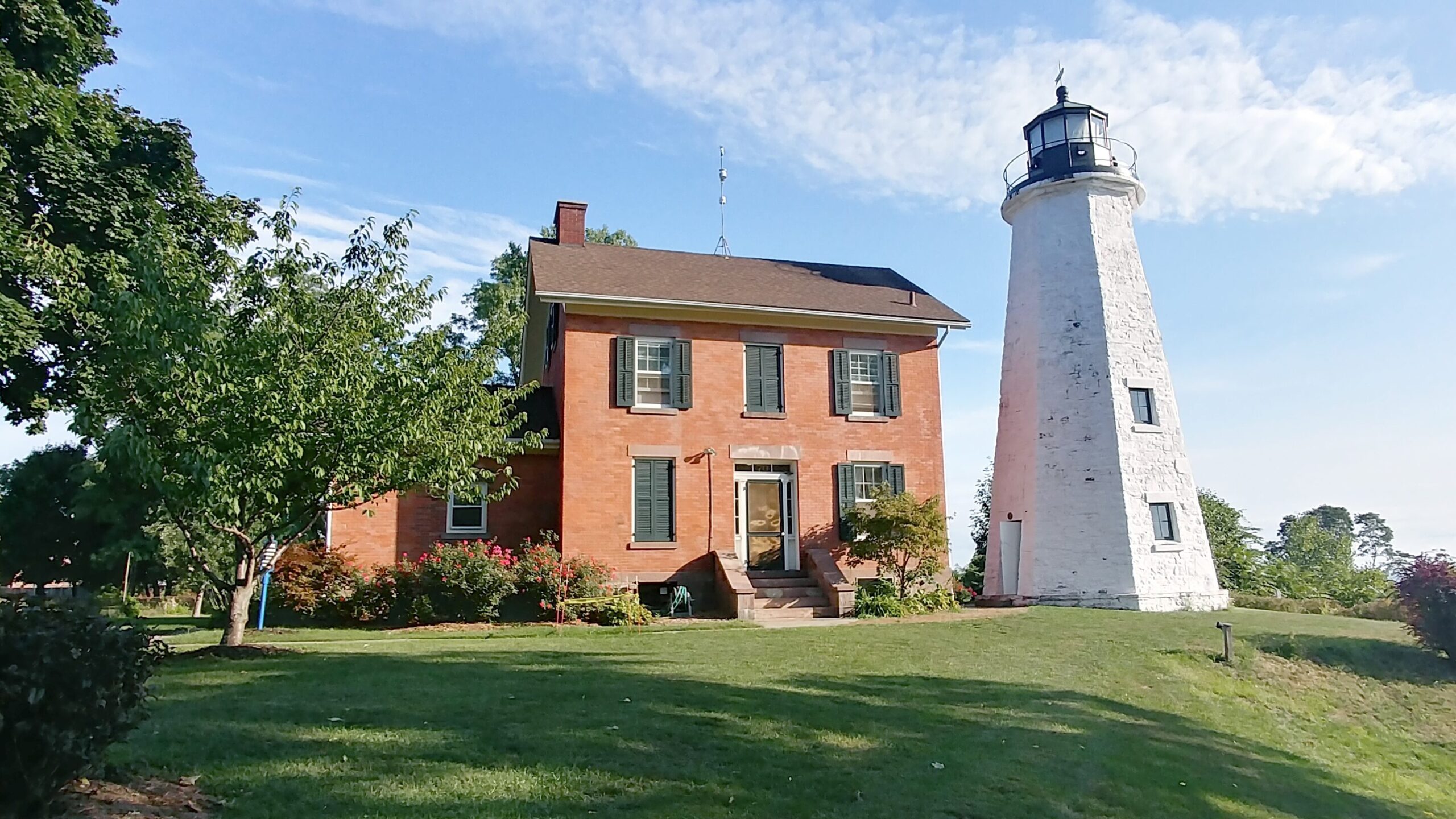
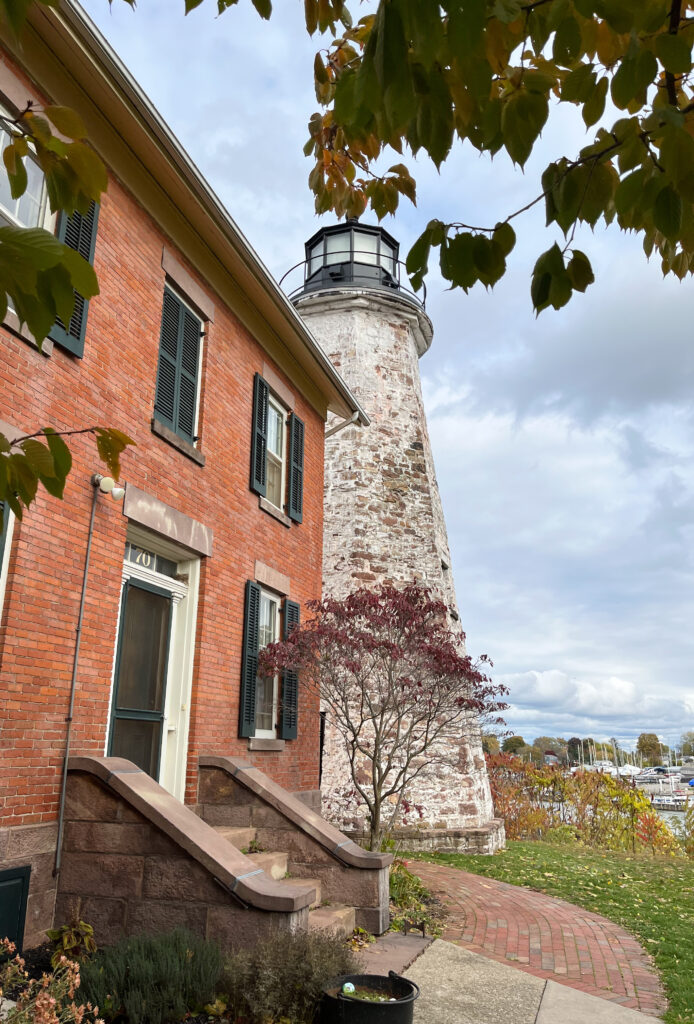
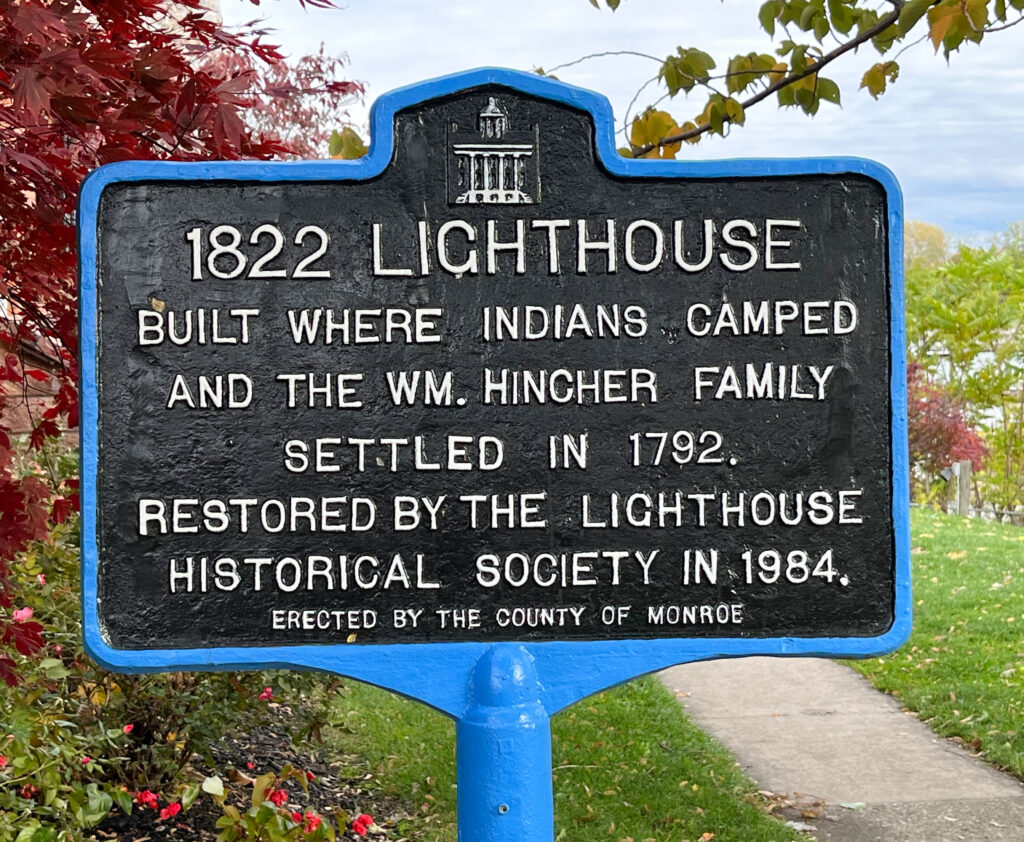
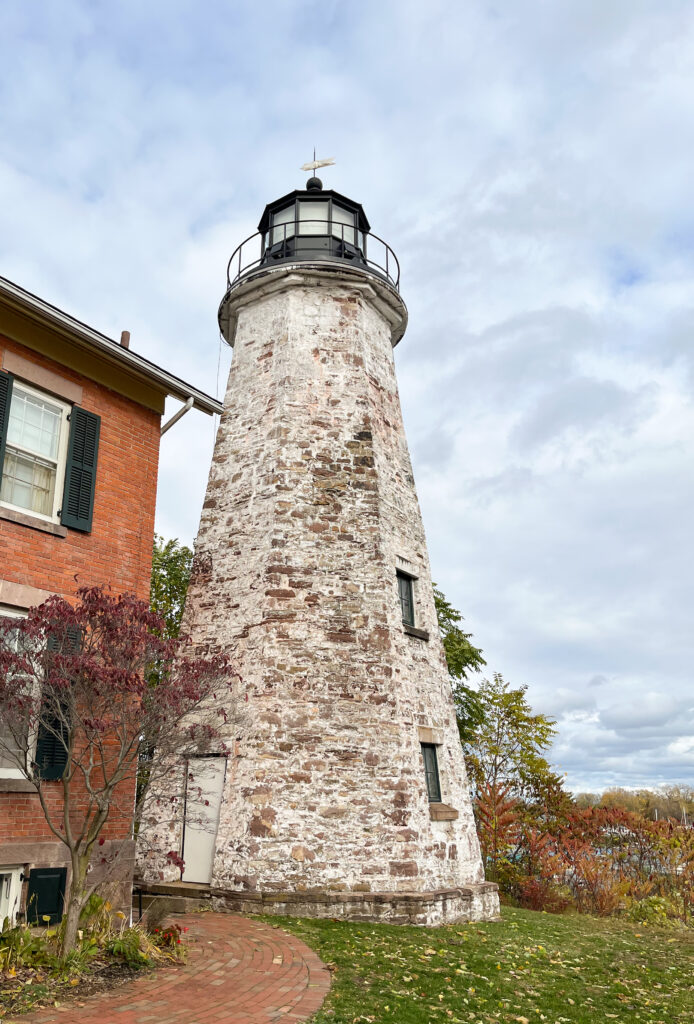
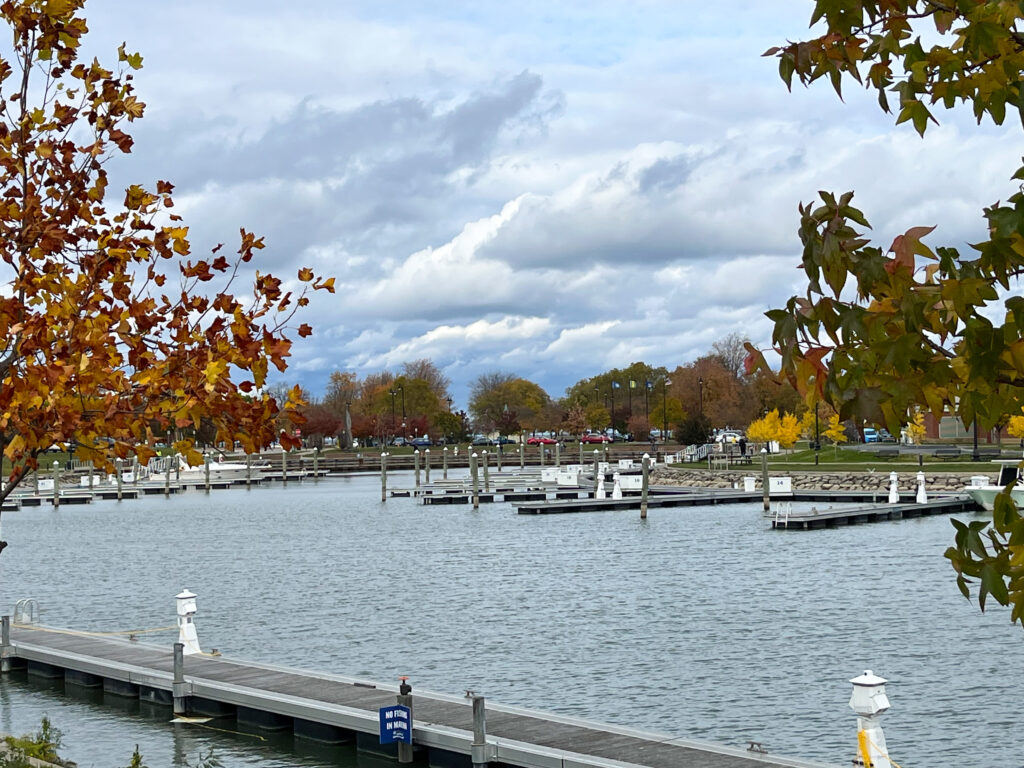
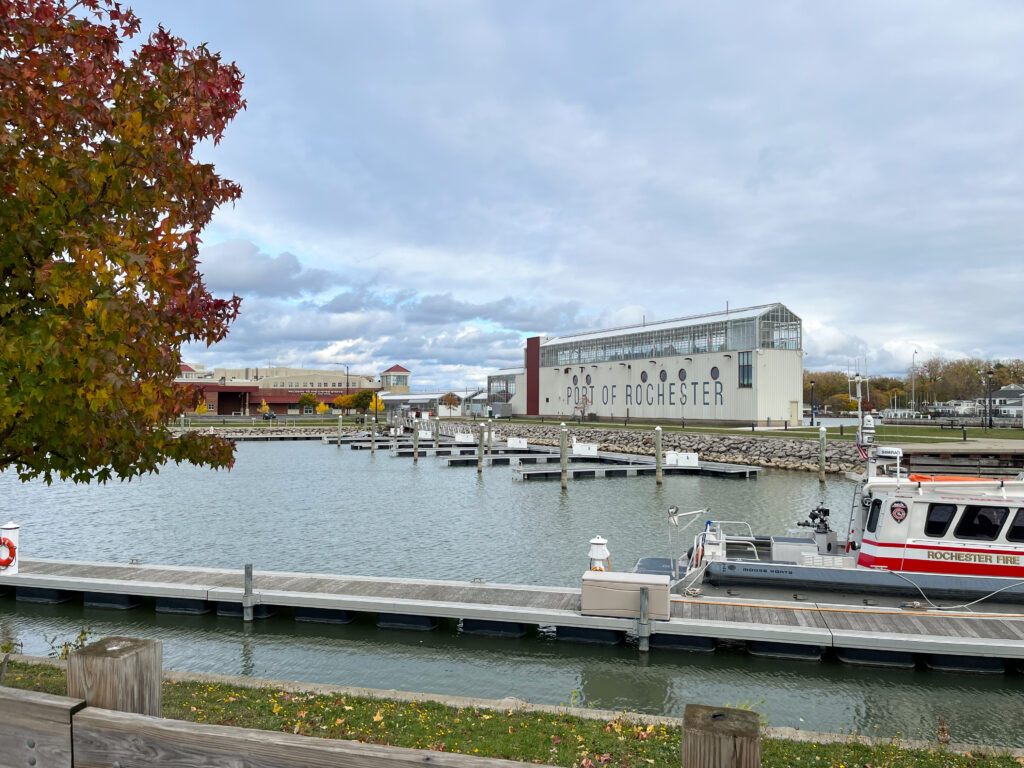
As I continued my journey south through New York, I made a short stop in Rochester — a visit that beautifully blended history and local flavor. My first stop was the Charlotte–Genesee Lighthouse, standing where the Genesee River meets Lake Ontario in the Charlotte neighborhood.

Built in 1822, this sturdy stone lighthouse is the oldest active lighthouse on the U.S. side of Lake Ontario. It’s remarkable to think it has been guiding ships for more than two centuries — first lit by whale oil lamps, later upgraded to a Fresnel lens in 1853. Climbing its 42 steps to the lantern room, I paused to imagine sailors depending on that steady light. From the top, the panoramic view of the lake and harbor was breathtaking — calm, expansive, and quietly powerful.

The lighthouse still stands thanks to the dedication of the local community. In 1965, a letter-writing campaign saved it from demolition, and today it’s lovingly cared for by the Charlotte–Genesee Lighthouse Historical Society. It remains open to visitors — a beautiful reminder of Rochester’s maritime past and the importance of preservation.

Before leaving town, I stopped at Savoia Bakery, a Rochester favorite since 1929 — and a spot recommended by Corey. The moment I walked in, the air was rich with the scent of freshly baked pastries and Italian sweetness. The glass cases were filled with colorful, old-world treats, each one as beautiful as it was delicious. I picked out a few pastries for the road — soft, buttery, and just the right touch of comfort for a traveler heading south.

It was a quick visit, but one that captured so much of what I love about travel — a glimpse of history, a taste of local tradition, and a reminder of how small stops can leave lasting memories. 🌊🥐

— Kari

Ellicottville – A Hidden Gem in the Hills

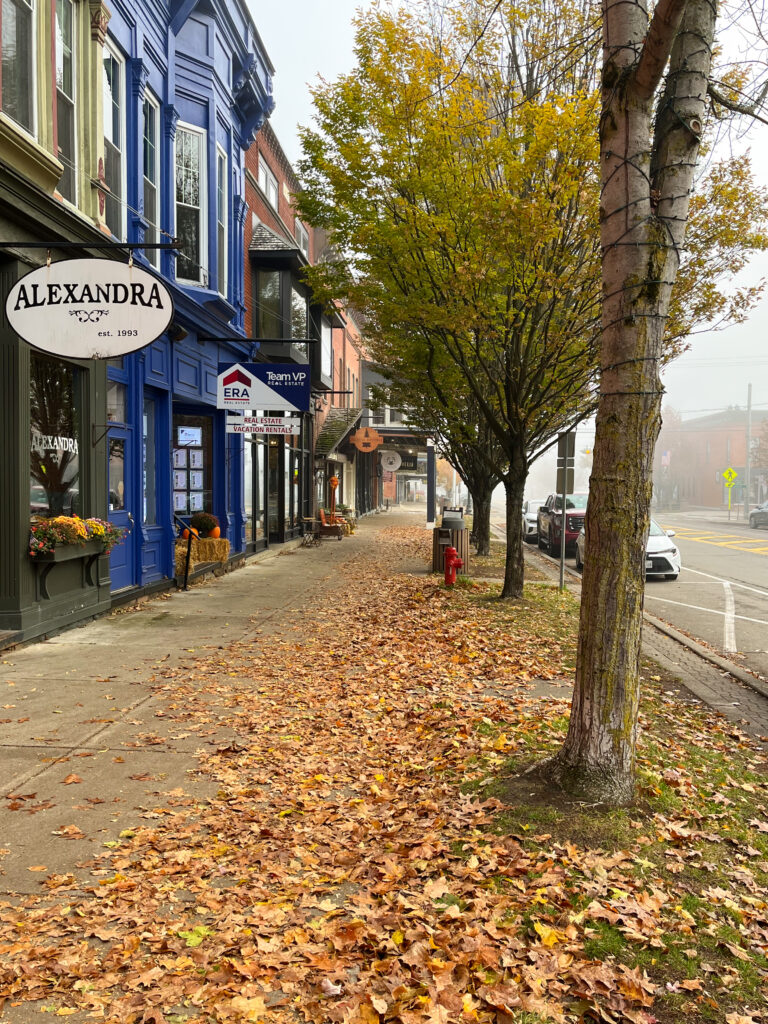
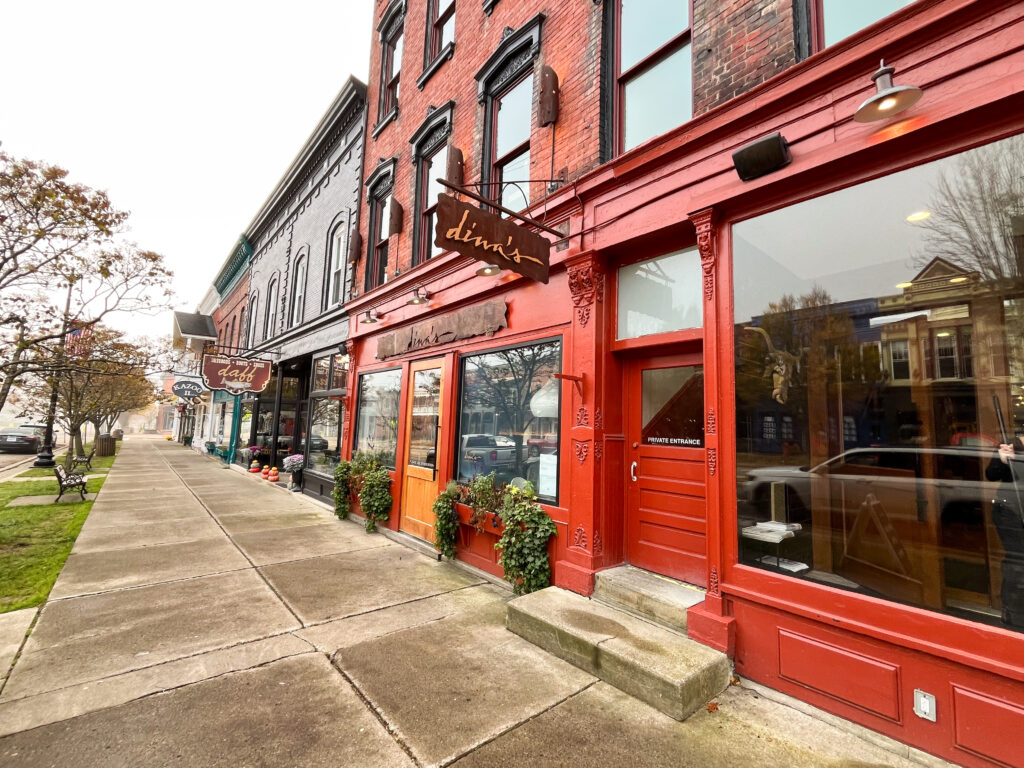
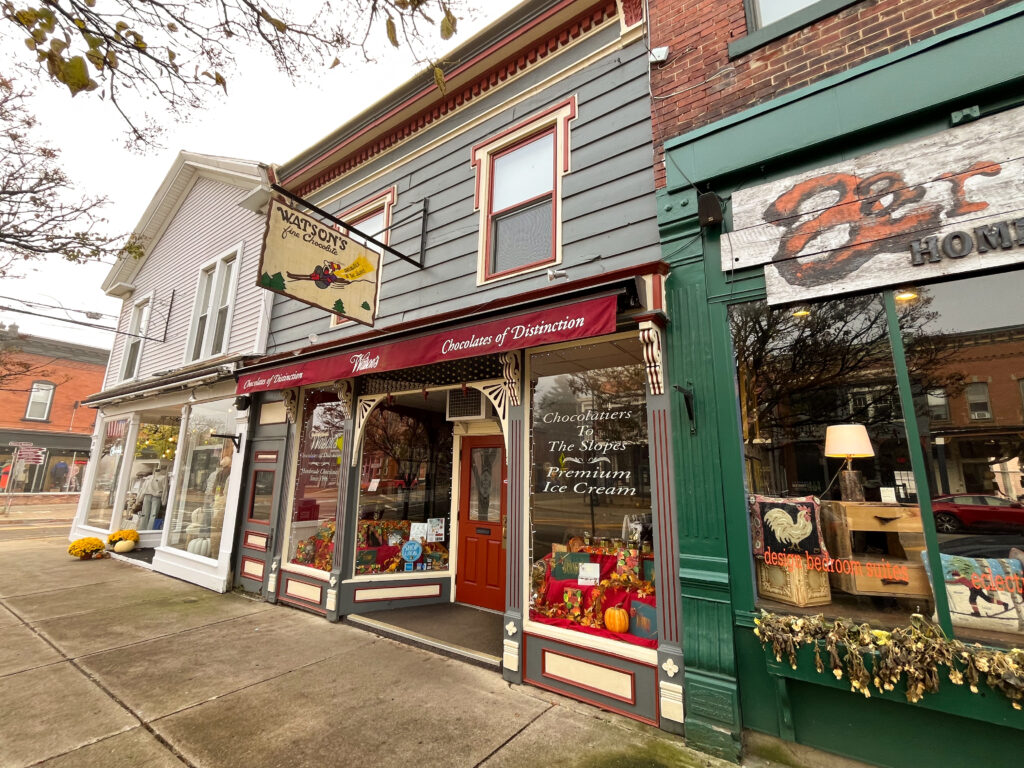
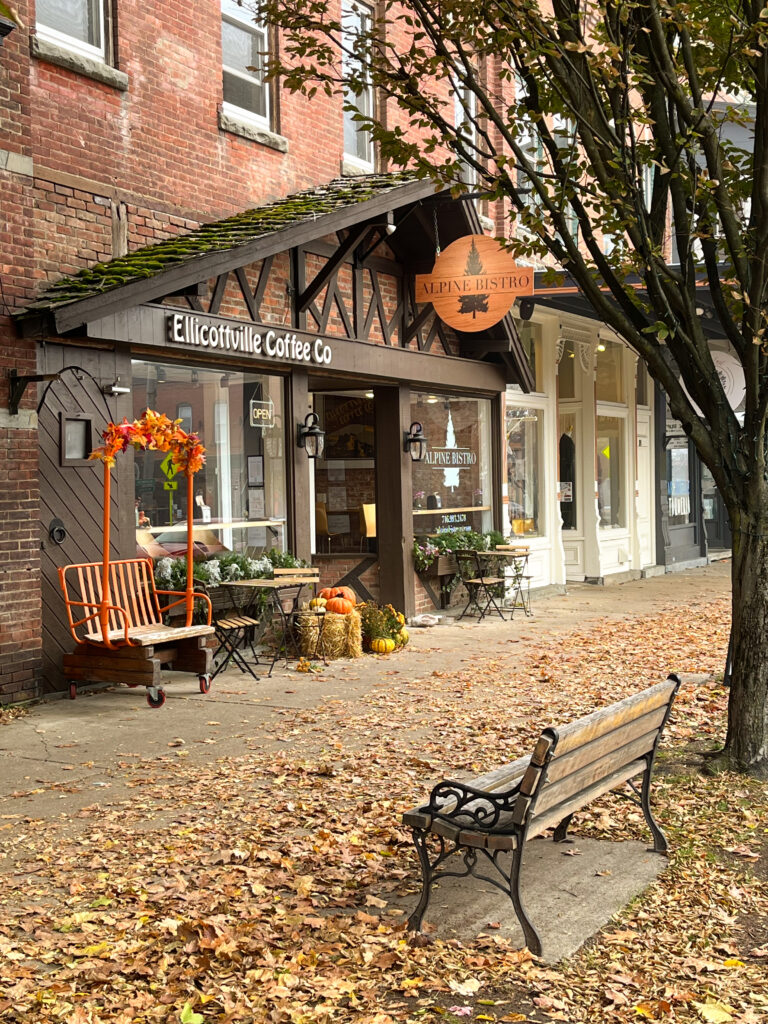
I only spent one night in Ellicottville on my drive south from Sackets Harbor, but it left a lasting impression. Tucked into the rolling hills of western New York, this little town feels like something out of a storybook — charming streets, historic buildings, and a comforting small-town warmth that makes you slow down without even realizing it.

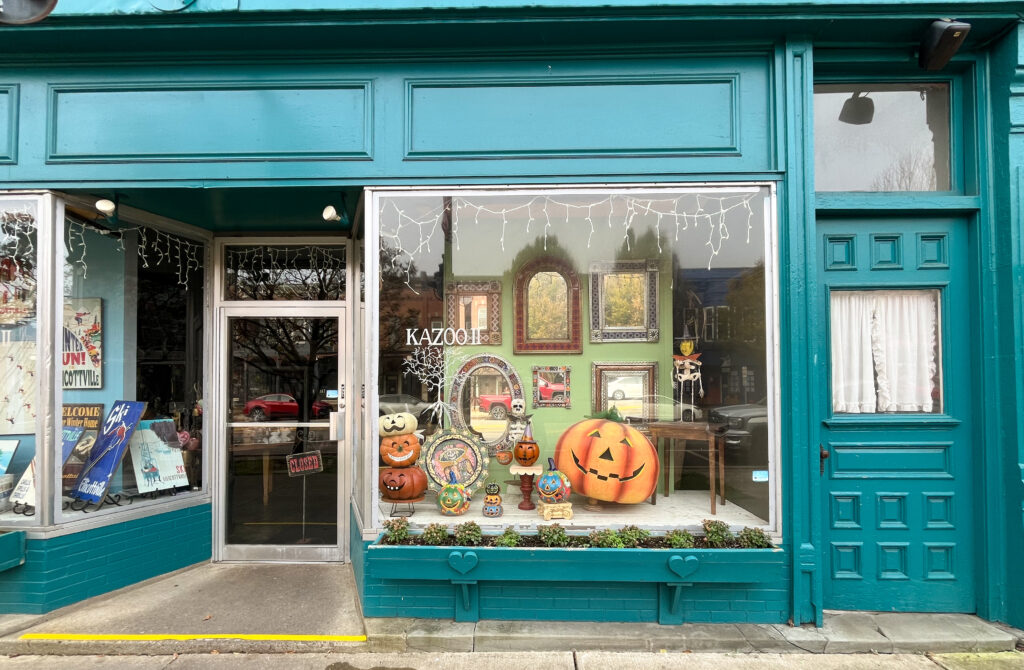
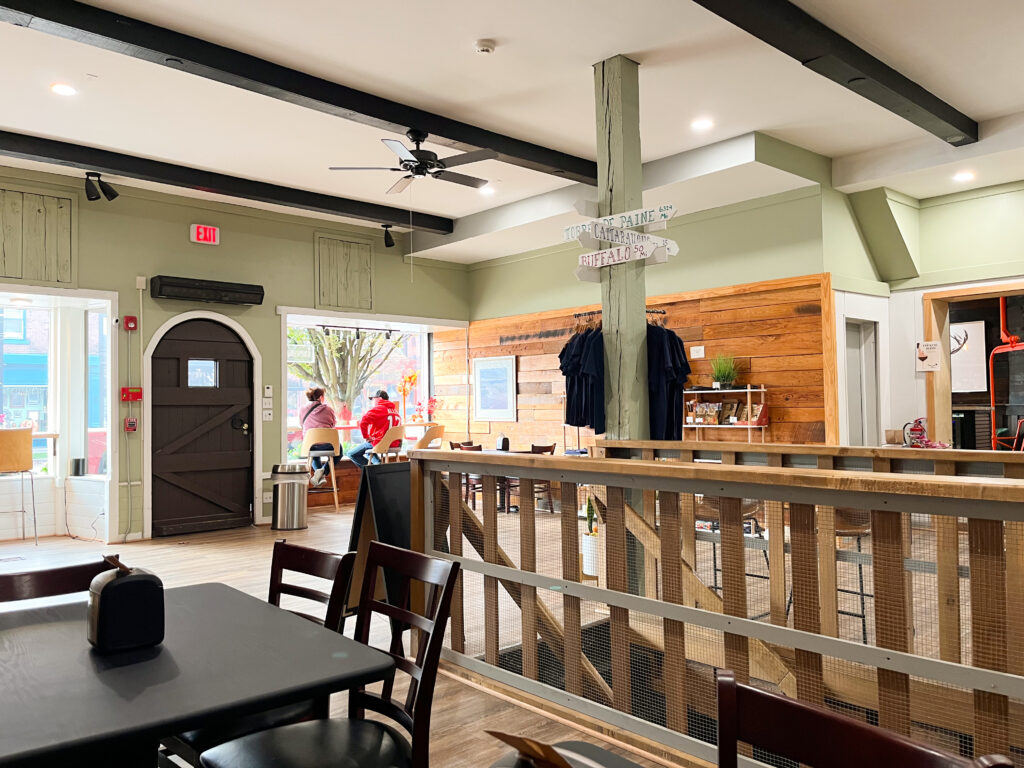
Walking through the downtown, I was struck by how everything felt intentionally quaint yet lived-in at the same time. Cozy cafés, little boutiques, and the soft bustle of locals going about their day created a rhythm that was both calming and inviting. I could easily imagine spending hours wandering these streets, discovering tucked-away corners and enjoying the subtle details that make a place feel like home.

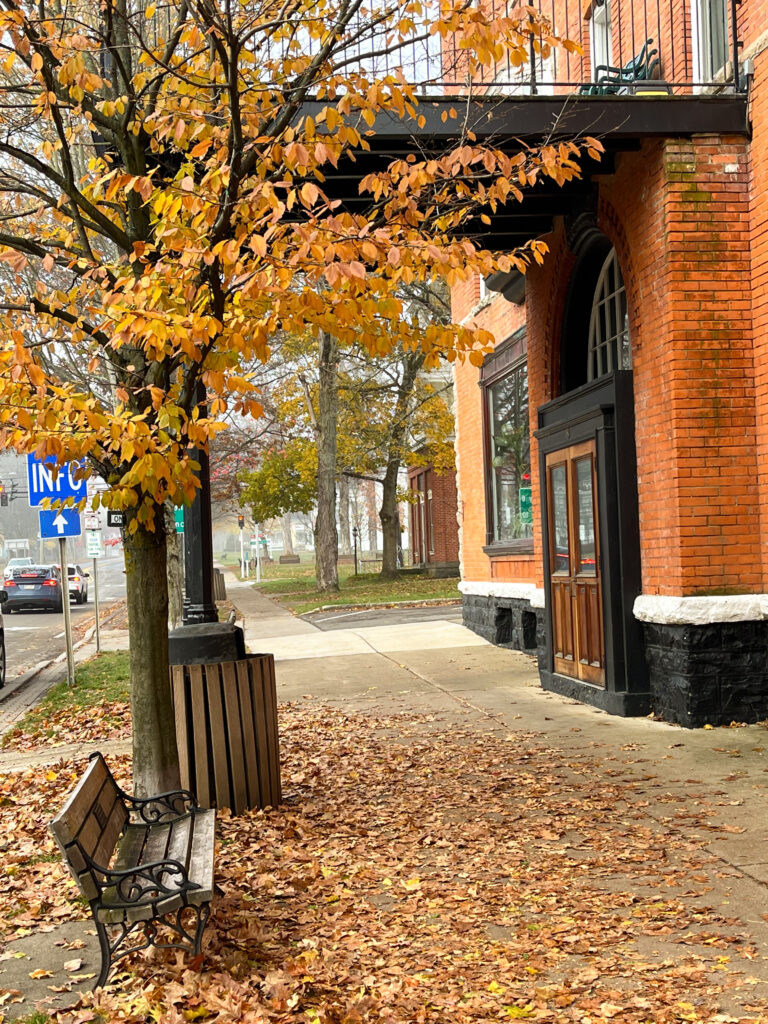
The surrounding hills hint at adventure in every season. I only glimpsed them briefly, but I could see why people come here to hike, bike, ski, and snowboard. There’s a sense of possibility in the air — whether it’s a crisp autumn morning or a sparkling winter day, these hills are calling for exploration.

Even though my visit was short, I could already picture returning for some of the town’s seasonal events — the Fall Festival, the Ellicottville Championship Rodeo, or the magical “Christmas in Ellicottville,” when the streets glow with lights and the scent of pine and hot cocoa drifts through the air. I’d love to be here for one of those celebrations someday, to experience the town’s joy and community energy fully.

In that single night, Ellicottville managed to leave its mark — a combination of charm, adventure, and quiet reflection that stays with you. It’s a town that makes you want to linger, to return, and to explore every little corner. I may have only touched the surface, but I know there’s so much more waiting, and I can’t wait to see it again. 🌿

A Day Trip to Kingston and Gananoque, Ontario: Revisiting Memories and Discovering New Charm

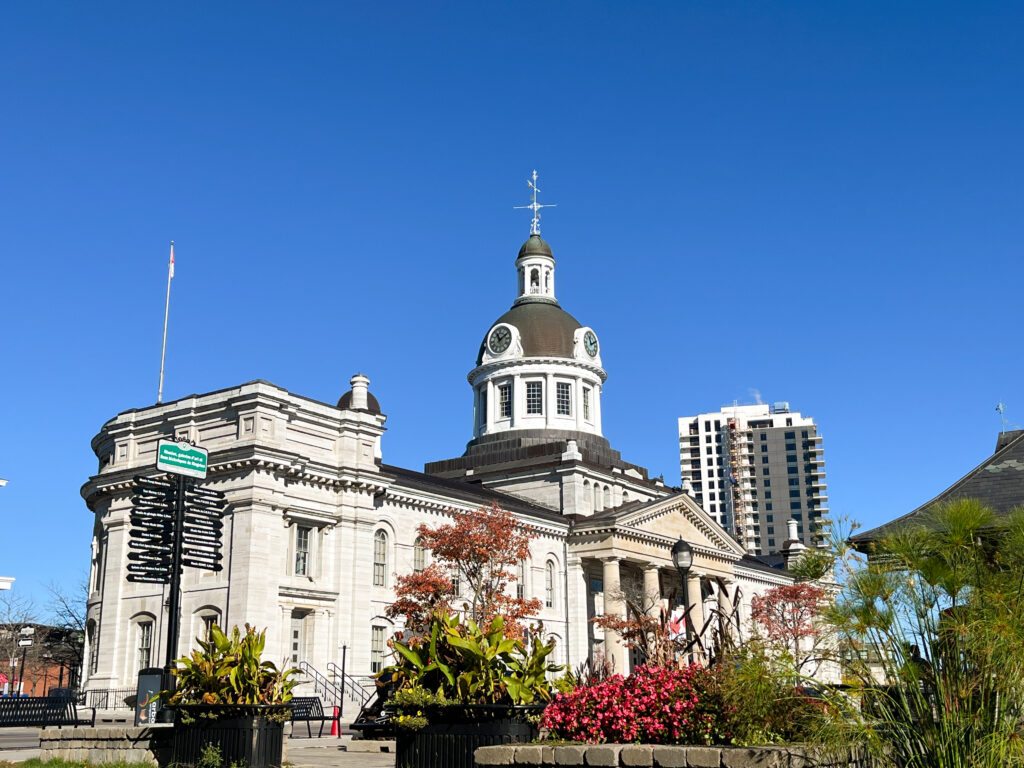
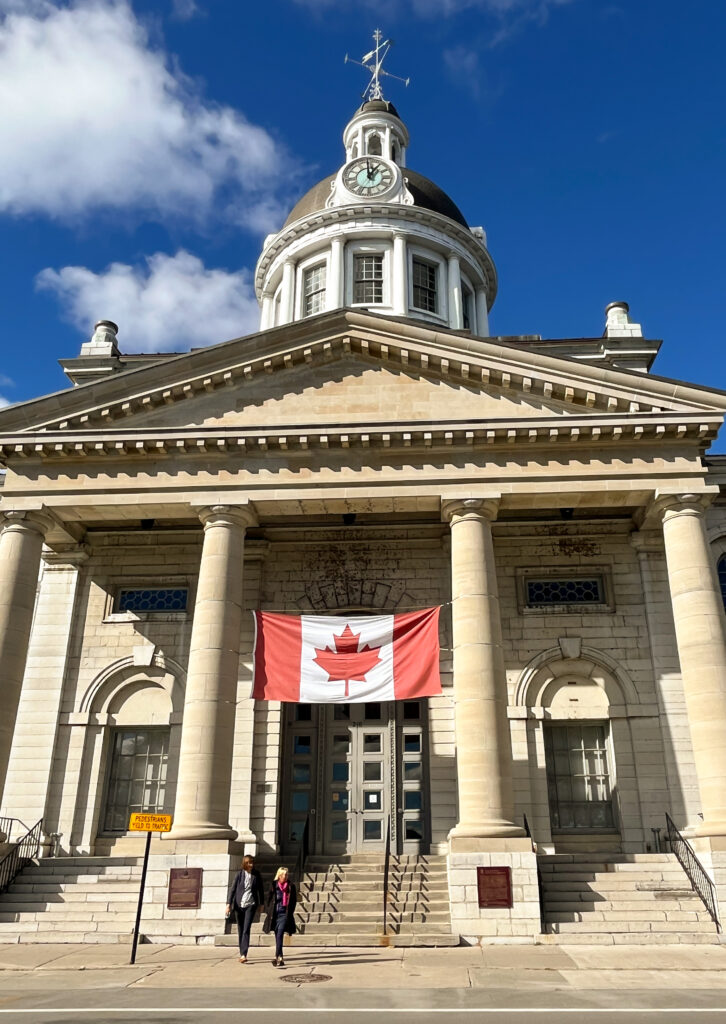
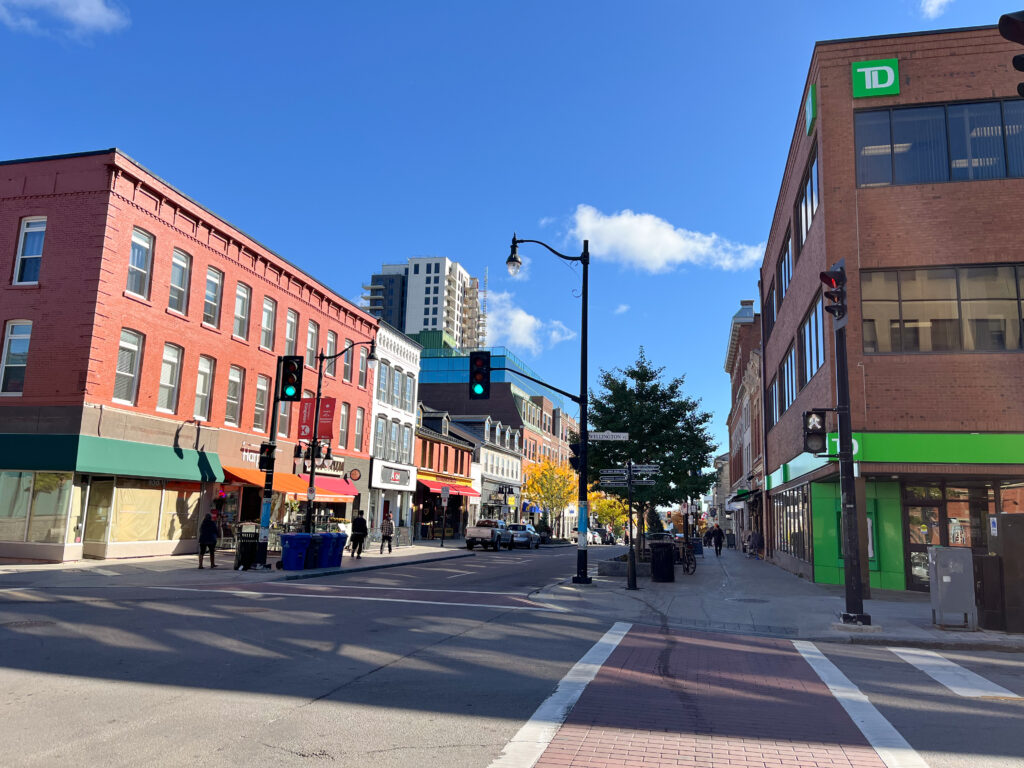
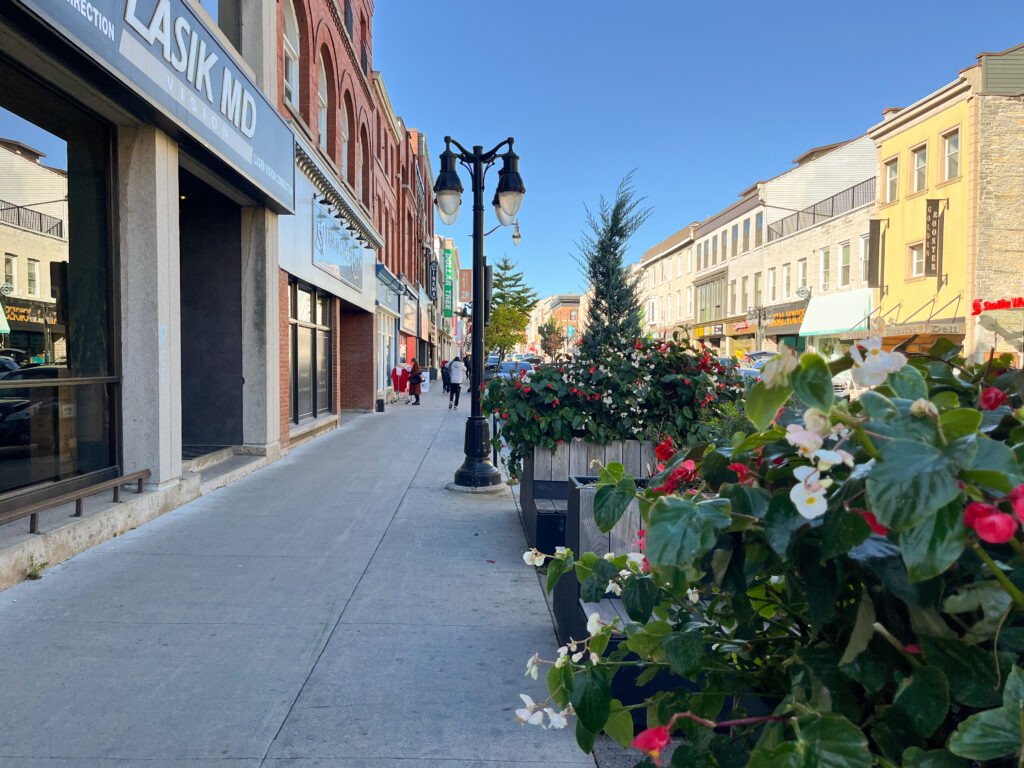
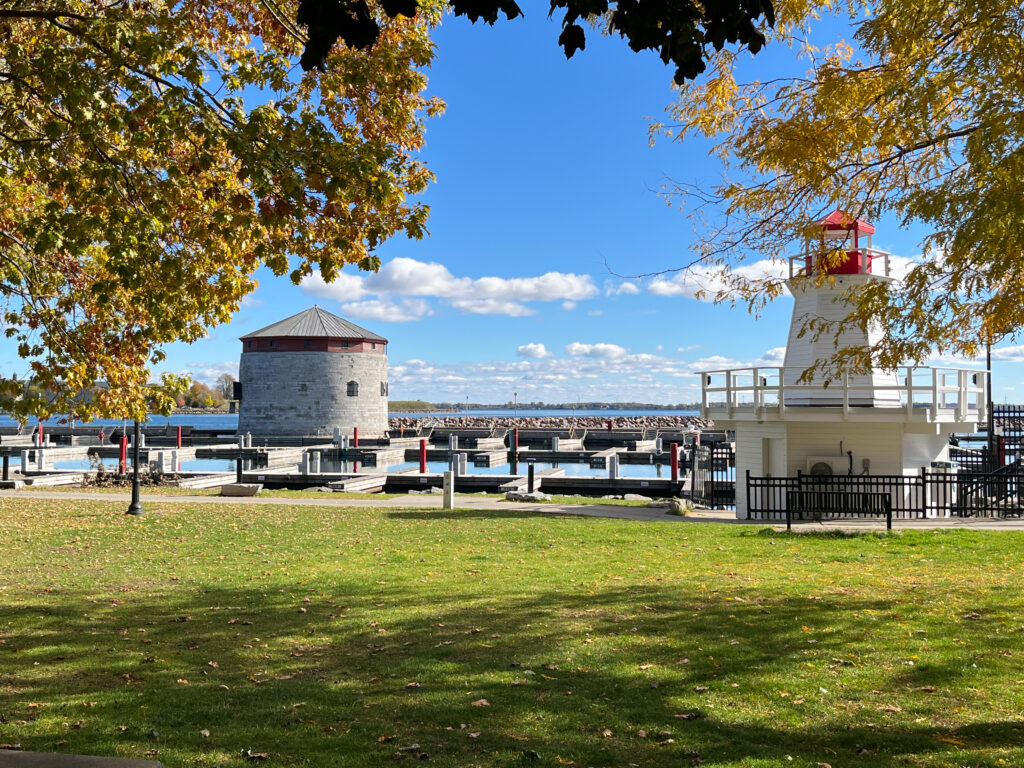
I took a day trip across the border to Canada, revisiting Kingston, Ontario—a place I hadn’t seen in about forty years. The last time I was there, I was with a friend who was moving back home, and I remembered it as a quaint little town with a population of around 57,000 in the mid-1980s. Today, it has grown to about 133,000, and while it’s no longer the small, quiet place I remembered, it was still a fun and fascinating visit.

Kingston is known as “The Limestone City,” a nickname earned after a devastating fire in 1840 destroyed much of the town. When it was rebuilt, most of the new structures were crafted from durable local limestone, giving the city its distinct and elegant character. It was also the first capital of Canada, rich with history and charm, home to several UNESCO World Heritage Sites, including Fort Henry and the Rideau Canal, which links Kingston to Ottawa.

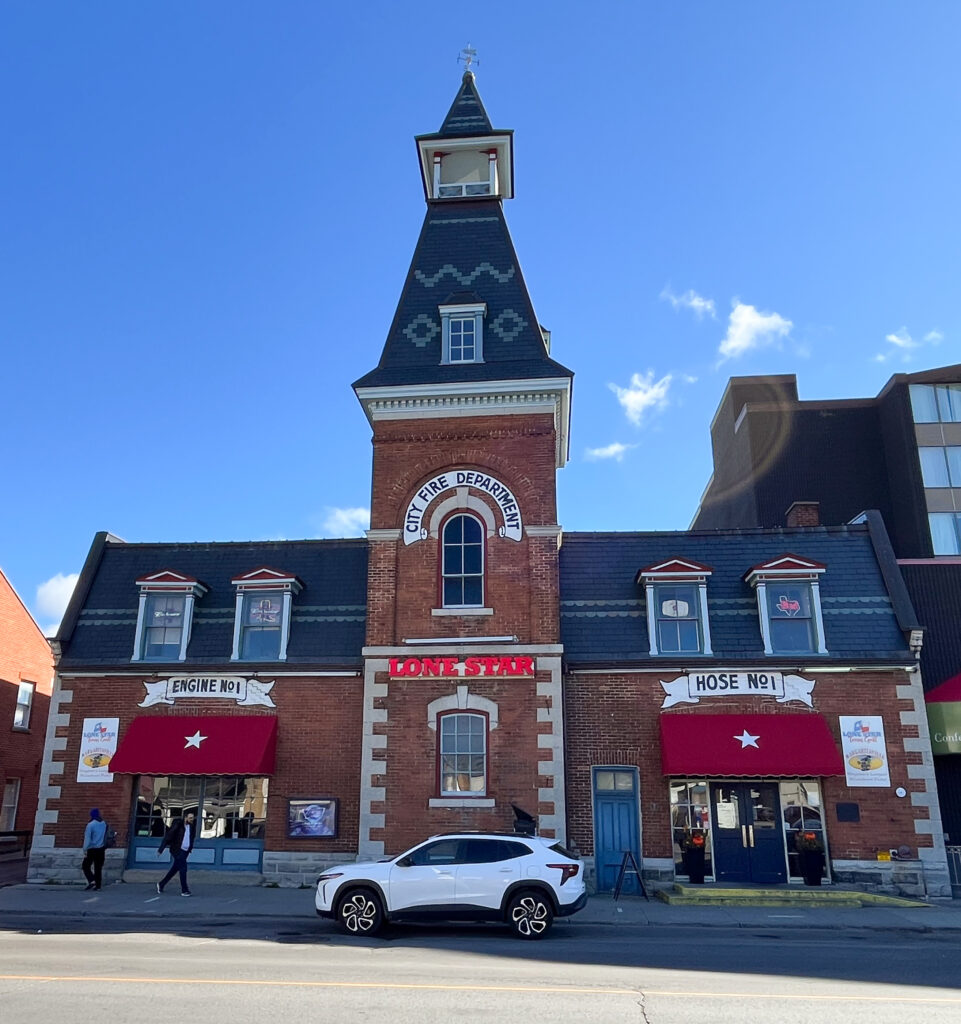
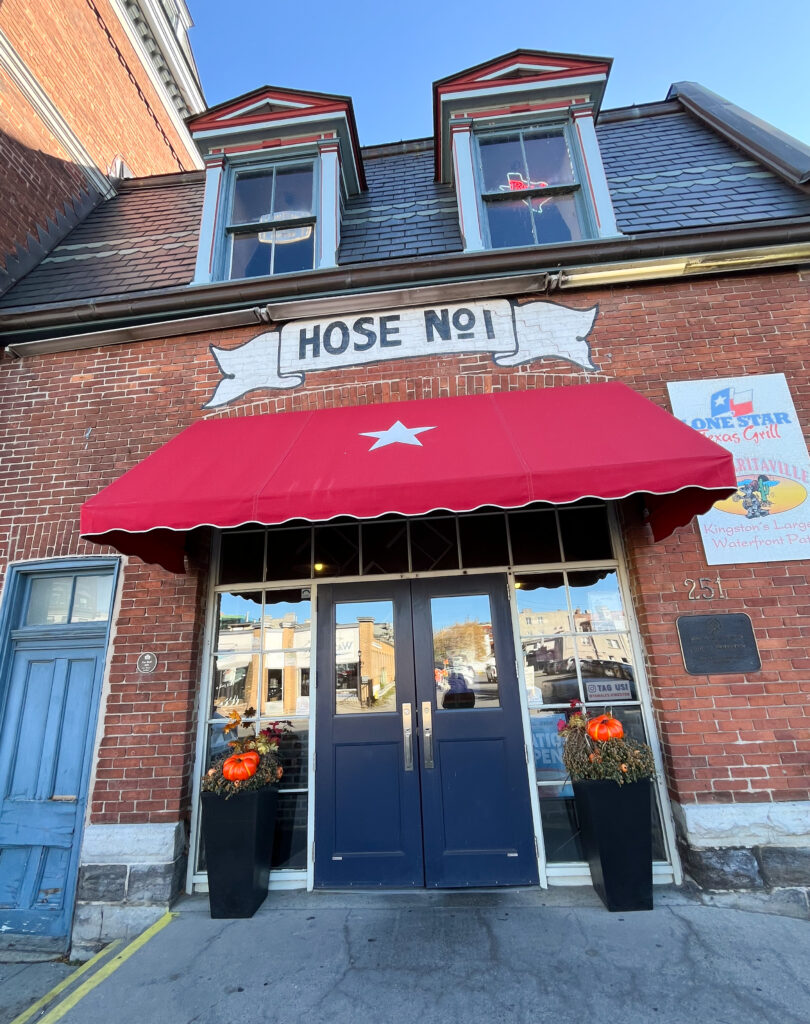
For lunch, I stopped at Lone Star Texas Grill, a Mexican restaurant housed in a beautifully remodeled old fire station. It was the first Mexican food I’ve had since leaving Texas in September—a little taste of home in the most unexpected place. Afterward, I wandered downtown, browsing shops and strolling along the waterfront. Kingston now has a vibrant energy—more bustling than nostalgic—but still full of character and warmth.

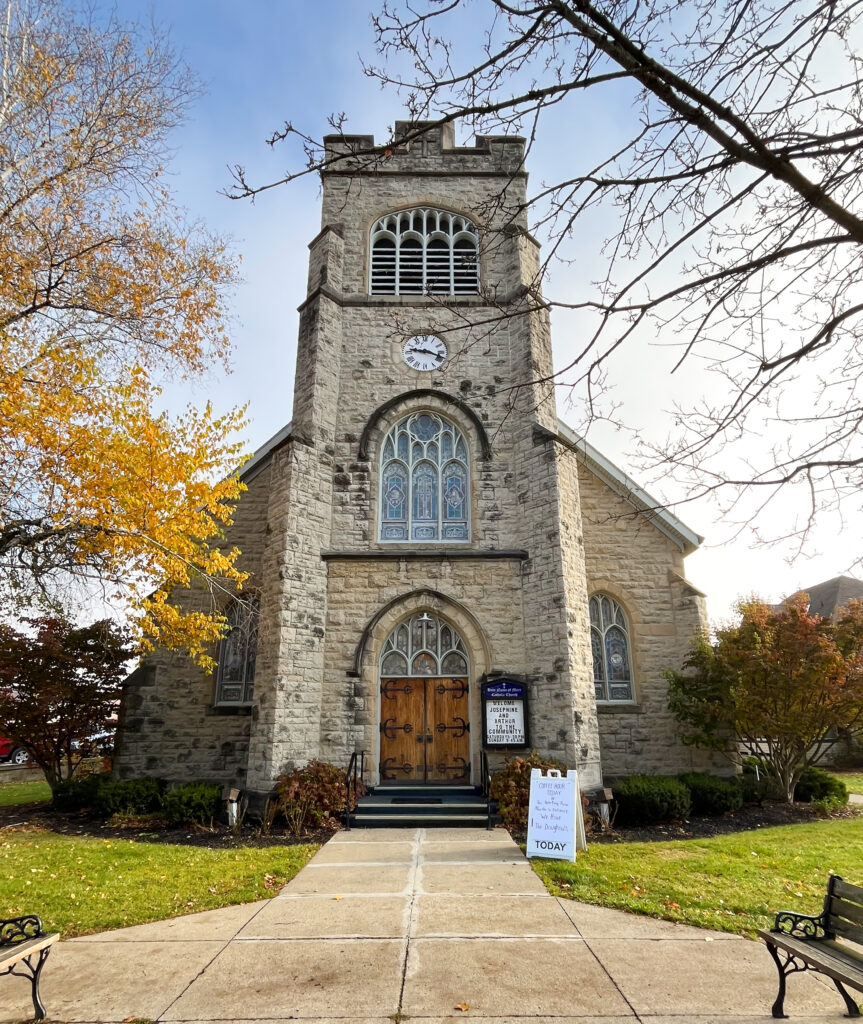
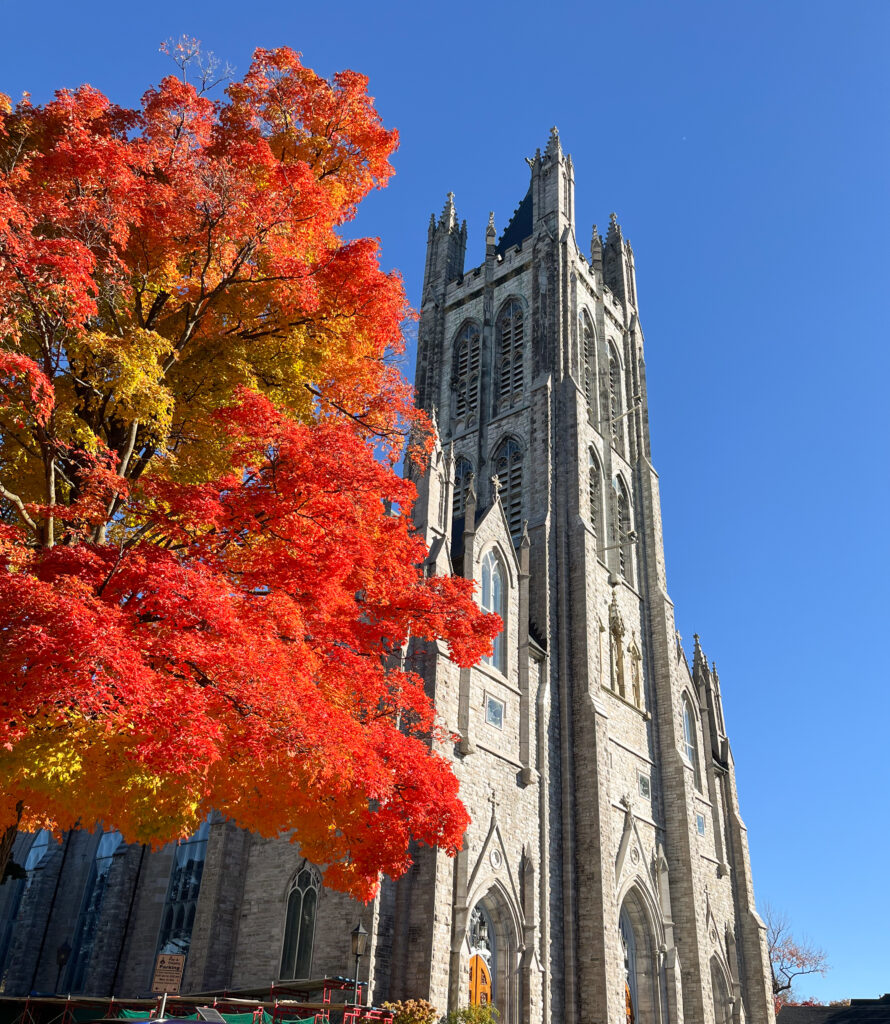
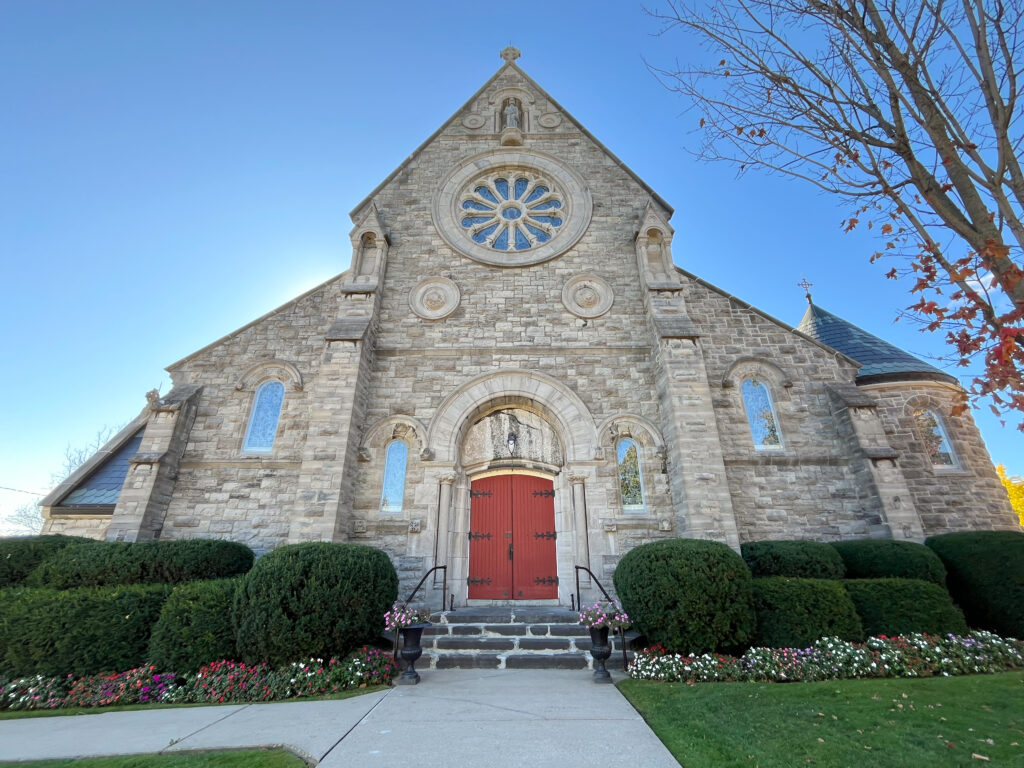
On a whim, I decided to stop in Gananoque on my way back. It’s a smaller town, just a short drive away, with the cozy feel I had been missing in Kingston. The main street is lined with quaint shops, and I came across a couple of beautiful old churches. One, in particular, caught my eye—St. John the Evangelist Roman Catholic Church—a striking stone structure that almost looks like a castle.

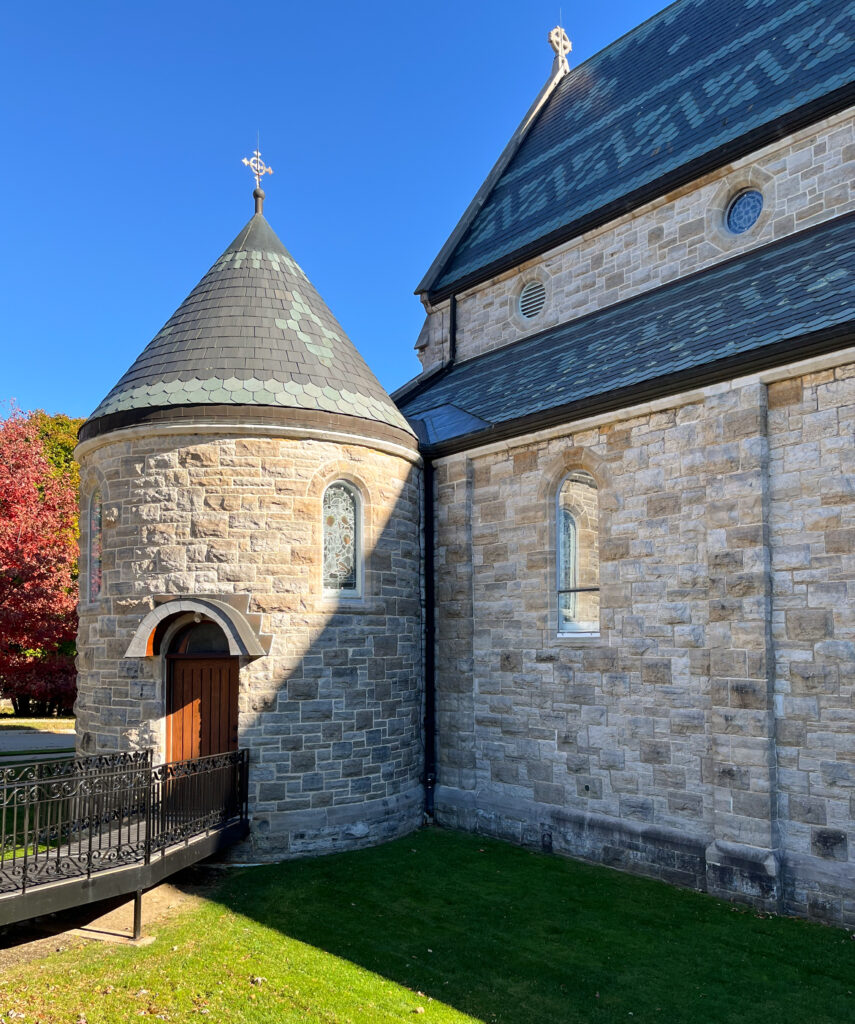
The church’s story is fascinating. The parish was founded in 1846, and the current building was constructed between 1889 and 1891, designed by Irish-born architect Joseph Connolly. It’s a wonderful example of Hiberno-Romanesque architecture, with intricate stone carvings, conical towers, and a patterned slate roof in green and black tiles. Inside, light streams through stained glass windows crafted by the Daprato Statuary Company of Chicago and New York. The church is officially recognized under the Ontario Heritage Act for its remarkable craftsmanship and well-preserved design.

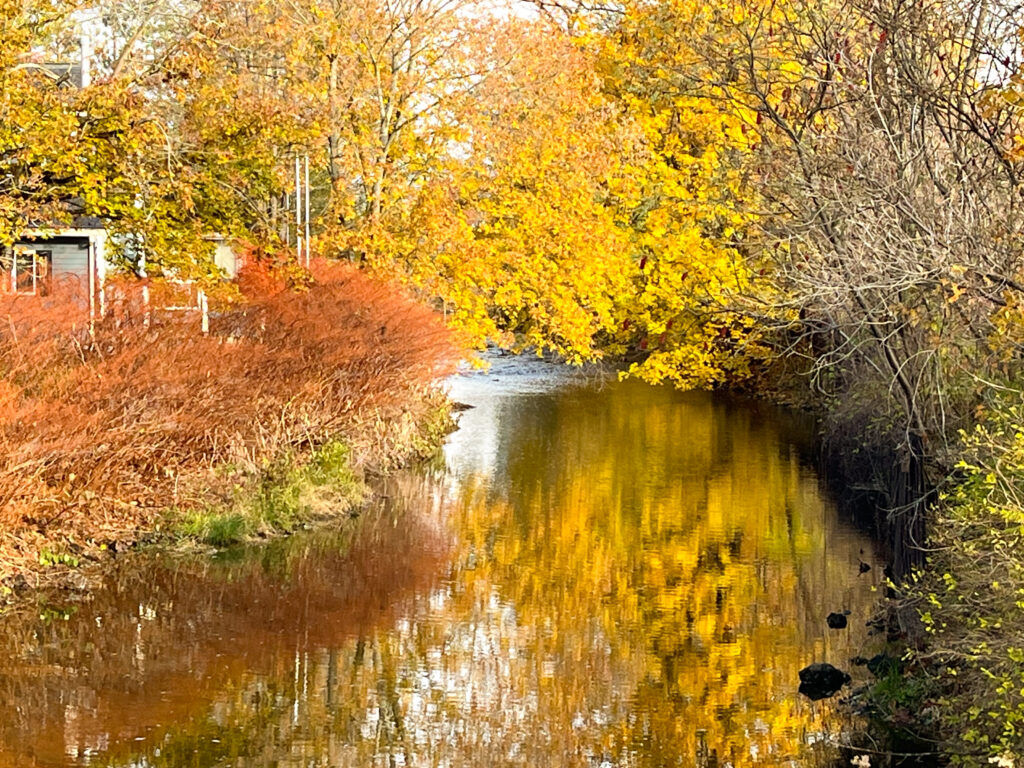
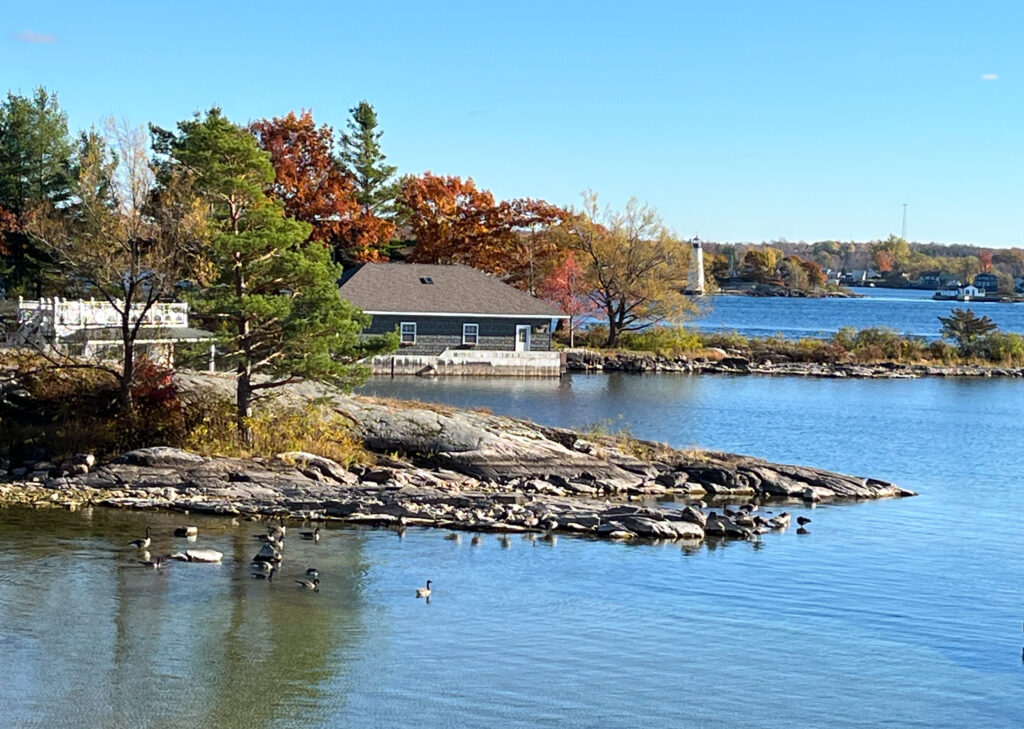
Before heading home, I crossed through the Thousand Islands region, a breathtaking stretch where the St. Lawrence River flows between Canada and the U.S. I took a short drive through Wellesley Island, one of the larger islands on the American side, and stopped for a quick look at Wellesley Island State Park. The air was crisp, the water calm, and a few trees still held on to their golden leaves. It was peaceful and quietly beautiful—a perfect ending to a full and memorable day.

— Kari

Three Beaches Within 25 Minutes of Sackets Harbor

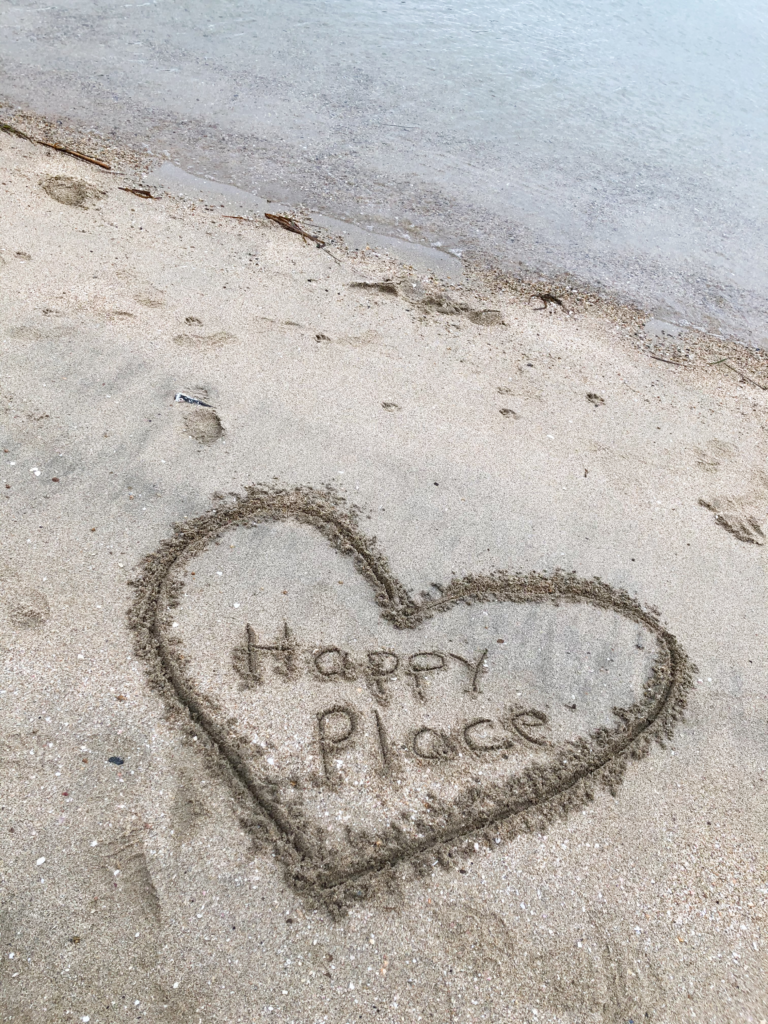
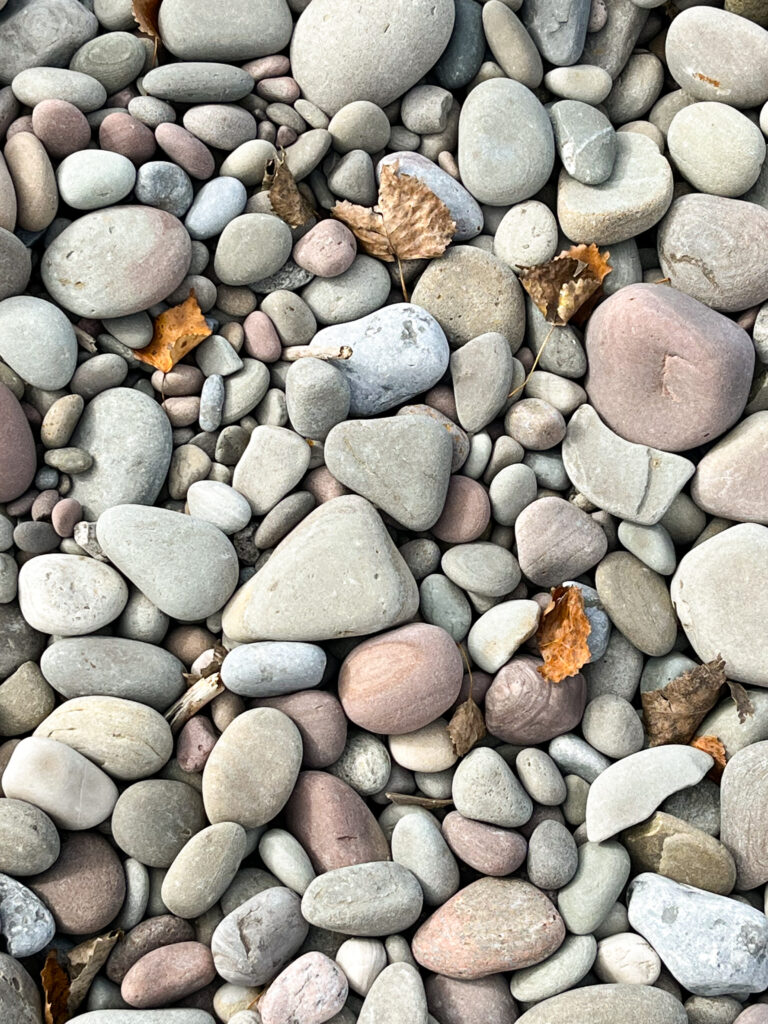
Beaches are definitely one of my happy places. I love to walk in the sand — to feel it shift beneath my feet and connect me to the earth. On coastal beaches, I’ve always loved looking for seashells and driftwood. But here, along the lakeside shores near Sackets Harbor, I searched for heart-shaped rocks instead. I only found one, but the walks were peaceful and grounding — the kind that clear your mind and fill your soul.

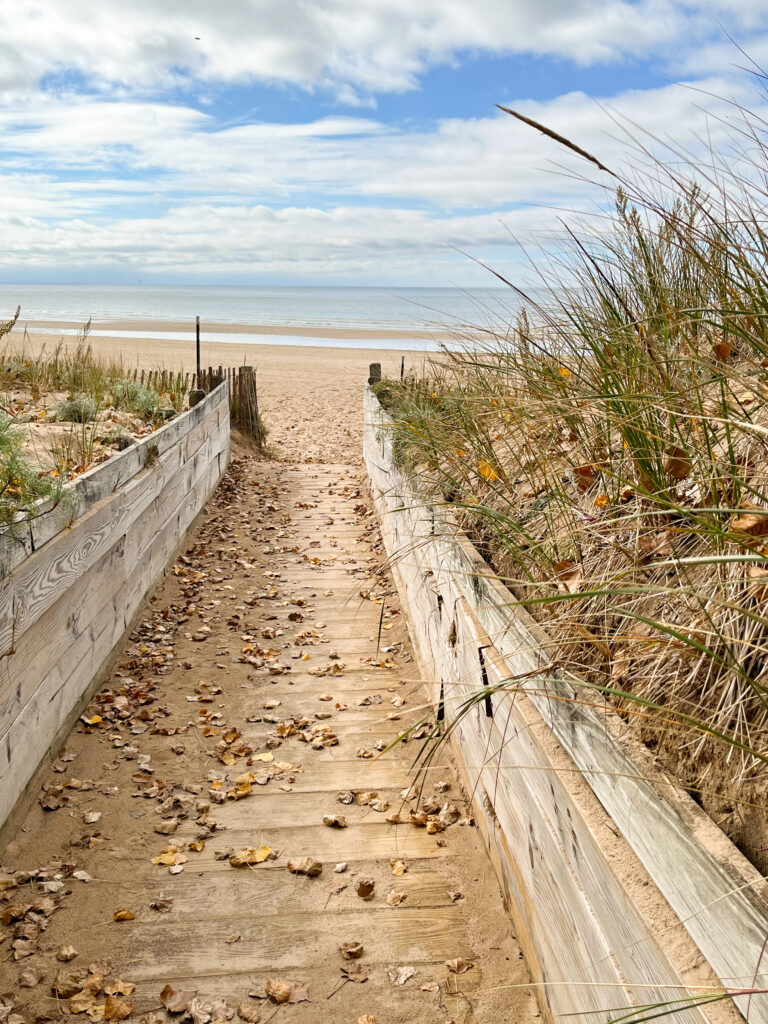
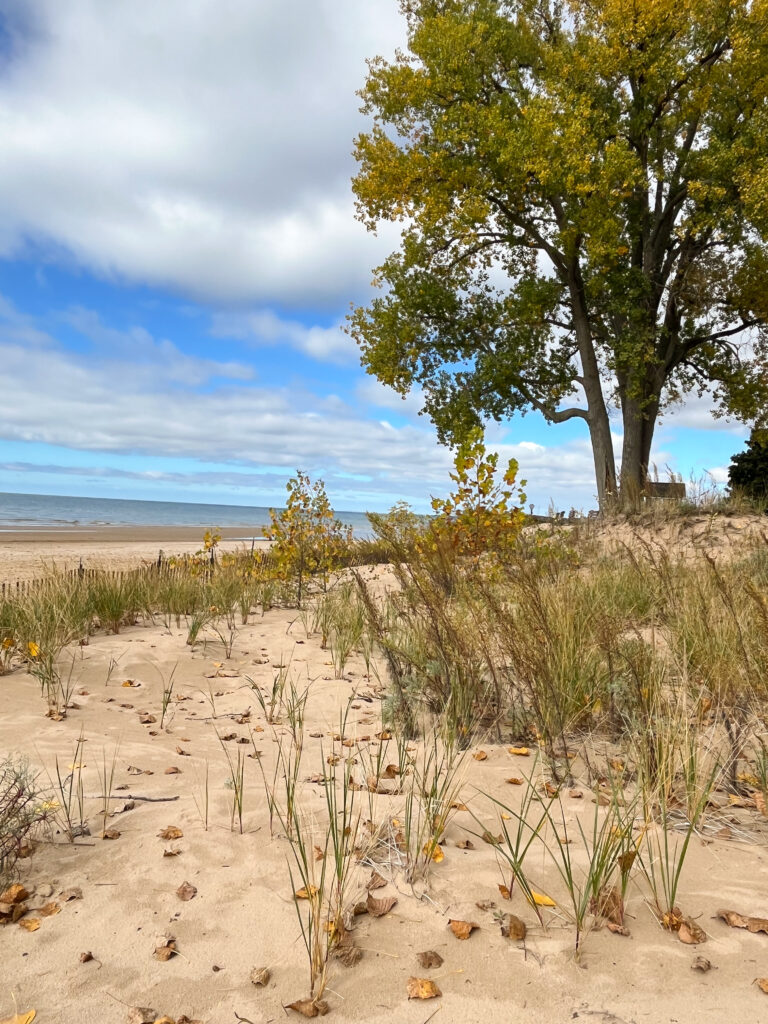
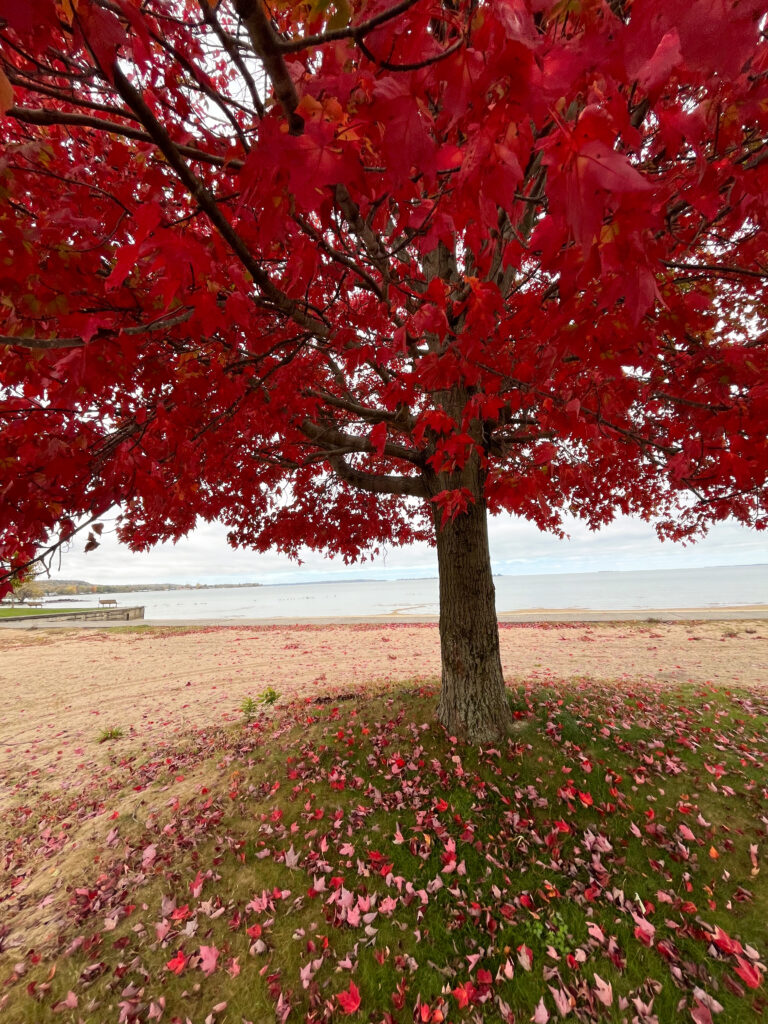
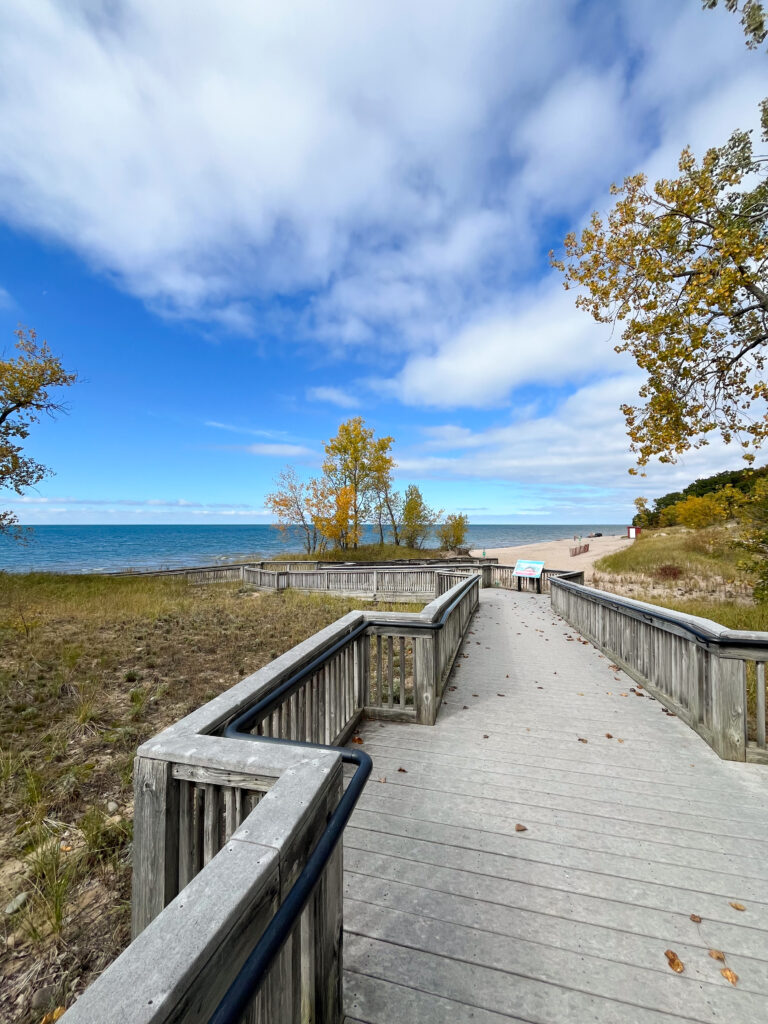
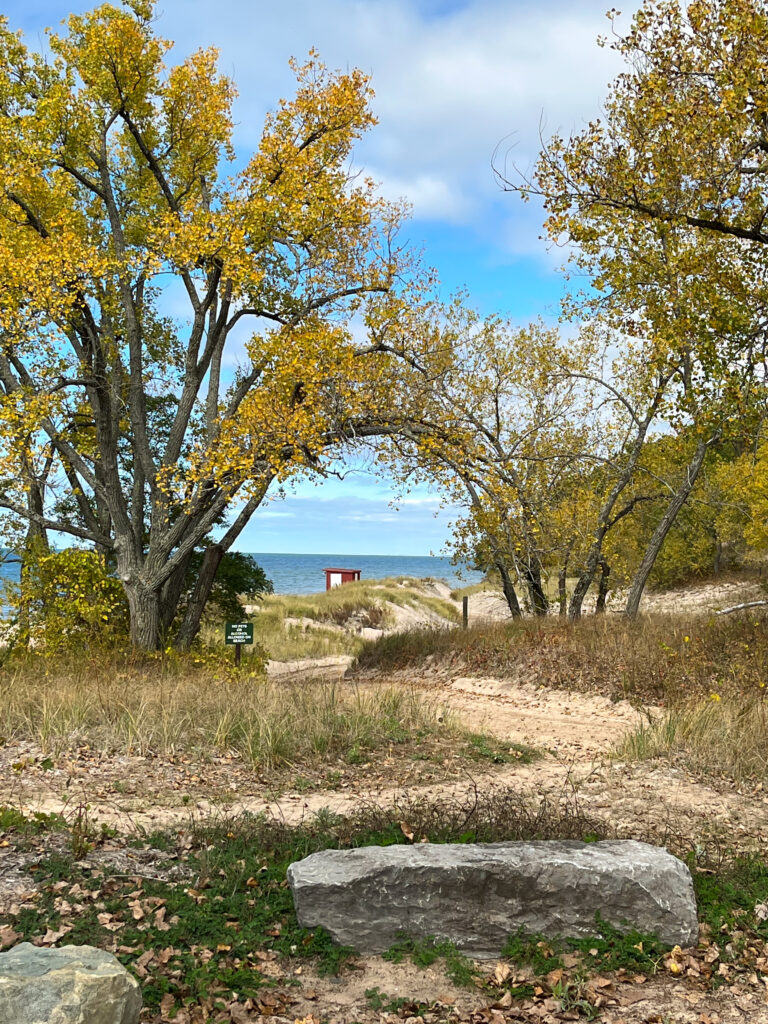
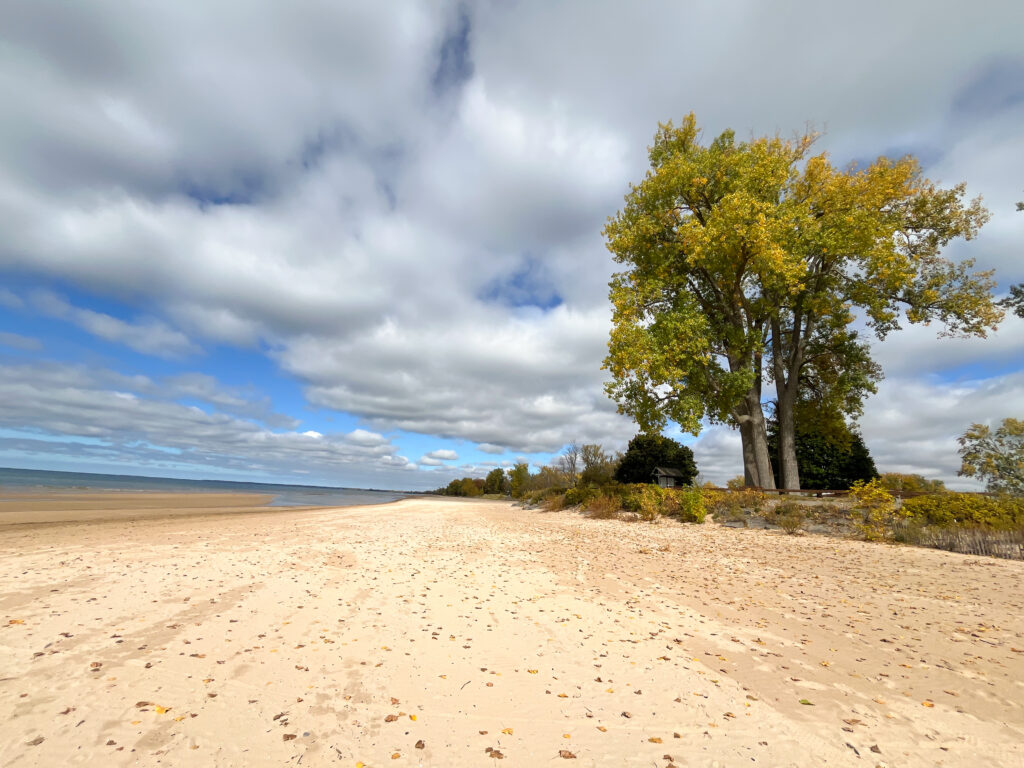
During my stay, I visited three beaches within about twenty-five minutes of Sackets Harbor. The days were cool and sunny, perfect for slow walks and quiet reflection. Each beach had soft sand and gentle waves, with beautiful sand dunes edging the shoreline. The dunes were covered with tall grasses and old wooden fences that swayed and creaked softly in the breeze. Behind them, trees painted in shades of gold and amber framed the horizon, their autumn colors glowing in the afternoon light.

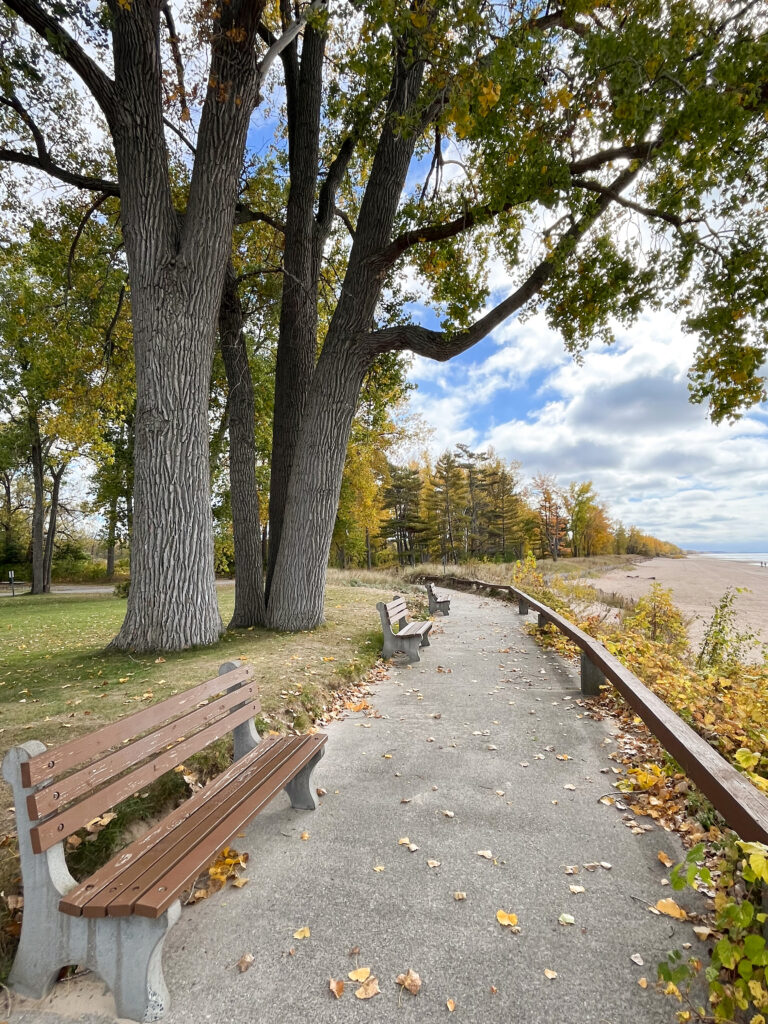
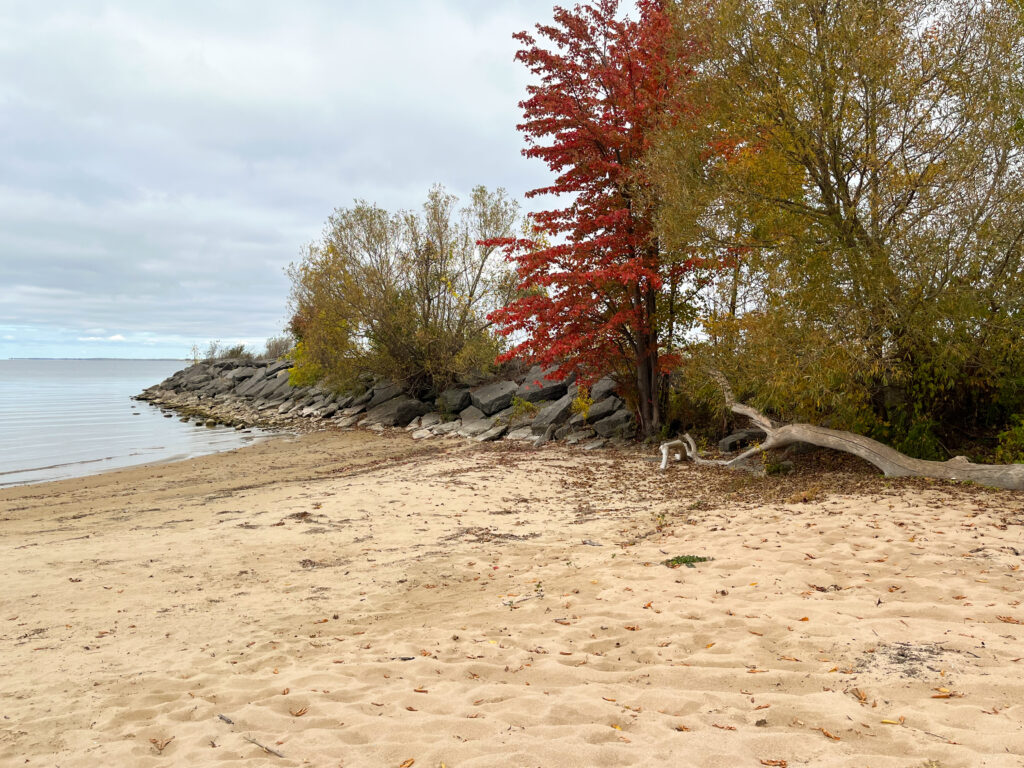
One beach had a long line of rocks brought in to prevent erosion — a rugged but beautiful contrast to the smooth sand. A few of the beaches had benches along a path that ran parallel to the water, inviting you to sit, listen to the waves, and watch the light dance across the lake. In some spots, the forest reached all the way to the beach, where roots tangled near the sand and the air smelled faintly of pine.

And then there were the seagulls — another surprise. I had always thought gulls belonged to the sea, yet here they were, soaring over Lake Ontario, their calls echoing softly across the water.

Walking barefoot in the cool sand felt like coming home to myself — a simple act of grounding, of reconnecting with the rhythms of the earth. Even though I only found one heart rock, I left each beach with a sense of calm and gratitude. These quiet, lakeside moments reminded me how peace can be found anywhere — sometimes just twenty-five minutes away.

— Kari

Finding Peace in Sackets Harbor: A Month on the Shores of Lake Ontario

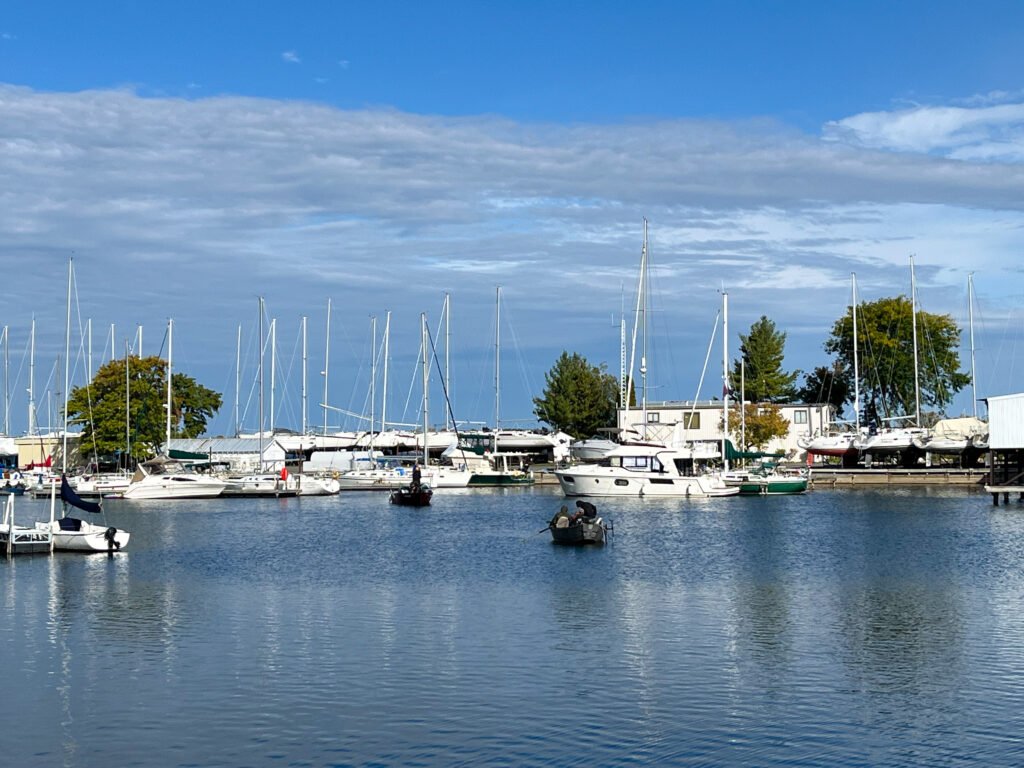
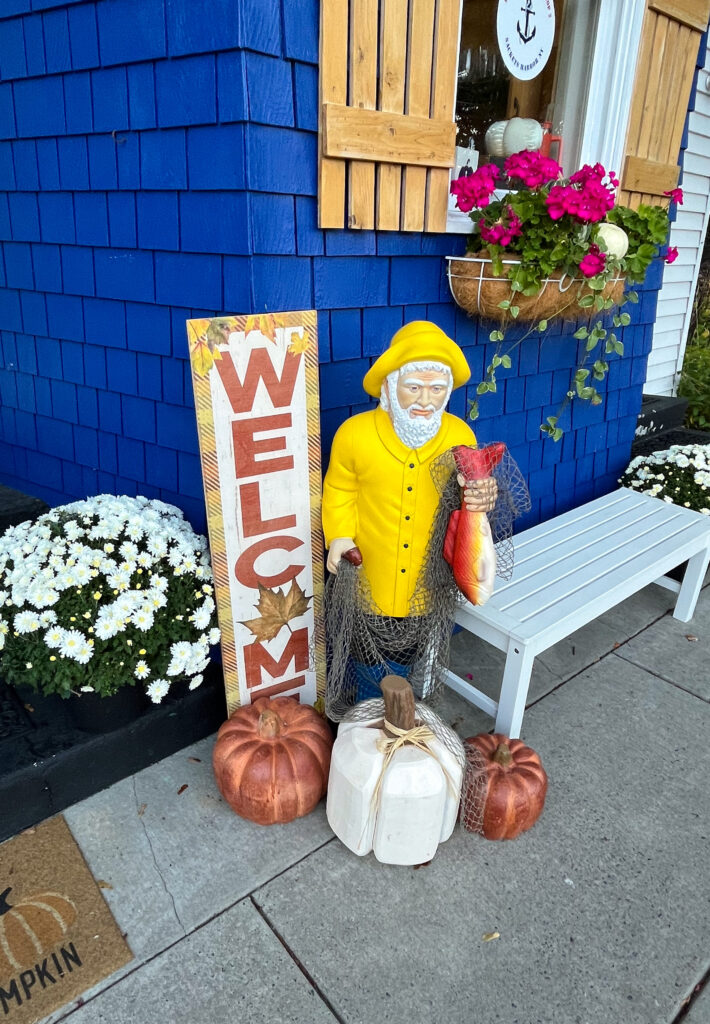
After months of planning, sorting, and saying goodbye to so many things I once called mine, I’ve arrived at my destination for the month of October — the Village of Sackets Harbor, a charming little gem nestled along the shores of Lake Ontario in upstate New York.

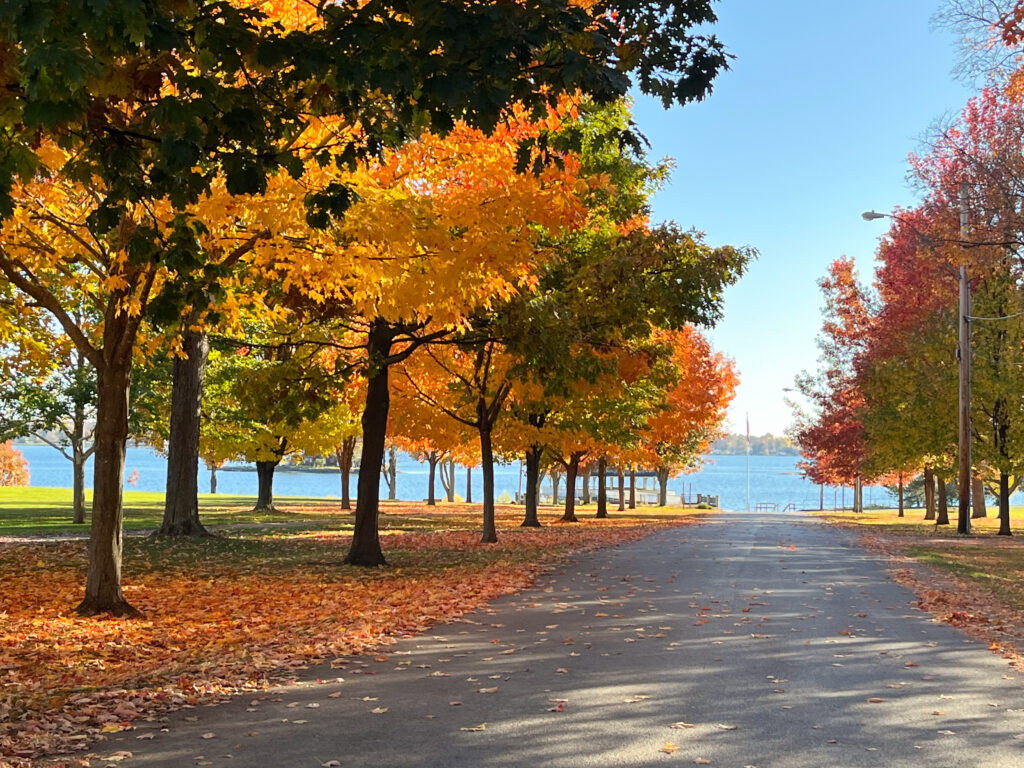
This lovely village of about 1,300 people feels like it’s been tucked away from the rush of the world. It’s quaint and quiet, with tree-lined streets, historic homes, and a harbor that glimmers in the morning light. Everything here is walkable, and each path invites you to slow down and notice the small, beautiful things — the sound of leaves rustling, the scent of woodsmoke, the cool whisper of fall air.

I’ve been walking every morning since I arrived. I begin my day at the harbor, just as the sun lifts above the water, painting everything in gold. Some days, I wander through town, and others, I take the trail that winds through the historic battlefield. There’s something grounding about starting the day this way — moving, breathing, being part of the quiet rhythm of the village.

The best part of being here is time with my daughter, Amy, and her family. My two grandsons are here — lively, curious, and full of wonder — and they fill my days with laughter and joy. Being near them feels like a gift, one I don’t take for granted.

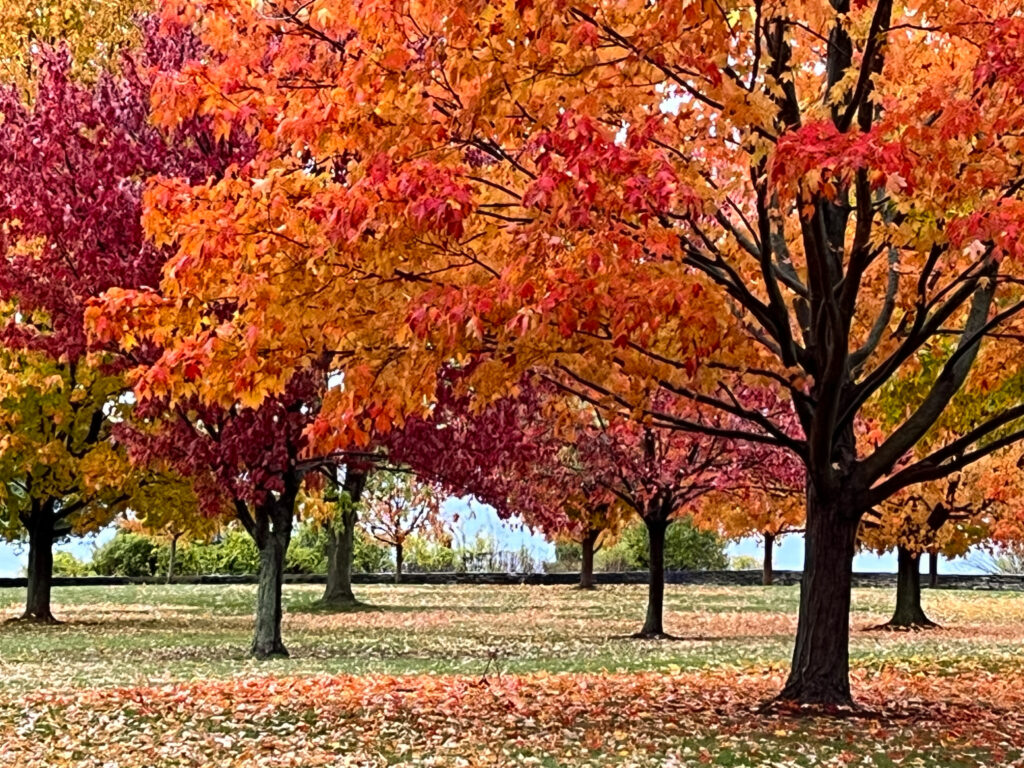
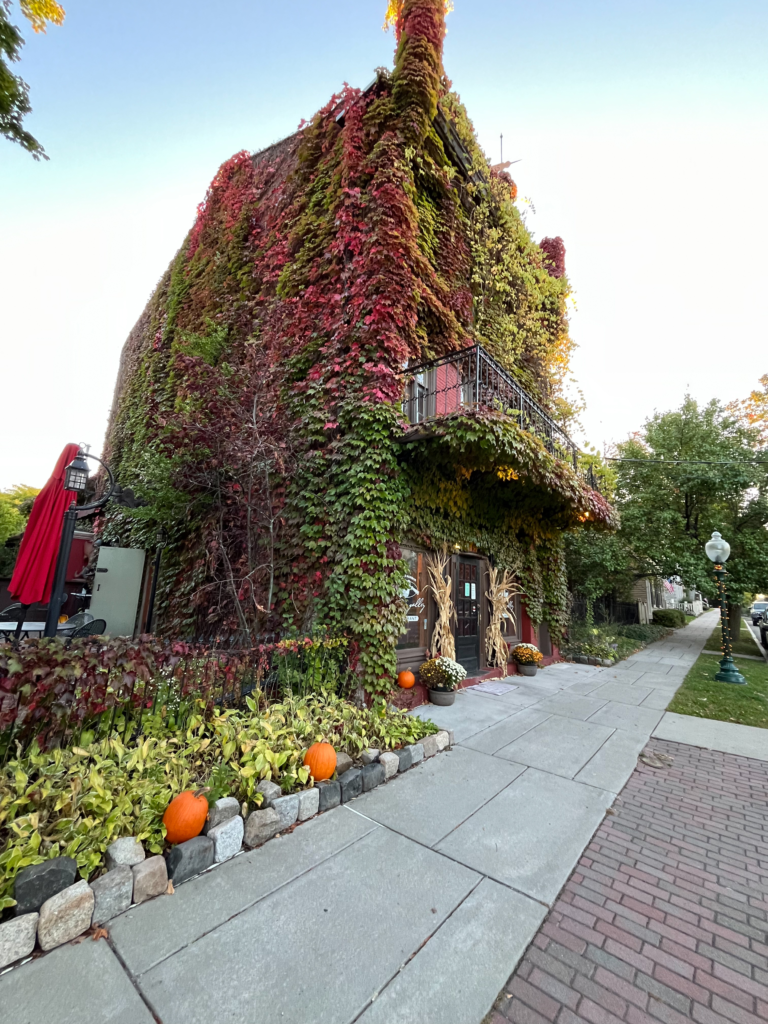
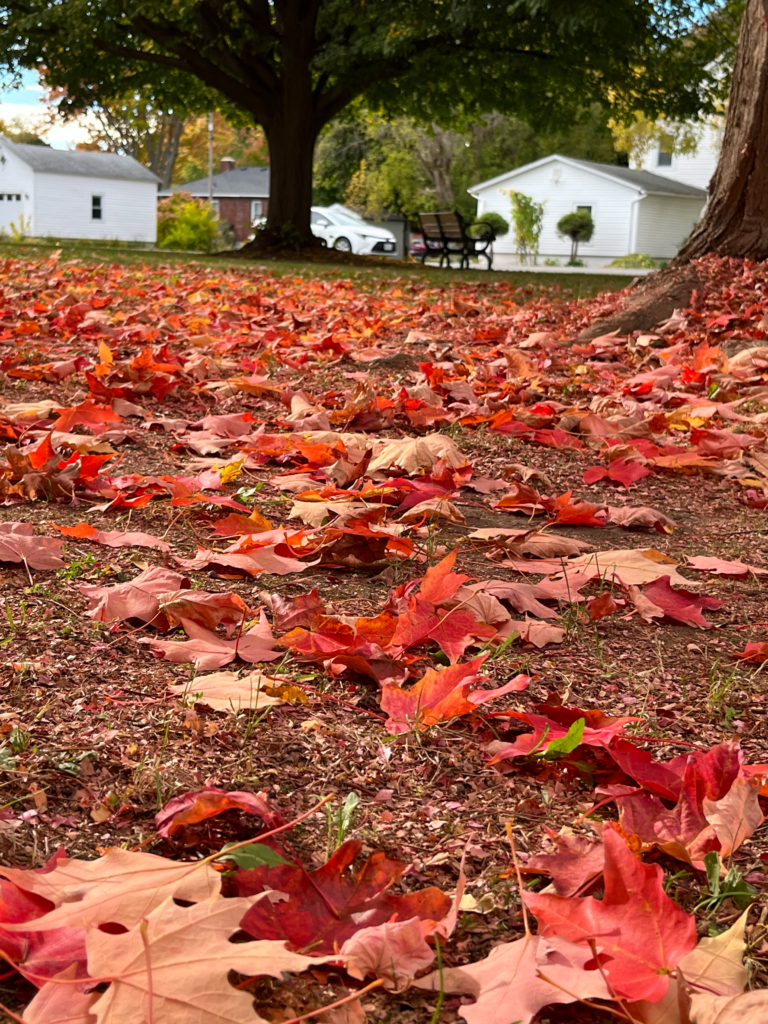
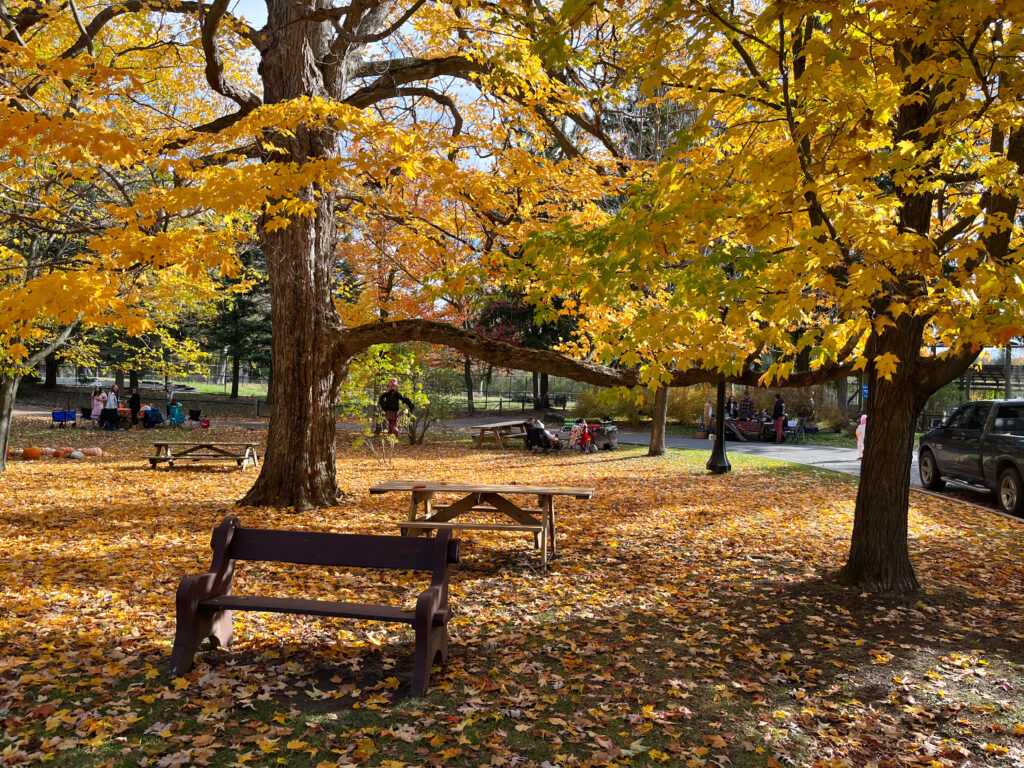
And then there’s fall — my favorite season. When I arrived, the trees were just beginning to turn, and I knew that soon the whole village would be dressed in red, gold, and amber. I could already feel that shift in the air, that whisper that says, slow down, savor this.

For the first time in a long while, I don’t have things hanging over me — no closets to clean, no papers to sort, no boxes to pack. I’ve done all of that. Now, I have the luxury of time — time to walk, to stretch, to eat well, to read, to create. I have mostly been writing and taking photographs… lots of photographs.

I brought along some art supplies, tucked carefully into my car before I left. Here, surrounded by beauty and stillness, I finally have the freedom to explore and create without hurry or distraction.

In this quiet little harbor town, I feel a peace I haven’t known in years — the kind that comes not from doing more, but from finally doing less.

Travel and Stereotypes: Seeing Beyond the Lines We Draw

One of the quiet gifts of travel is how it invites us to see the world — and one another — with softer eyes. We all carry ideas about places and people, shaped by stories we’ve heard or assumptions we’ve never questioned. Sometimes they’re harmless, almost humorous. Other times, they build invisible walls that keep us from really seeing.

Growing up in the South, I imagined the North as a world of city streets and hurried footsteps, where winters stretched on forever and people weren’t especially friendly. And I know some northerners picture the South as a land of front porches and drawls, where everyone drives a pickup and waves to strangers. The funny thing is — there’s a bit of truth in all of it. Winters do stretch on up north, and in the South, most people really do wave as you pass by, often from behind the wheel of a truck. And the truth is, many northerners aren’t overly outgoing at first — but once you start the conversation, they are kind, helpful, and genuine. Stereotypes often start with a seed of truth — they just fail to tell the whole story.

But stereotypes fade quickly when your feet touch the ground.

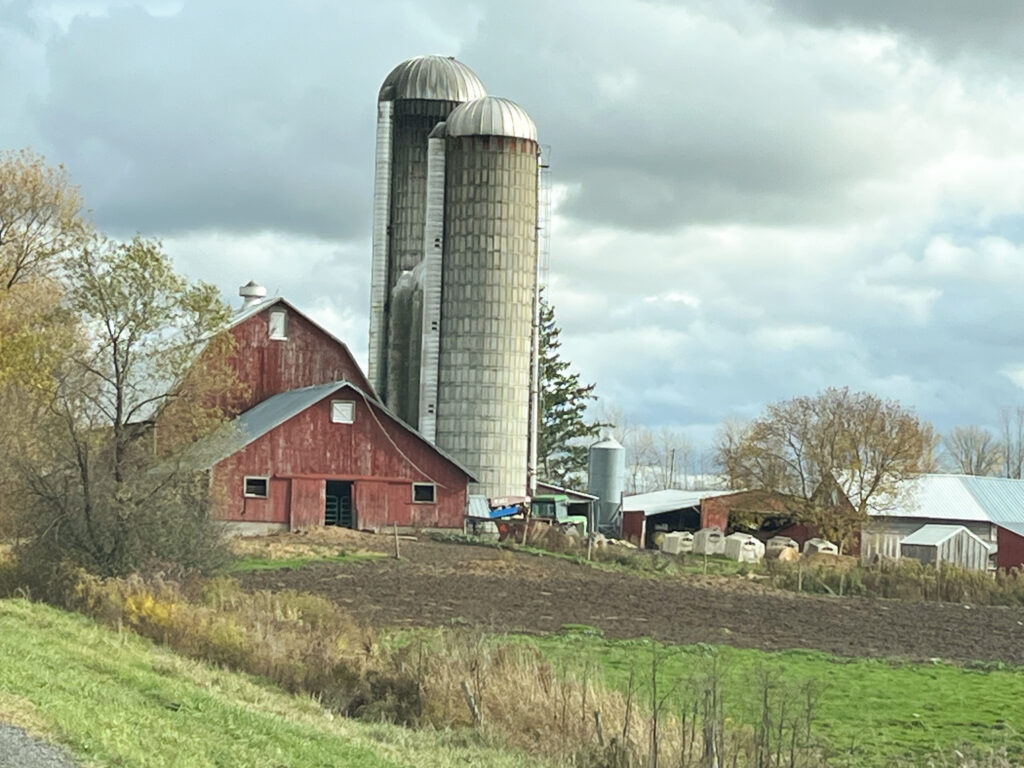
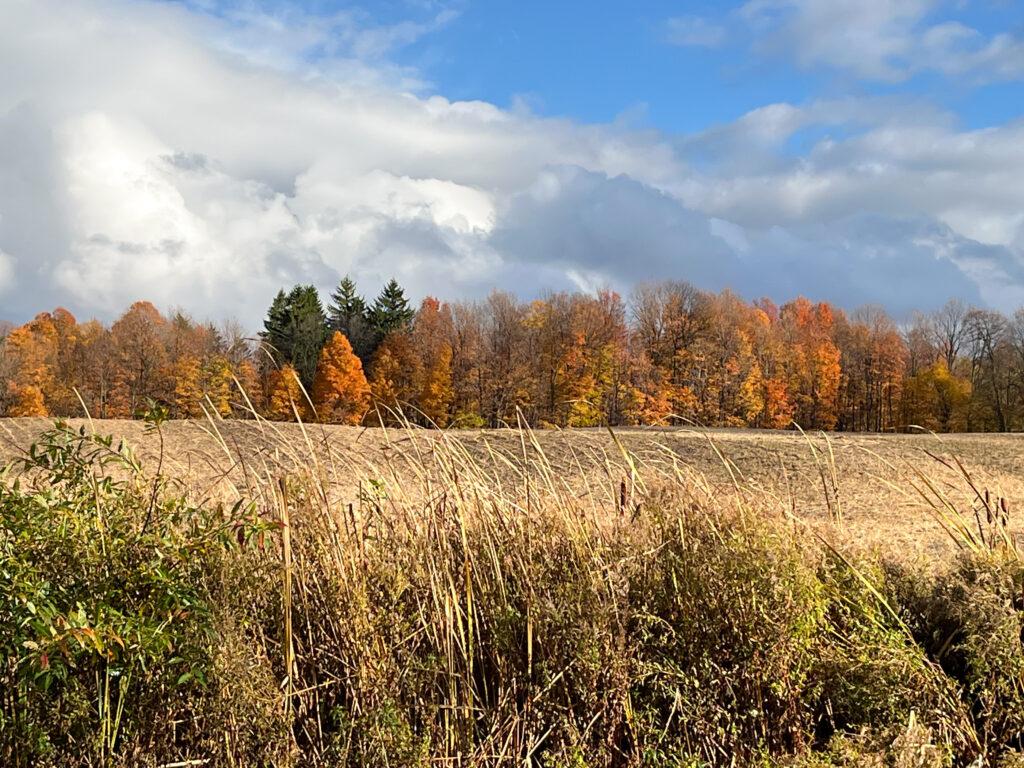
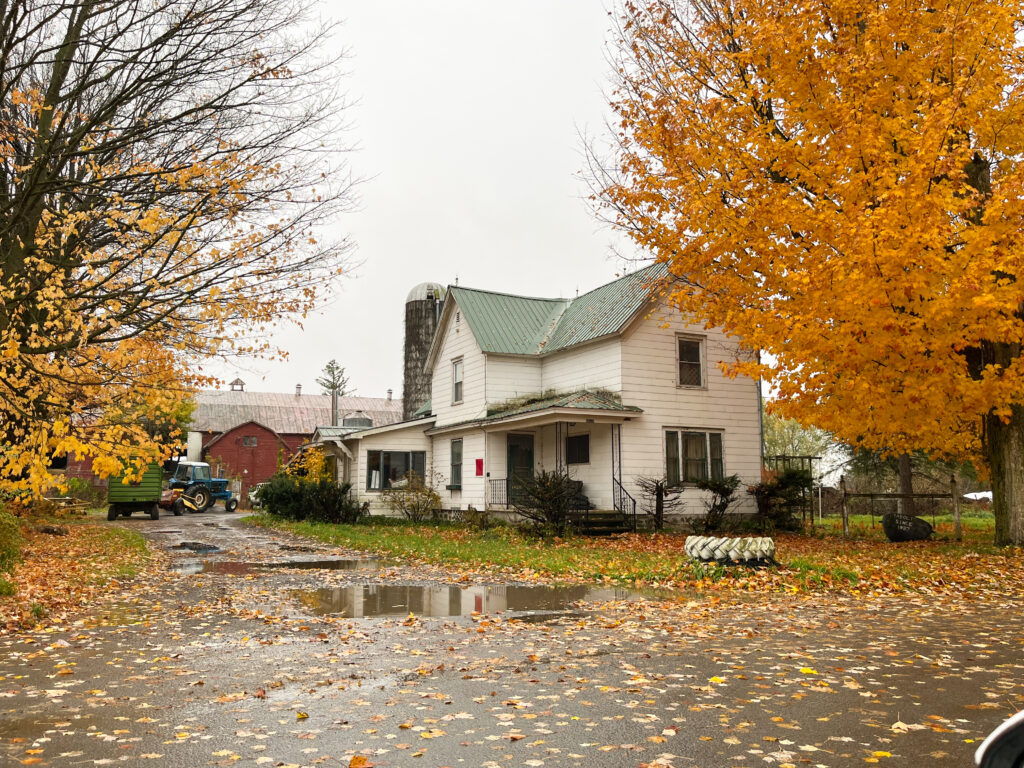
I remember my first visit to upstate New York — expecting noise, traffic, and the shadow of New York City. Instead, I found quiet farmland, red barns, rolling hills, and winding country roads. The air smelled of hay and woodsmoke. I passed old farmhouses with porches full of pumpkins, tractors resting by the fields, and church steeples rising above little towns. It felt familiar in a way that caught me off guard — like finding a reflection of home in an unexpected mirror.

And yes, I still say y’all. It slips out naturally — soft, warm, and full of welcome. It’s part of my rhythm, part of where I’m from. But what I’ve learned is that the sound of belonging isn’t tied to a region. It’s found in the kindness of a smile, the comfort of shared laughter, the ease of connection between strangers.

The South isn’t all one thing, and neither is the North. Both hold beauty, complexity, and contradiction — city lights and quiet roads, tradition and change, rough edges and grace.

Travel has a way of peeling back the surface. When you take the time to listen, to linger, to look past what you thought you knew, the world grows softer and wider. You realize how much of it — and how much of us — is shared.

We are all far more alike than we are different. And the more I wander, the more I believe that the real journey isn’t just about miles or maps — it’s about learning to see with open eyes and an open heart.

— Kari
A Fall Road Trip Through the Adirondacks: Wandering from Wanakena to Lake Placid

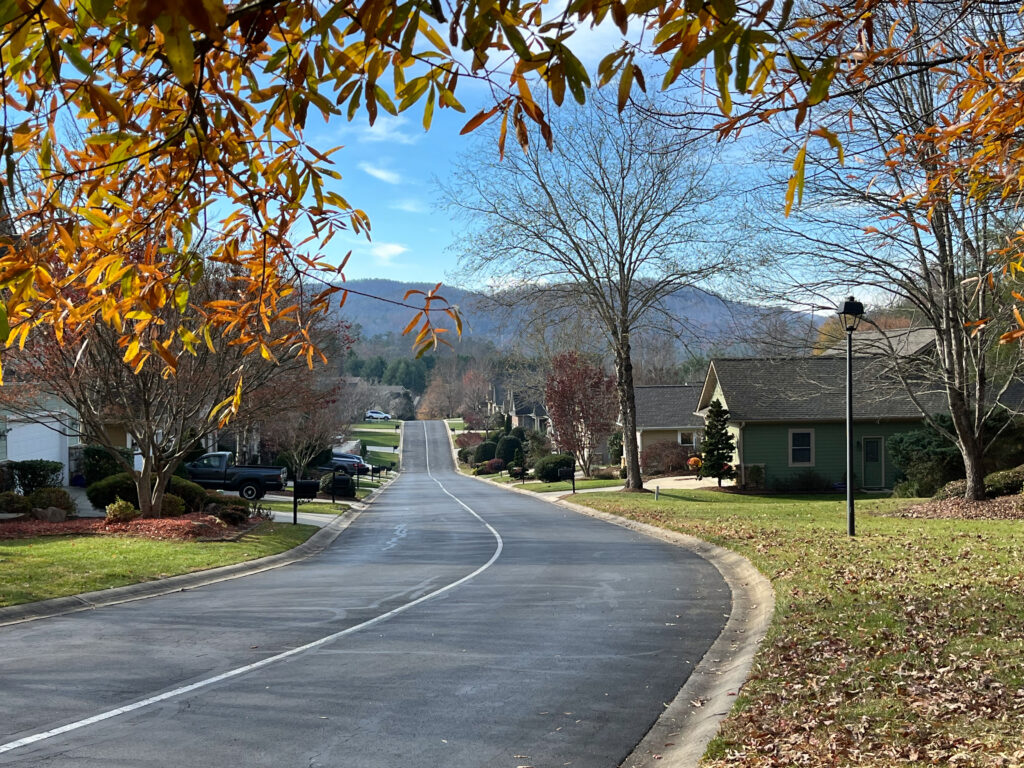
It was one of those golden autumn mornings that practically invites you to wander. The sun was bright, the air crisp, and the promise of color called me north toward the Adirondacks. I set out with a thermos of tea and no particular schedule—just the hope of seeing fall in all its glory.

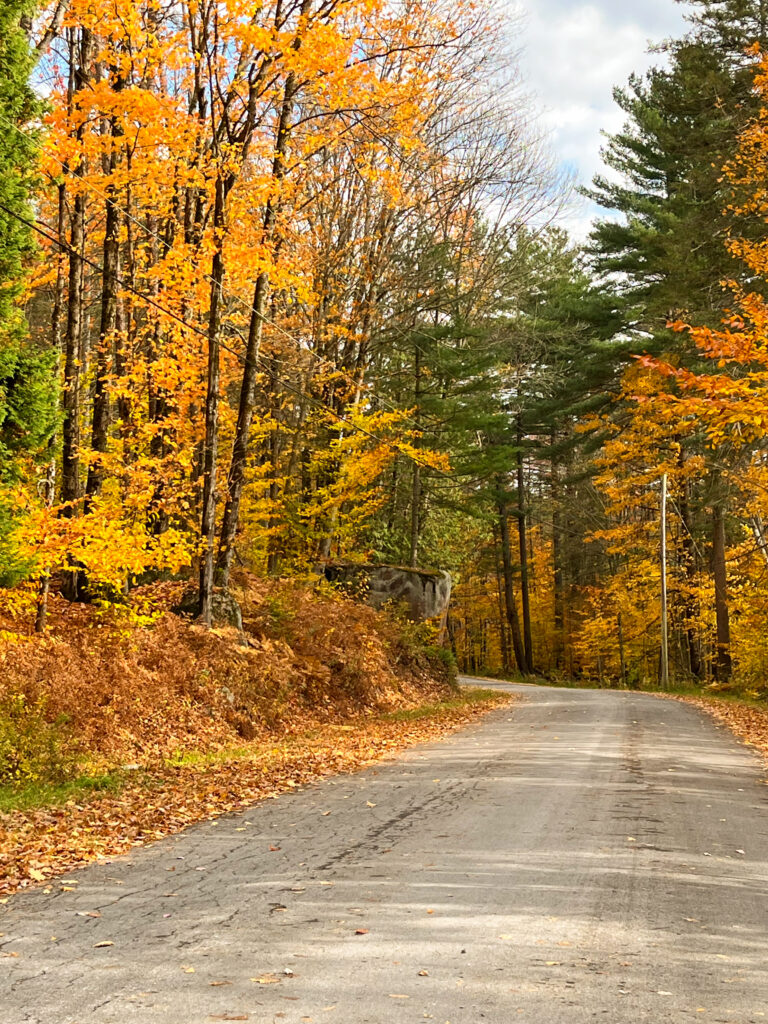
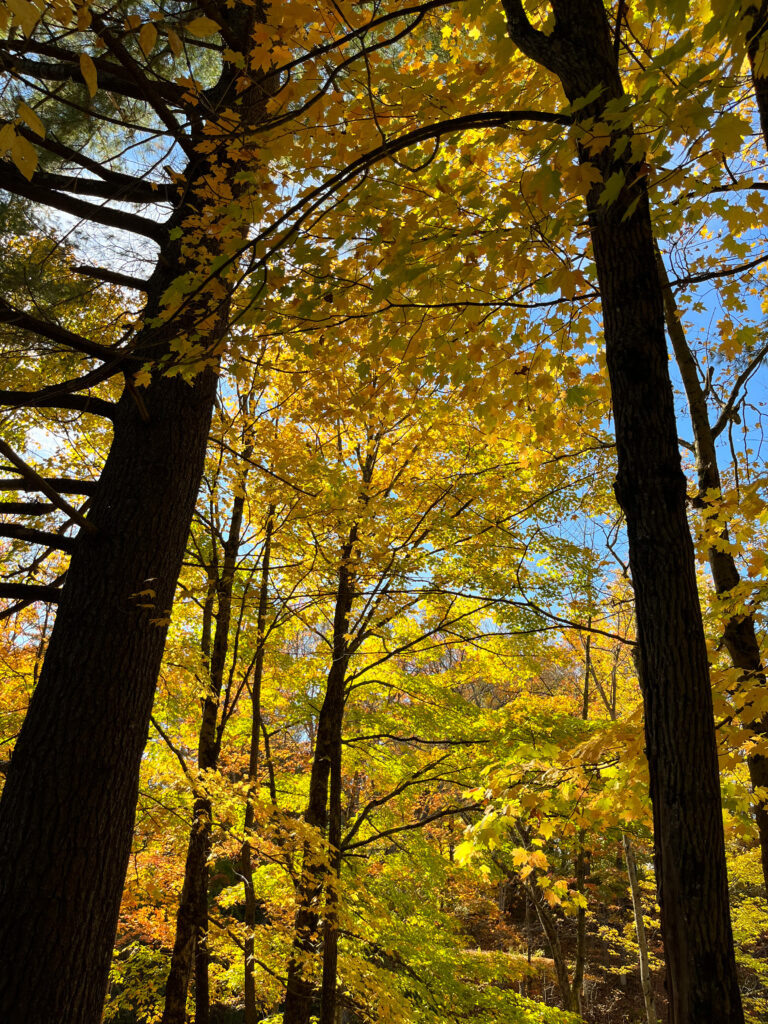
The drive itself felt like a moving painting. The road wound through forests brushed in every shade of amber, scarlet, and gold. My route took me through Tupper Lake, then on to Saranac Lake, and finally to Lake Placid. Each turn seemed to reveal a new masterpiece—sunlight spilling through maples, lakes catching the color of the sky, and mountain ridges softened by mist.

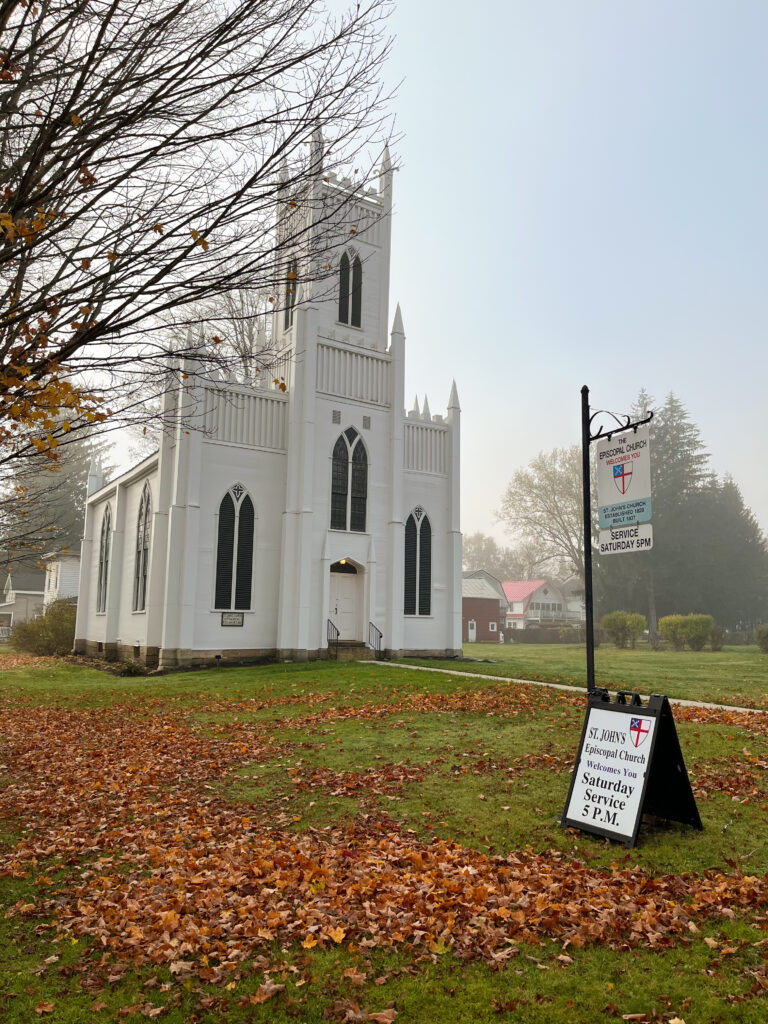
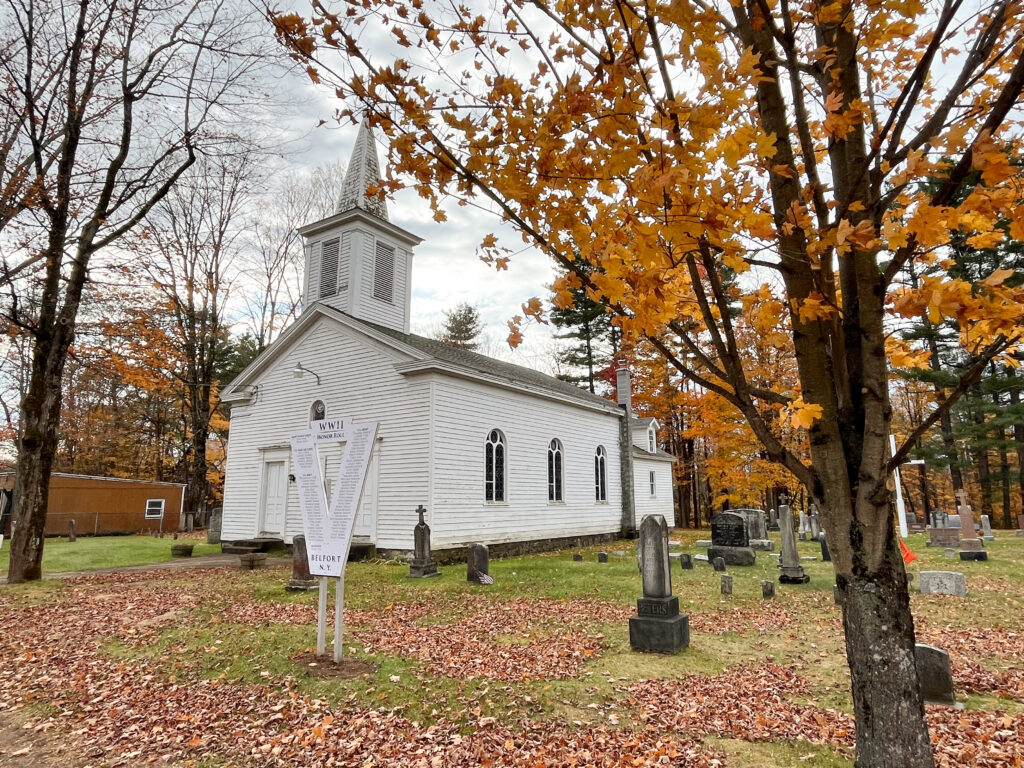
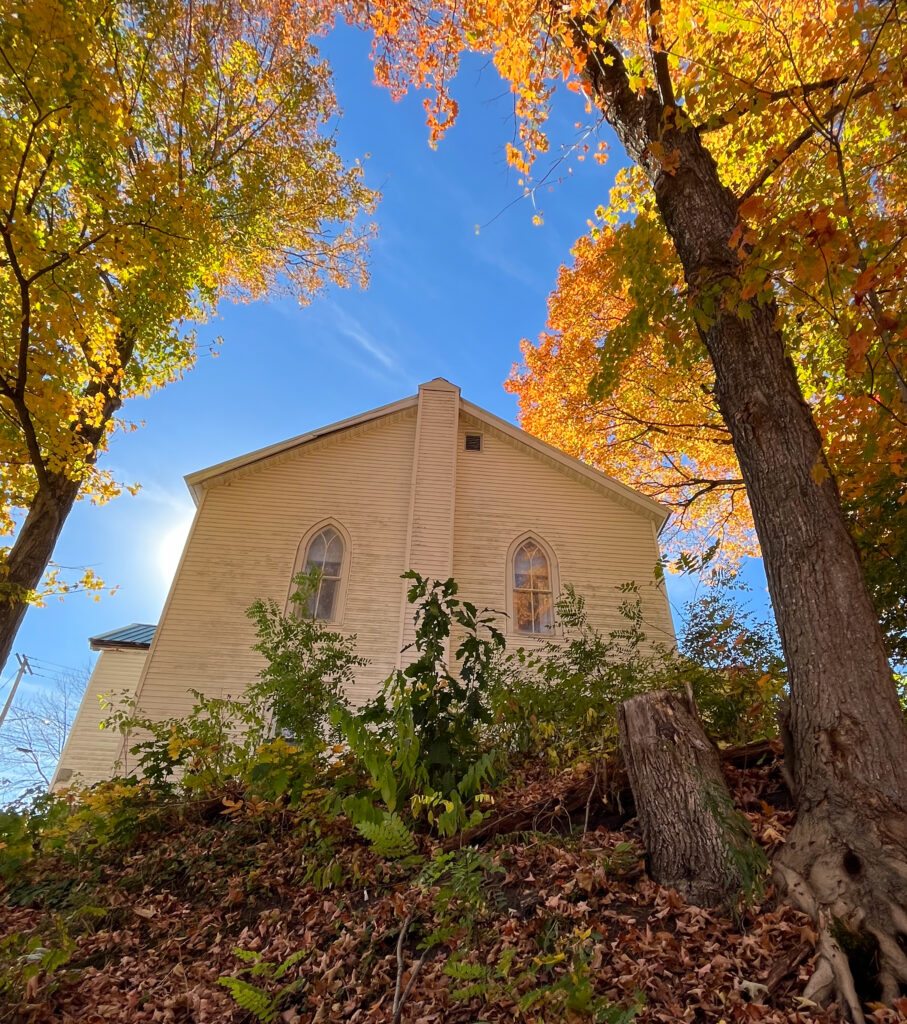
Somewhere along the way, a small roadside sign caught my eye: Wanakena Church. Something about it whispered, stop here, and so I did. What a treasure that detour turned out to be.

Wanakena was like stepping into another time—a sweet little riverside community with quiet charm and a sense of peace that wrapped around me like a favorite quilt. The church stood about a block off the river, humble and lovely, surrounded by trees just beginning to turn. Nearby, a single building held a store, a library with bookshelves and patio furniture on the porch, a small deli, and even a post office with a large moose waving from the steps. It made me smile.

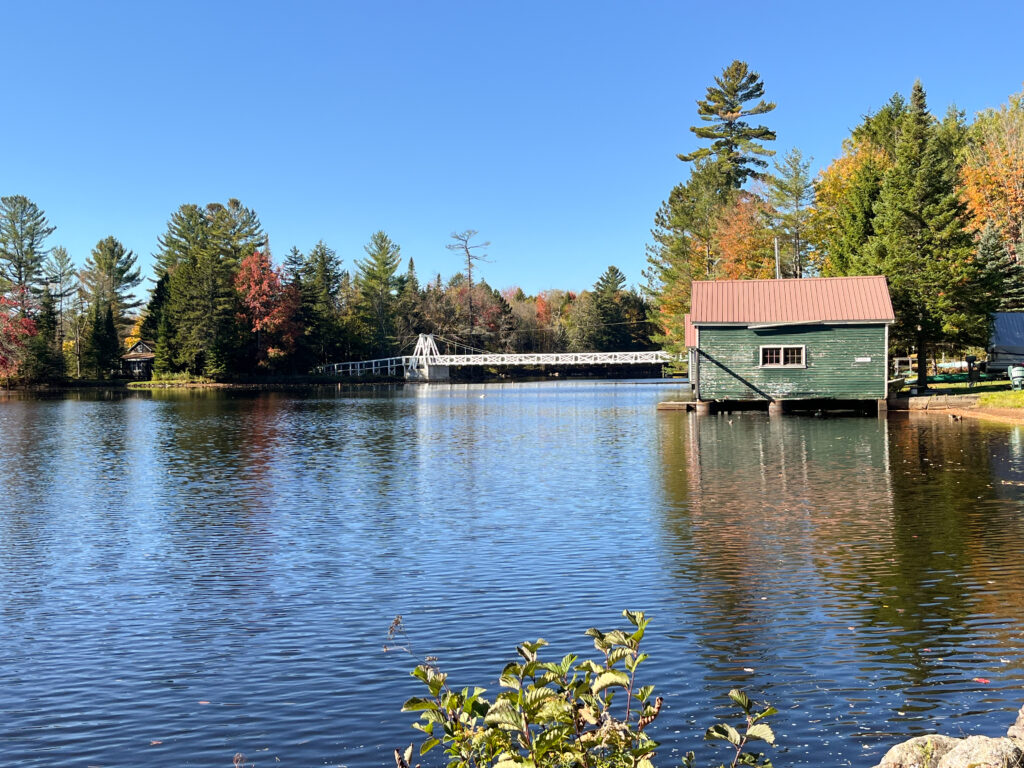
I spoke with two women sitting by the river’s edge—friendly, open souls who shared stories about their village. They told me about the footbridge that crossed the river to a pond and a labyrinth for walking and contemplating. I crossed it, and for a few moments, I felt that quiet sense of awe that comes when you stumble into something unexpectedly beautiful.

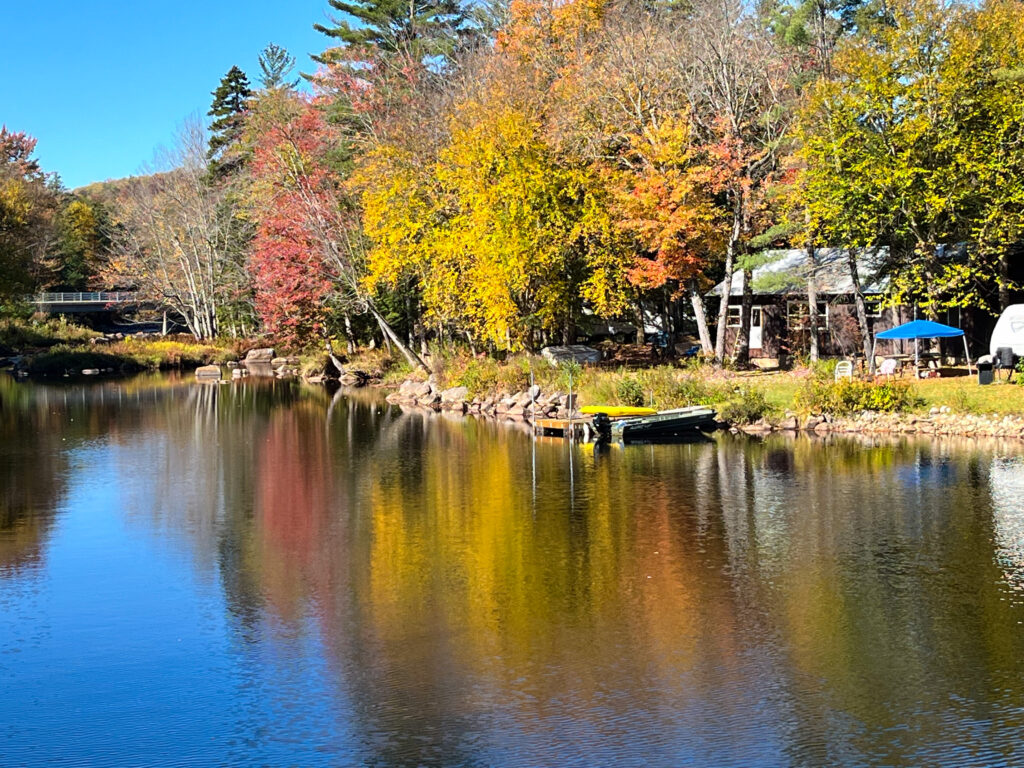
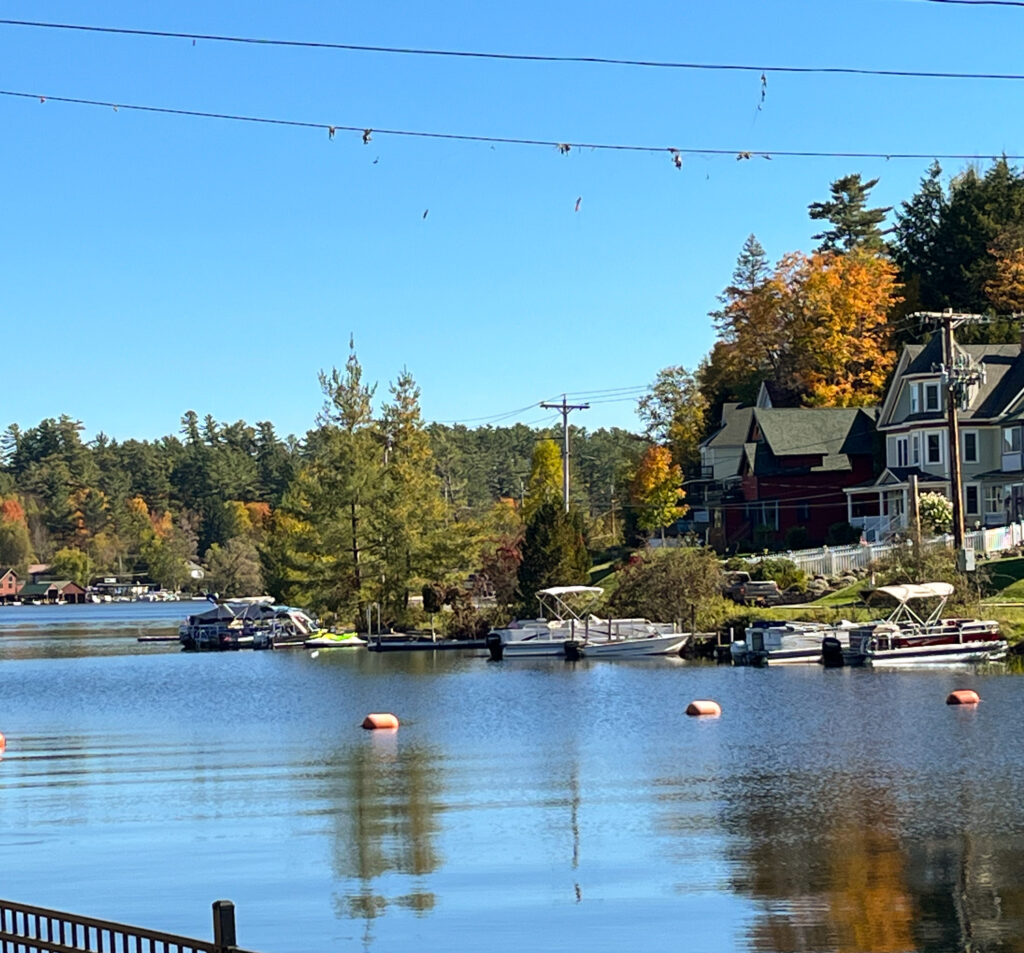
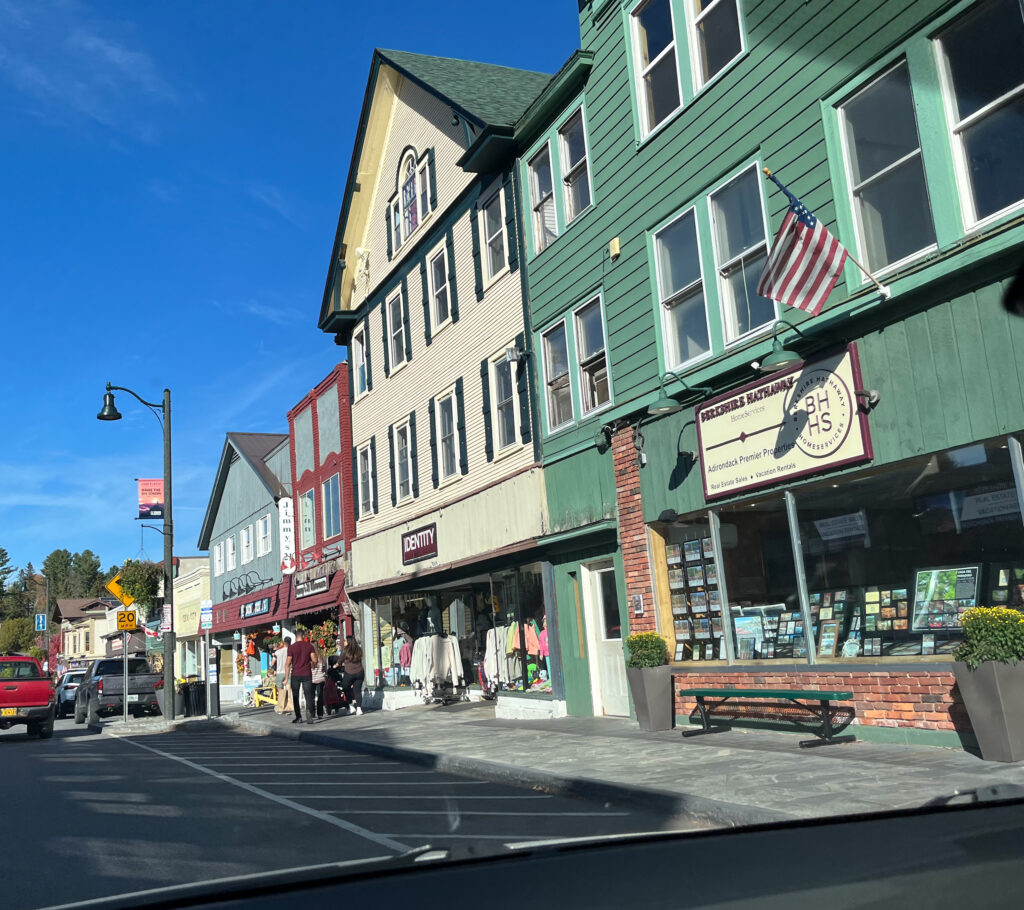
Back on the road, I stopped in Saranac Lake, parking near a small park where the river winds just behind the town. I wandered through streets lined with shops and old brick buildings, then lingered by the water, taking in the reflections of autumn on the surface.

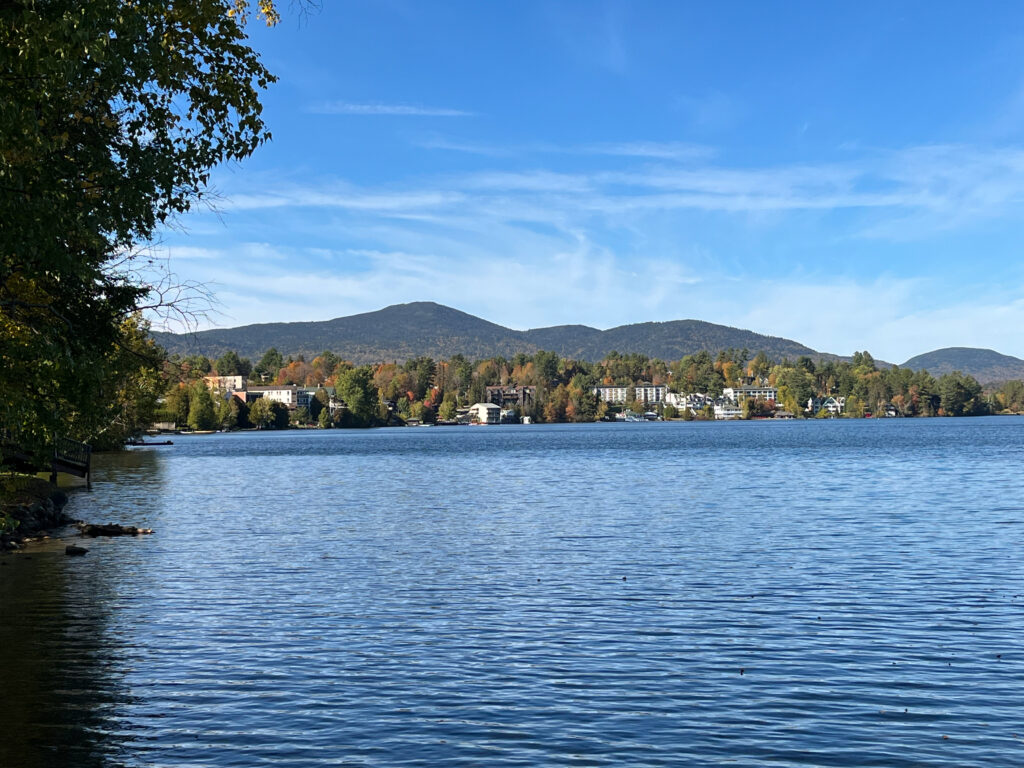
By the time I reached Lake Placid, the afternoon light had softened to a honeyed glow. I didn’t have much time left—just enough for a short drive around the lake, a few quick photos, and a promise to myself to come back. Lake Placid was a gem, shimmering with beauty and charm.

The drive back was quiet, except for the steady whisper of tires on the road and the hum of contentment in my chest. The trees seemed even brighter in the fading light—like the world was saying one last brilliant goodbye before winter’s rest.